Ivan Zhakata
Zimpapers Arts and Entertainment Hub
AFTER years of building bridges between Zimbabwean and European cinema, the European Film Festival Zimbabwe is seeking to strengthen its footprint in the local creative industry, with this year’s edition placing a renewed emphasis on the future of film-making.
Running from 28-30 October in Harare under the theme “The Next Frame”, the festival aims to move beyond simple film screenings. Instead, it is creating opportunities for emerging filmmakers to develop their craft, explore financing models, and establish partnerships to help propel Zimbabwean cinema forward.
The three-day programme brings together European productions, local short films, master-classes, and industry discussions. Activities are spread across the National Gallery of Zimbabwe, the Zimbabwe Film and Television School of Southern Africa (ZIFTESSA), the Zimbabwe German Society, and Alliance Française Harare.
Hosted by the European Union in partnership with EU Member States, the festival features films from Romania, Ireland, Spain, Madagascar, and Belgium, alongside productions by Zimbabwean filmmakers.
This focus on rebuilding creative connections comes as local filmmakers continue to grapple with high production costs, limited financing, and the challenge of reaching wider audiences.
The theme, “The Next Frame”, therefore carries significance beyond the screen, challenging filmmakers to consider what the next chapter of Zimbabwean cinema should look like and how the industry can become more sustainable.
European Union Delegation to Zimbabwe Chargée d’Affaires Francesca Fabbri said the festival was designed to give local talent a platform alongside international productions.
“What excites me most about this edition is not just the films we are bringing from Europe, but the talent we are putting on that same stage from Zimbabwe,” she said. “This is a festival that says to every young filmmaker in this country: your story matters, your voice belongs in this conversation, and your audience is waiting.”
The festival opened yesterday at the National Gallery of Zimbabwe with an exhibition bringing together organisations from the film, media, culture, and education sectors. The opening programme included a preview screening of Grounded, followed by a question-and-answer session with acclaimed Zimbabwean-British actress Chipo Chung. The Romanian feature film Nasty was also screened.
Today’s programme shifts towards skills development, with aspiring actors and filmmakers attending a master-class on screen acting and directing led by Leroy Gopal, in association with Monzyice Creations.
The evening screenings at the Zimbabwe German Society will feature Four Mothers and the Spanish film Jokes and Cigarettes.
Friday’s schedule will place the business of film-making under the spotlight, featuring a finance workshop organised in collaboration with the National Arts Council of Zimbabwe and facilitated by the Chartered Accountants Academy.
Two panel discussions, titled “The Missing Middle: A Sustainable Future in Film-making” and “AI and African Cinema: Tool, Threat or Turning Point?”, will examine production financing challenges alongside the opportunities and risks presented by artificial intelligence.
For Zimbabwean filmmakers, the discussions offer an opportunity to confront structural questions that extend beyond creativity. Without reliable financing, professional training, and distribution channels, promising productions struggle to reach audiences or generate sustainable re-turns.
Festival director Rumbi Katedza said the theme was intended to encourage the industry to imagine new possibilities while building relationships to benefit emerging storytellers.
“This year’s theme invites us to imagine the future of film in Zimbabwe. I am honoured to lead the festival and build new relationships through film, including stronger creative connections with the European Union,” she said. “There is so much we can learn from one another, and I hope the encounters we create here will open doors for the next generation of filmmakers to tell stories on their own terms and lay the foundations for lasting collaborations.”
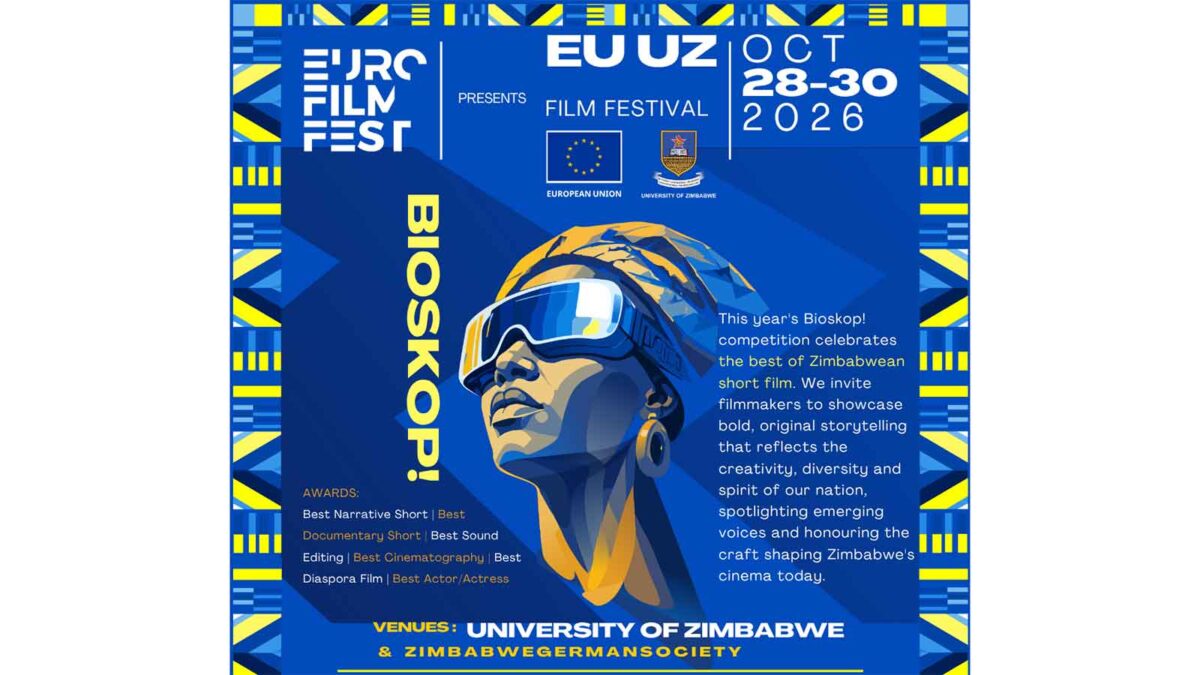
The BIOSKOP! Short Film Competition provides another platform for local talent, having attracted 80 entries across various genres and film-making approaches. Films have been short-listed in six award categories, recognising narrative film-making, documentaries, cinematography, sound, and performance.
The winners will be announced on Friday at Alliance Française Harare, where the short-listed productions will be celebrated before the festival concludes with How to Make a Killing. Other films scheduled for Friday include Weight, Disco Afrika — A Malagasy Story, Chez Ali, and God Sleeps on Sundays.
All festival events are free to attend, though some activities have limited spaces.
Launched by the European Union in 2016, the European Film Festival Zimbabwe has developed into a vital platform for cultural exchange, bringing European and African cinema into conversation while offering local filmmakers opportunities to showcase their work.
As the festival enters another edition, the primary challenge remains translating the enthusiasm generated by screenings and industry conversations into lasting, practical opportunities for Zimbabwean filmmakers.