
Obey Musiwa recently in Mashonaland Central
Extreme heat is placing growing pressure on Zimbabwe’s health system and threatening the livelihoods of smallholder farmers, while exposing pregnant women, children and the elderly to increased health risks, experts have warned.
The concerns emerged during Zimbabwe’s multisectoral Climate Change and Health Vulnerability and Adaptation (V&A) Assessment, which is expected to guide the development of a Health National Adaptation Plan (HNAP).
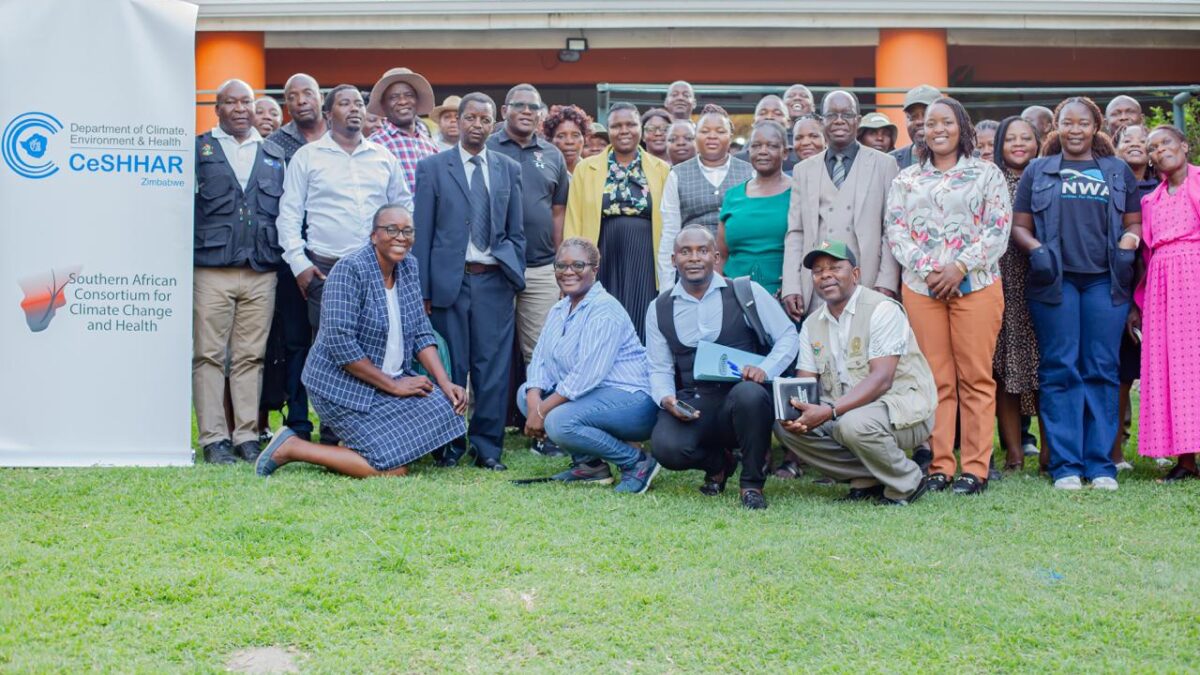
Experts from the health, agriculture, water, civil protection and social welfare sectors met in Bindura for a two-day National Multisectoral Consultative Workshop convened by the Ministry of Health and Child Care in collaboration with the World Health Organisation (WHO) and the Climate, Environment and Health Department at CeSHHAR Zimbabwe.
The department is providing scientific and technical leadership for the assessment alongside the Government and WHO.
The process is funded by the Global Fund and WHO, with additional support from the Wellcome Trust through the Southern Africa Consortium for Climate Change and Health (SACCCH).
The workshop sought to establish how climate-related exposures affect public health and gather national input for the V&A Assessment, which will inform the HNAP.
Participants examined the impact of climate hazards on communities, as well as the capacity of health facilities to respond to climate-related health challenges.
The assessment identified hot, low-lying areas such as Kariba, Chiredzi, Beitbridge and Tsholotsho as priority areas nationally. In Mashonaland Central, the focus includes Zambezi Valley districts such as Mbire, Muzarabani and Guruve.
Speaking at the launch of the process to develop Zimbabwe’s HNAP, beginning with the V&A Assessment, Health and Child Care Minister Dr Douglas Mombeshora said climate change was already affecting health, nutrition and food security.
He linked rising temperatures to adverse pregnancy outcomes, including premature deliveries and low birth weight.
“Extreme heat can affect pregnancy outcomes,” he said, adding that premature births were a major contributor to rising neonatal mortality.
Dr Mombeshora said the Government needed to take action before the situation deteriorated further.
“We must be proactive and cannot wait for the crisis to deepen before it acts, and that is why the HNAP is a critical step towards a science-informed response that protects people before the worst happens, not after.
“Understanding climate change means looking beyond temperature charts and rainfall statistics to how these hazards affect everyday people, and our Vulnerability and Adaptation assessment helps us answer who is most at risk, why they are vulnerable, and what systems we must strengthen to protect them,” he said.
He said the Ministries of Agriculture and Environment are working with the health sector, and that Government wants policies that respond to the direct health consequences of climate change.
Head of the Climate, Environment and Health Department at CeSHHAR Zimbabwe and also the Zimbabwe country director for SACCCH Dr Fortunate Machingura, said the partnership connects scientific evidence with national responsibility for protecting health.
“The strength of this partnership lies in connecting those who generate evidence with those responsible for acting on it,” said Dr Muchingura..
“Our department brings research expertise to help identify who is most vulnerable, assess existing capacity to respond and establish priorities for adaptation.
She said that working with the Ministry and WHO, they want this assessment to inform the eventual HNAP and guide investment towards the people and health services facing the greatest risks.
CeSHHAR Associate Social Scientist Dr Christine Chawhanda said risk is not spread equally.
“Vulnerability is shaped by both biology and daily social realities,” she said.
Farmers, informal traders and outdoor workers cannot avoid the sun, she said, because “their daily survival depends on outdoor labour.” She said the impact goes well beyond individual illness.
“Extreme heat does not just make people sick it tests every pillar of our health system.”
She added that heat illness is often recorded under broader symptoms, so routine surveillance can undercount its true burden.
Senior meteorologist Naboth Chaibva of the Meteorological Services Department (MSD), under the Ministry of Environment, said heat is the clearest change Zimbabwe should prepare for in the next 10 to 30 years.
He said the National Climate Change Adaptation Plan (2024) projects national average warming of 1.5 to 3.5°C by 2080.
“The First BiennialReport projects 1.0 to 1.5°C for 2020–2040 and 1.5 to 2.5°C for 2041–2060, depending on emissions,” he said.
“For health services, this means more heat stress and clinics that must keep patients cool and maintain reliable water and power.”
Mr Chaibva said MSD proposes testing a heat alert when daytime maximum temperatures are forecast to exceed a local threshold for at least three days in a row.
“The threshold would be based on each location’s own records for that month, for example, a November alert in Kariba would use a temperature higher than the daytime highs recorded on about 95 out of every 100 November days.”