Gibson Nyikadzino
In Berlin, Germany
The fundamental idea to understand why Zimbabwe was sanctioned illegally, and remains under the same is through understanding what has become to be known as the International Law of Colonialism, or the Doctrine of Discovery.
This Doctrine of Discovery was used to colonise non-Europeans and the non-Christian world. To expand their explorations, colonialists used clauses of the law of colonialism emanating from the January 8, 1455 Papal Bulls that gave them power to “invade, search out, capture, vanquish, and subdue all the kingdoms, dukedoms, principalities, dominions, possessions, and all movable and immovable goods and to reduce their persons to perpetual slavery.”
This common-law international Doctrine was then codified into European international law at the Berlin Conference of 1884–85 and in the Berlin Act of 1885 specifically to partition and colonise Africa. This Doctrine of Discovery also gave the colonial establishment power to appropriate unto themselves the right to occupy the native lands and having indigenous people in various jurisdictions trapped in perpetual slavery.
Using the same law, the colonial establishment used it to occupy native and indigenous people in Africa, the Apache Indians in the USA and the Aborigines in Australia. Furthermore, the continued hold of native peoples lands by European colonial merchants implanted the idea that there was a “genocide” of white farmers that occurred in South Africa raised by conspiracy theorists that did not want the native South Africans repossess their land in 2018.
Therefore, indigenous peoples around the world have been negatively impacted by this international law of colonialism which has remained an applicable principle in many countries and also continues to limit the human, sovereign, commercial and property rights of African people’s and their governments.
Hence the displacement of the native people in Zimbabwe was legalised through the Doctrine or Discovery codified in the Berlin Act in 1885. Zimbabwe exposed the scandalous nature of the neo-liberal agenda in attempting to control the world. To give further context, through the Berlin Act, the colonisers were confirming that all territories and land they acquired and give their people will remain theirs and whoever they considered to have considered reversing that was breaking the law and hence had to be punished.
Based on these, the sanctions against Zimbabwe must not only be understood through either what was known as the ZIDERA, or now the Global Magnitsky Act, without understanding the Doctrine of Discovery. The debate about sanctions against Zimbabwe has to be explained on the idea that by reclaiming its land from colonial dispossession, the country was perceived to have challenged the existing political economic order that had benefited the colonial establishment for over a century, in Zimbabwe’s case.
In the minds of the colonisers, Zimbabwe ought to have been punished because she challenged the colonial order that emanated from the Doctrine of Discovery, and sustained by and through the Berlin Act.
So, sanctions imposed on the people of Zimbabwe were so because of the country’s Fast Track Land Reform Program (FTLRP) which formally initiated by the Land Acquisition Act of 2002.
Zimbabwe’s land reclamation programme was an indication to resist the resist the unjust laws of colonialism that gave rights to Europeans to own the land of the natives. Zimbabwe, as before, maintains its determination for self-rule, sovereignty, political and economic independence despite the existence of coercive economic tools against its people.
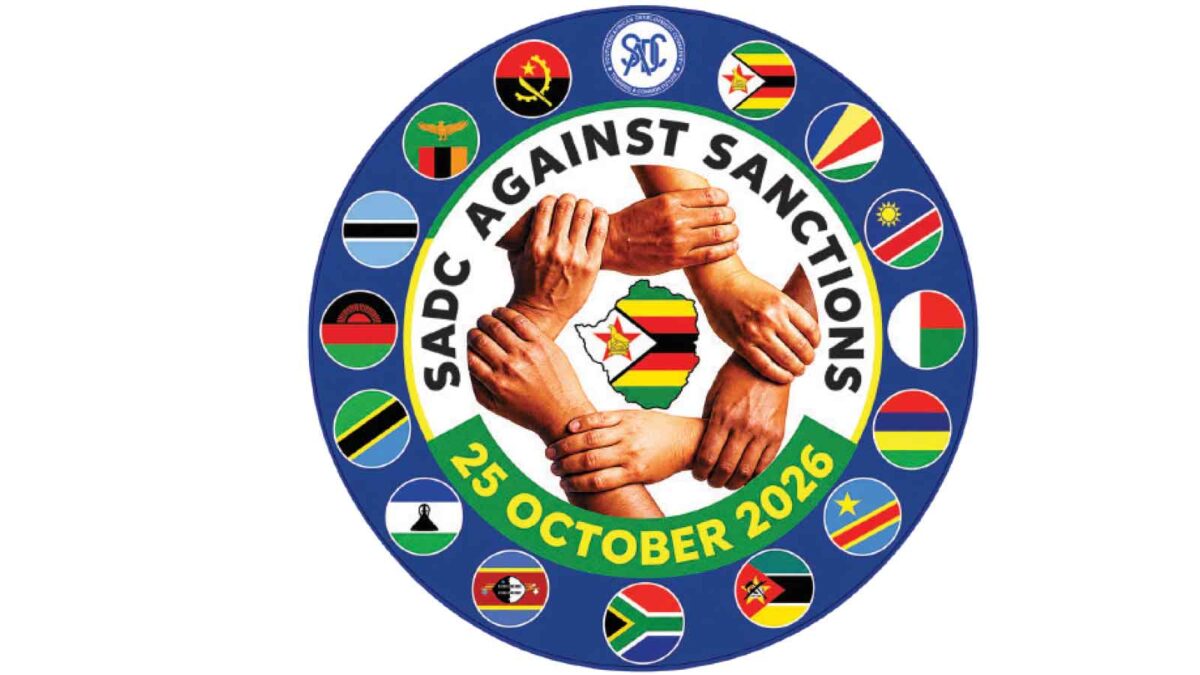
There is no territory that has been sanctioned more in the history of economic warfare in Africa than Zimbabwe and the former settler regime of Rhodesia (1965-1979), such that the country has now been categorised as belonging to the “sanctions industry”.
In that regard, some theories have however been flown and thrown on how, for instance, Rhodesia “fared better under United Nations sanctions” than Zimbabwe which is “only sanctioned by the Americans, Europeans and their allies”. While the goals of the sanctions appear the same, the dynamics informing these decisions are different.
The factors Rhodesia and Ian Smith survived the sanctions rarely apply to those in modern Zimbabwe. A number of factors around this issue need to be understood in order to have sanity of thought when explaining this conundrum without malice and prejudice.
This, therefore, has to be argued, too, with the mind that the purpose of economic sanctions against the Smith government was not to bring it to its knees but to make him “reasonable” while Zimbabwe was supposed to “scream”.
Economically Zimbabwe has lost billions of dollars due to sanctions, and their impact must not be taken lightly, for they have disrupted many aspects of social life. Other African countries fear taking the route that Zimbabwe adopted to empower their citizens and challenge the law of colonialism because they are afraid of living uncomfortable lives despite the economic enslavement that comes with the Doctrine of Discovery.
It is, therefore, key to understand that Zimbabwe’s realisation to have its native people be the rightful owners of their land and resisting the law of colonialism that empowered invaders to be in Zimbabwe is the reason why sanctions were imposed, and the white establishment feels happy to have the country’s economy “scream”.
The circumstances Zimbabwe resisted the law of colonialism are different from that of the Rhodesians. The Rhodesia-Zimbabwe sanctions issue carries a lot of worth when approached from the point of rationality.
On several occasions, Zimbabwe has been accused of failing to uphold rights when the black majority took their land, yet when the Caucasians became citizens of Zimbabwe through colonisation, their brutality is a closed chapter as they were empowered by the Papal Bulls.
Rhodesia sanctions were meant to bring a political solution, that is “the independence of the black majority”, and had nothing about wealth redistribution to benefit the exploited.
Zimbabwe’s sanctions are meant to stop an economic triumph over exploitation. The basis of the matter is that sanctions against Zimbabwe should be lifted in whatever form, there is no need for comparisons. Zimbabwe is targeted so that it does not send signals of reclaiming economic sovereignty to other African countries.