Online Reporter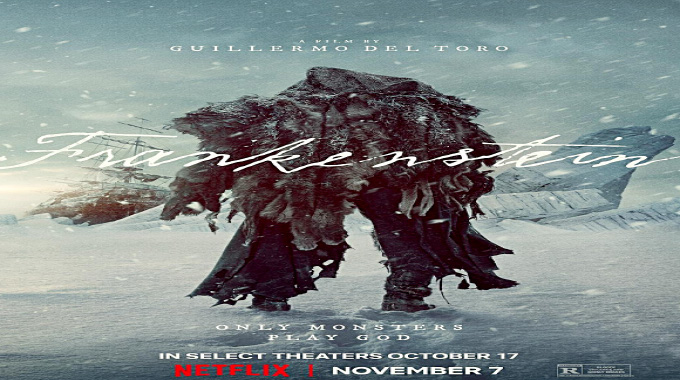
Munashe Tombo
“IN the darkest night, the brightest light is born.” That line sets the tone for Guillermo del Toro’s Frankenstein (2025), a film that doesn’t merely retell Mary Shelley’s timeless tale — it reimagines it with staggering emotional depth and visual splendour. This is not just a film; it is a cinematic experience that restores humanity to the Monster and forces us to confront the eternal question: what does it mean to create — and to be created?
Del Toro’s signature style is evident in every frame. His lush, painterly cinematography transforms gothic horror into a moving work of art. Shadows breathe, candlelight flickers like whispers of conscience, and the landscapes feel alive with dread and beauty. It is a world where morality and ambition collide, and where the consequences of unchecked desire are rendered with operatic intensity.
The performances are nothing short of mesmerising. Oscar Isaac delivers a tormented Victor Frankenstein, a man consumed by brilliance and guilt. Jacob Elordi brings vulnerability and aching humanity to the Creature, making him less a monster and more a tragic mirror of our own flaws. Mia Goth, ethereal and haunting as Elizabeth, lingers in the mind long after the credits roll. Together, they form a triangle of obsession, compassion, and inevitable ruin.
The film’s score deserves its own ovation. Haunting yet tender, it wraps the narrative in an atmosphere that is both immersive and unsettling. Every note feels like a heartbeat echoing through the corridors of creation and consequence.
But beyond its artistry, Frankenstein (2025) asks a universal question: What responsibility comes with power? Del Toro doesn’t offer easy answers. Instead, he leaves us grappling with ambition, redemption, and the fragile line between genius and hubris. It is a film that demands not just to be watched, but to be felt.
So don’t simply see Frankenstein — immerse yourself in its rebirth of wonder, fear, and hope. This is a masterpiece that will ignite curiosity, stir empathy, and perhaps even reshape how you view humanity itself.
Good Fortune (2025): A comedy of angels, ambition, and chaos
If Frankenstein is a gothic symphony, Good Fortune is a riotous burst of colour and energy — a luminous tapestry of talent, triumph, and tenacity. Produced by Garam Films, Oh Brudder Productions, Keep Your Head, and Yang Pictures, this star-studded comedy boasts a cast that reads like a dream: Seth Rogen, Aziz Ansari, Keke Palmer, Sandra Oh, and Keanu Reeves.
The premise is deliciously absurd. Reeves plays Gabriel, an angel whose well-intentioned attempt to teach Arj (Ansari), a struggling man, that money cannot solve life’s problems goes spectacularly wrong. By body-swapping Arj with his wealthy employer Jeff (Rogen), Gabriel sets off a chain of chaos that costs him his wings and unravels the celestial order. What follows is a sharp, witty exploration of luck, morality, and the messy beauty of human imperfection.
The film sparkles with comedic timing and heartfelt moments. Ansari’s neurotic charm, Rogen’s larger-than-life antics, and Reeves’ serene gravitas create a dynamic that is both hilarious and surprisingly poignant. Add Keke Palmer’s infectious energy and Sandra Oh’s razor-sharp wit, and you have a comedy that doesn’t just entertain — it uplifts.
Good Fortune is more than a film; it’s an invitation to embrace possibility, laugh at chaos, and rediscover the joy of second chances. Take your seat, feel the pulse of destiny, and bring that energy back to your world.
Munashe Tombo is the Director of Video Ezy Entertainment, a local E-entertainment company, that hosts pro-gaming, movie and video game reviews He can be contacted on [email protected]