Gibson Mhaka, Zimpapers Politics Hub
IN the high-stakes arena of global geopolitics and regional integration, leadership is defined not by grandiloquent rhetoric, but by the pragmatic execution of economic diplomacy that yields tangible dividends for ordinary citizens.
President Mnangagwa’s recent diplomatic tour, spanning his influential stewardship as Chairperson of the Common Market for Eastern and Southern Africa (COMESA) to his bilateral engagements at the Third Russia-Africa Summit in Moscow, Russia underscores a sophisticated strategy, positioning Zimbabwe and the region as indispensable global economic partners rather than passive recipients of international policy.
By bridging regional economic integration with high-level multilateral diplomacy, President Mnangagwa has accelerated the actualisation of Vision 2030, anchored on economic growth, technological transfer, and sovereign development.
Anchoring regional integration: The COMESA framework
At the regional level, President Mnangagwa’s leadership as COMESA Chairperson has breathed fresh vitality into intra-African trade, industrialisation, and institutional alignment.
The 21-member trading bloc, representing a market of over 640 million people and a combined gross domestic product exceeding US$1 trillion, serves as a crucial pillar for the African Continental Free Trade Area (AfCFTA).
Under his tenure, Zimbabwe has championed value addition, resource mapping, and cross-border infrastructure development, urging member states to discard colonial-era economic structures that relegate Africa to a supplier of unbeneficiated raw materials.
Foreign Affairs and International Trade Minister, Professor Amon Murwira, observed that President Mnangagwa’s leadership has harmonised regional economic priorities with global diplomatic engagements, ensuring that Africa presents a unified, formidable front on the international stage.
“It is commendable that His Excellency the President, Dr Mnangagwa, undertook this visit to the Russian Federation in his capacity as President of the Republic of Zimbabwe and as Chairperson of COMESA.
“The whole idea is to strengthen the working relationship between the Russian Federation and Africa, and specifically between the Russian Federation and Zimbabwe,” Prof Murwira noted.
By leveraging his dual capacity, President Mnangagwa ensured that deliberations in Moscow reflected not merely bilateral interests, but the collective trade and investment aspirations of the broader COMESA sub-region.
The Moscow Accord: Sovereign tech and strategic partnerships
The Third Russia-Africa Summit and Russia-Africa Economic and Humanitarian Forum, held in Moscow under the theme “For Peace, Security and Development,” provided a critical platform for operationalising this economic diplomacy strategy. Bringing together 48 African nations, including 20 Heads of State and Government, the summit culminated in 146 intergovernmental and institutional agreements, alongside the Declaration of Cooperation on Artificial Intelligence Technologies and the Russia-Africa Partnership Forum Action Plan for 2027–2029.
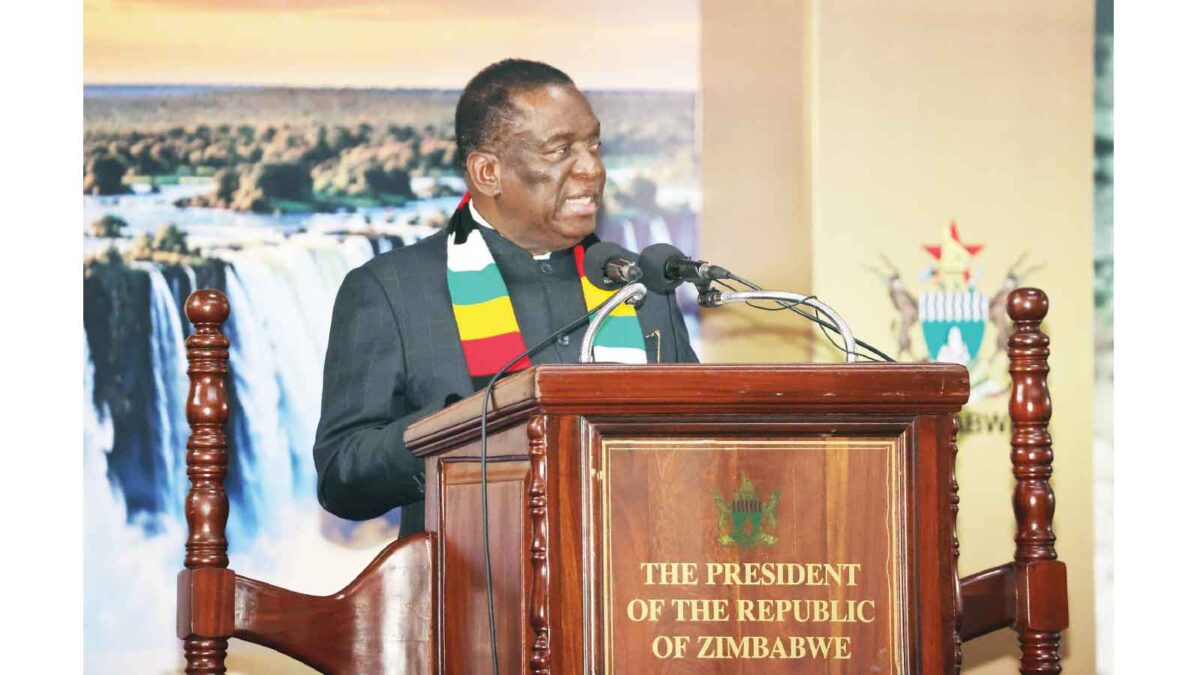
During plenary sessions and high-level bilateral talks with Russia President Vladimir Putin, President Mnangagwa articulated a clear vision: marrying Africa’s rich natural resources, expanding markets, and vibrant youth demographic with Russia’s advanced industrial, energy, and digital capabilities.
“The complementary strengths of our cooperation should scale up Africa’s industrialisation, technology sharing, innovative skills development, sustainable economic development and transformative impacts to the daily lives of our people,” declared President Mnangagwa.
Central to his address was the imperative of sovereign technological adaptation. In an era where global infrastructure, supply chains, and financial systems are increasingly digitised, President Mnangagwa called for the direct integration of Russian artificial intelligence (AI) technologies, cybersecurity protocols, and digital frameworks into African universities, research hubs, and industrial sectors.
This vision aligns directly with Zimbabwe’s Education 5.0 doctrine, which shifts tertiary institutions from theoretical academia toward tangible research, innovation, and industrial output.
By embedding advanced AI training, software development, and threat-mitigation tools into higher education, the nation prepares its workforce for high-value tech entrepreneurship and automated industrial processes.
Countering imperialist hegemony and securing technological sovereignty
President Mnangagwa’s push for technological independence resonates with Russian President
Vladimir Putin’s vision of a multipolar world order grounded in mutual respect and sovereign self-determination.
Addressing the forum’s plenary assembly, President Putin reiterated that true economic liberation requires control over infrastructure, capital, and technology.
“Africa needs solutions that will allow it to manage its resources at its own discretion, direct them toward its urgent needs and requirements, and accumulate significant capital and long-term investment in energy, industry, transport, and logistics.
“This would help to finally cast off the shackles of the colonial legacy and ensure the political, social, and economic stability of African nations, as well as genuine national sovereignty in all its manifestations,” President Putin emphasised.
This sovereignty is particularly vital in defending critical information infrastructure. As international economic systems migrate online, cyber threats have evolved from simple network disruptions to sophisticated attacks against power grids, financial payment systems, and governance portals.
Advisor to the President of the Russian Federation, Mr Anton Kobyakov, noted that the proliferation of accessible AI tools has heightened vulnerability scales globally.
“We are witnessing a fundamental change in the nature of cyberthreats.
“In the past, the main goal of threat actors was to disable information resources, while today, attacks are increasingly aimed at destroying the systems themselves, interfering with their operation, and exploiting technological vulnerabilities. The increased use of AI is making the situation even more complex,” Mr Kobyakov explained.
Furthermore, chairman of the board and chief executive officer of the Roscongress Foundation, Mr Alexander Stuglev, underscored that robust digital defence is directly linked to commercial success.
“The use of AI for criminal purposes raises the stakes, cybersecurity extends far beyond technical measures for events and is directly linked to the resilience of international communications and business growth,” Mr Stuglev stated.
By prioritising AI adoption and cyber security collaboration, President Mnangagwa ensures that Zimbabwe’s domestic digital architecture remains shielded from external manipulation, laying a secure foundation for digital commerce and industrial governance.
Translating diplomacy into domestic gains
Upon his arrival at Robert Gabriel Mugabe International Airport, welcomed by Vice Presidents Dr Constantino Chiwenga and Dr Kembo Mohadi, Cabinet ministers, and service chiefs, President
Mnangagwa confirmed that Russian business delegations are set to visit Zimbabwe to finalise investment ventures across mining, agriculture, energy and manufacturing.
“They are very interested in coming to Zimbabwe. They find that Zimbabwe is very cooperative and they want to do more business.
“And I told them that Zimbabwe is open for business. So, we expect to have some business delegations coming to Zimbabwe,” President Mnangagwa said.
Prof Murwira reiterated that government ministries are already deploying implementation matrixes to ensure these high-level agreements yield concrete results.
“Most importantly, to ensure that the long-term friendship between Africa and the Russian Federation is translated into economic gains and improved livelihoods for the people of the Russian
Federation and the people of Africa, particularly Zimbabwe,” Prof Murwira affirmed.
From steering regional integration at COMESA to securing strategic technological and economic partnerships in Moscow, President Mnangagwa continues to demonstrate that proactive, deliberate, and sovereign economic diplomacy remains Zimbabwe’s surest engine toward achieving an upper-middle-income economy by 2030.