Andile Tshuma, Zimpapers Writer
A CITY cannot claim to be smart if its infrastructure is modern but inaccessible, its public services difficult to navigate for persons with disabilities and its economic opportunities beyond the reach of vulnerable residents.
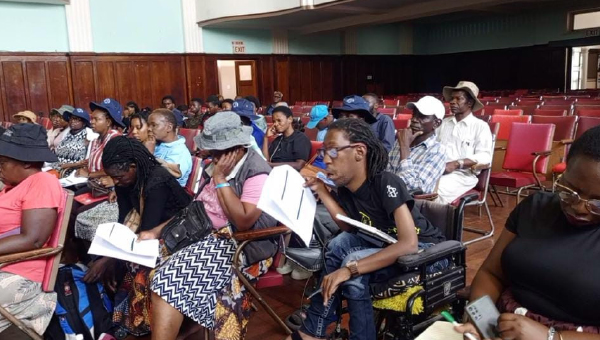
In Bulawayo, this matter has come into sharp focus as the local authority prepares its 2027 budget, with persons with disabilities (PWD) warning that the proposed spending priorities could leave some residents struggling to access essential services and participating meaningfully in the city’s development.
At a municipal budget consultation meeting held last week, disability rights advocates and residents challenged the Bulawayo City Council’s proposed US$457,88 million budget, raising concerns over an allocation of just US$8 000 for disability-related needs alongside a proposed average 74 percent increase in residents’ rates.
Their concerns highlight a critical dimension of urban development: the need for municipal budgets to respond to the different needs and barriers to access experienced by residents rather than treating the population as having uniform needs.
As cities pursue modern infrastructure, improved service delivery and technology-driven solutions, gender-sensitive and disability-inclusive budgeting is increasingly important in ensuring that development benefits all sections of society.
For Bulawayo, the challenge is not only to mobilise sufficient revenue to maintain municipal services, but also to ensure that the resources collected translate into accessible infrastructure, inclusive public facilities and economic opportunities for those who have historically faced barriers to participation.
Disability rights advocate Mr Tsepang Nare said the proposed allocation was insufficient to support meaningful inclusion, arguing that the city could not aspire to modern urban development while residents continued to encounter physical barriers.
“The City of Bulawayo has failed to adhere to minimum standards for disability inclusion. You cannot talk about a modern, smart city of the future when your infrastructure remains a physical barrier. US$8 000 is not a budget for inclusion; it is a token gesture designed to tick a box,” he said.
The concerns raise questions about how inclusion is reflected in municipal financial planning and whether the needs of vulnerable groups are being adequately considered when spending priorities are determined.
A gender-sensitive and inclusive budget goes beyond setting aside money for particular groups. It requires local authorities to examine how decisions on roads, public transport, healthcare, education, sanitation, housing and employment affect different residents and whether the planned expenditure addresses the barriers they face.
For instance, a public facility may be accessible to a person who uses a wheelchair but remain difficult to navigate for someone with a visual impairment. Similarly, a municipal clinic may provide essential healthcare services but still be inaccessible to a deaf patient who cannot communicate effectively with healthcare workers.
These challenges demonstrate why inclusion must be considered from the planning stage rather than addressed as an afterthought once infrastructure and services have already been established.
During the consultative process residents highlighted precisely these concerns, calling for disability inclusion to be integrated into all city departments.
Ms Zodwa Mabhena, a resident said PWD continue to face difficulties securing formal employment and urged the local authority to consider them for casual jobs, including opportunities in the municipal cleansing department.
“We are already struggling with little being done for our plight, therefore the proposed increase of tariffs with nothing tangible for our welfare means that we will be thrown further into poverty, beyond our current realities,” she said.
Her appeal points to the economic dimension of inclusion, where access to employment can help vulnerable households earn an income, reduce dependence and participate more fully in community life. Municipal budgets therefore have implications beyond service delivery. The way councils allocate resources can influence who accesses employment, who benefits from public investment and who remains excluded from the local economy.
Education also emerged as a key concern, with Hope for Inclusion representative Ms Boiputso Nondo urging council to provide specialised learning materials, including large-print textbooks for learners with visual impairments.
“While we appreciate wheelchair ramps, they are not enough, and we want to see inclusion coming to the classroom where necessary learning aids are provided for learners with special needs. Only then can education be inclusive,” she said.
Her remarks underscore the importance of looking beyond visible infrastructure when measuring progress towards an inclusive city.
While ramps and accessible buildings are essential, meaningful inclusion also requires appropriate learning materials, communication support and services that enable residents with different needs to participate on an equal basis.
Healthcare presents a similar challenge. Participants at the consultative meeting raised concerns about communication barriers affecting those with hearing impairments seeking medical attention, warning that these difficulties could compromise patients’ privacy and access to proper diagnosis.
Health services officials responded that municipal clinics had at least two nurses who had undergone basic sign language training, adding that efforts were underway to make health facilities more inclusive and physically accessible.
Although these measures indicate efforts to improve access, the concerns raised by residents point to the need for continued investment in communication support, accessible facilities and services responsive to the needs of different patients.
The proposed rates increase adds another dimension to the debate.
Council is seeking an average 74 percent increase in residents’ rates to cushion rising operational costs and sustain municipal service delivery in 2027. Its Principal Gender, Safety and Health
Officer, Mrs Audrey Manyemwe, told the meeting that the proposed revenue would support services including road rehabilitation, water reticulation, public lighting, health and social services, and environmental management.
She also revealed that the municipal wage bill alone would consume US$117 million of the proposed budget.
These competing demands illustrate the difficult decisions facing local authorities as they attempt to maintain services while responding to residents’ expectations and financial constraints.
However, residents questioned whether the proposed full cost-recovery model could place additional pressure on vulnerable households without sufficiently addressing their needs.
For households already facing economic hardship, higher municipal charges can create difficult choices when income is limited. The effects may be particularly significant for residents who also face barriers to employment, additional costs associated with disability or difficulties accessing public services.
This makes it important for municipal authorities to consider affordability and the distributional effects of proposed charges alongside revenue requirements.
Inclusive budgeting does not necessarily mean abandoning efforts to recover service costs. Rather, it calls for careful consideration of how those costs affect different groups, how public resources are distributed and what measures can prevent vulnerable residents from being left behind.
Mr Craig Biemba also called for simpler processes for registering organisations representing people with disabilities, arguing that bureaucratic barriers made it difficult for them to organise formally and pursue self-help initiatives.
His concerns highlight another aspect of inclusive governance: residents must not only benefit from municipal services but also have meaningful opportunities to organise, participate in consultations and influence decisions affecting their lives.
The participation of women, persons with disabilities and other underrepresented groups in budget consultations is therefore important, but consultation alone is not sufficient. Their concerns must be considered during budget formulation, reflected in allocations where justified and followed through during implementation.
For Bulawayo, the challenge is to translate these concerns into measurable priorities as the 2027 budget process progresses.
The city has an opportunity to assess whether its proposed allocations adequately support accessible infrastructure, specialised learning materials, inclusive healthcare, employment opportunities and other services required by residents with disabilities.
As Bulawayo works towards improving municipal service delivery and modernising its urban environment, the voices raised during the budget consultation offer a reminder that development must be measured by who benefits from it.
A budget that recognises the different needs of residents, addresses barriers to participation and allocates resources according to clearly identified priorities can help ensure that urban progress is both economically sustainable and socially inclusive.