Online Reporter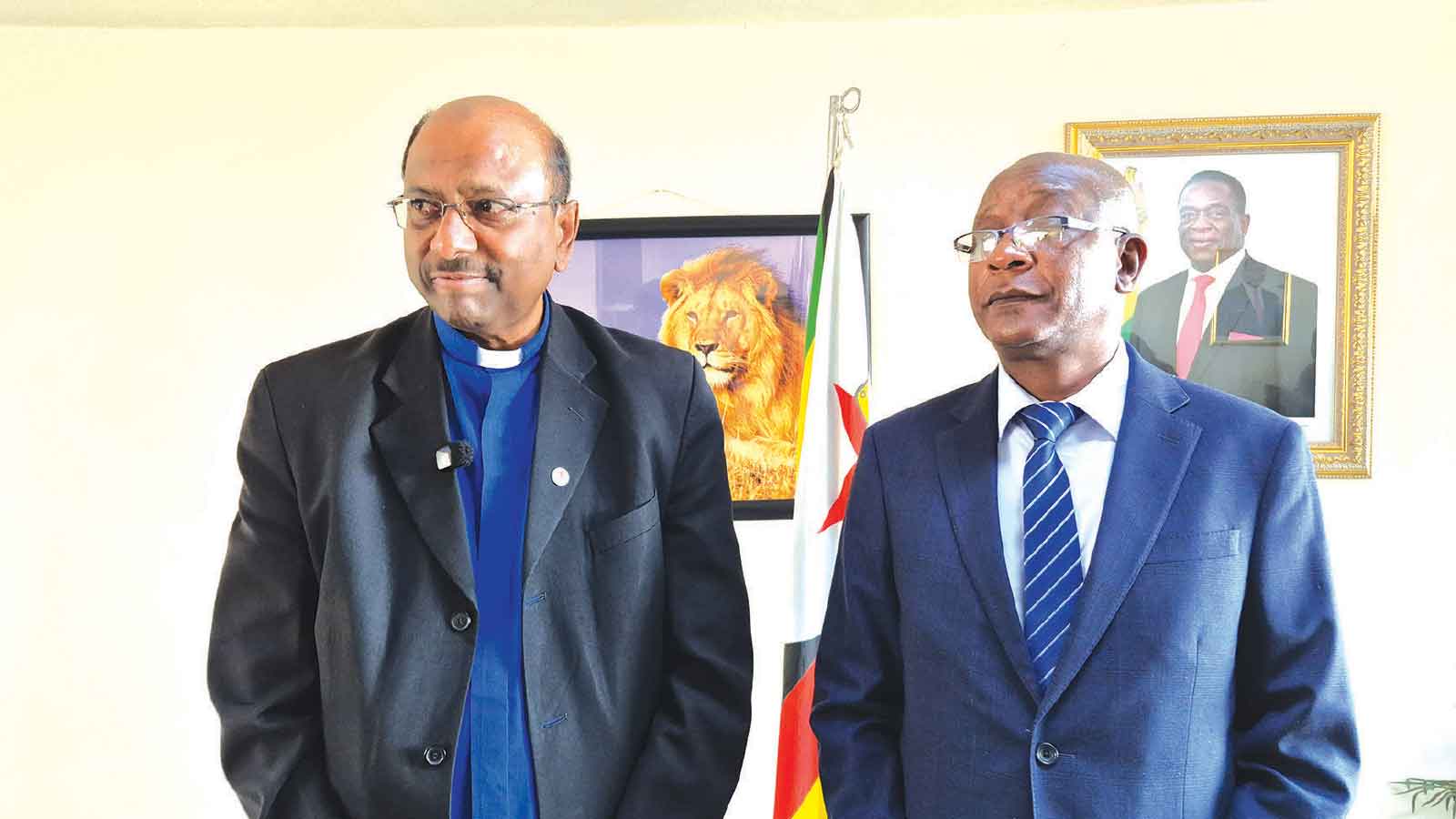
Debra Matabvu
Senior Reporter
THE World Council of Churches delegation has commended Zimbabwe’s Judiciary, describing it as accessible to people from all walks of life, including women and workers.
A WCC delegation, led by its General Secretary, Reverend Professor Jerry Pillay, is in Zimbabwe to attend the 48th General Assembly of the Zimbabwe Council of Churches (ZCC), which started on July 21 and ended yesterday.
The delegation also paid a courtesy call on President Mnangagwa at State House on Thursday.
Speaking to the media after meeting the delegation in Harare yesterday, Justice, Legal and Parliamentary Affairs Minister Ziyambi Ziyambi said discussions with the delegation centred on Zimbabwe’s judicial system and the measures that have been put in place to ensure access to justice for different sectors of society, including women and the labour force.
“By and large, we discussed issues of access to justice, issues to do with the independence of the judiciary and issues to do with women’s rights,” he said.
“We managed to have a conversation on those issues and explain our systems. We also had a conversation on how Government can collaborate with the Zimbabwe Council of Churches and the World Council of Churches in terms of peace and reconciliation.
“We are there to collaborate with the Zimbabwe Council of Churches as we believe that the work of churches is to ensure that there is peace and harmony in the country, and they have helped us a lot in that regard.”
Also addressing the media at the same occasion, WCC General Secretary Rev Pillay said he was impressed with the judicial system in the country.
“Today we had a great opportunity to have a really wonderful conversation with the Minister of Justice and we focused on the judicial system,” he said.
“We asked some questions about the independence of the judicial system in this country. We asked questions about access to the judicial system and the administration of justice. We asked questions about freedom of religion, freedom of assembly and freedom to protest.
“We asked questions about the constitutional processes in the country. We referred particularly to the recent amendment to the Constitution. We have been told by the Minister of Justice, as we were even told yesterday (Thursday), that the constitutional processes have been followed.”
He added that the conversation with the Minister focused on how the judicial system is being used to reconcile communities across the country.
“We have had discussions with regard to how, in the national spirit, people are brought together and how a justice system works in bringing people into reconciliation and into working together as a nation,” he added.
“We addressed issues of ethnic violence, conflicts and racism, and we have received assurances that those things in this country are being well dealt with.
“We are quite impressed to know that you have a judicial system that is very accessible to the people and that is working well.
“As we have looked at issues of human rights, we had a good conversation on gender-based violence and the rights of women.
“We have been assured that there are many well-established units within the judicial system for people, and for women in particular, to access and receive support.”
He also applauded the labour justice system in the country.
“One of the things that we realise is that people know their rights in terms of labour, and whenever there is a need to speak out about being treated unfairly, they have access to systems, places and information where they can pursue their own cases.
“In addition to that, we have received information about the use of technology, which has created a greater sense of access and enabled information to reach people in Zimbabwe more effectively.
“So, we walk away quite impressed with the judicial system and we have said, and the Zimbabwe Council of Churches has said to me quite strongly, that Zimbabwe is a very peaceful country and we can see the reason why, because you have a good judicial system at work, for which we are grateful.”