Online Reporter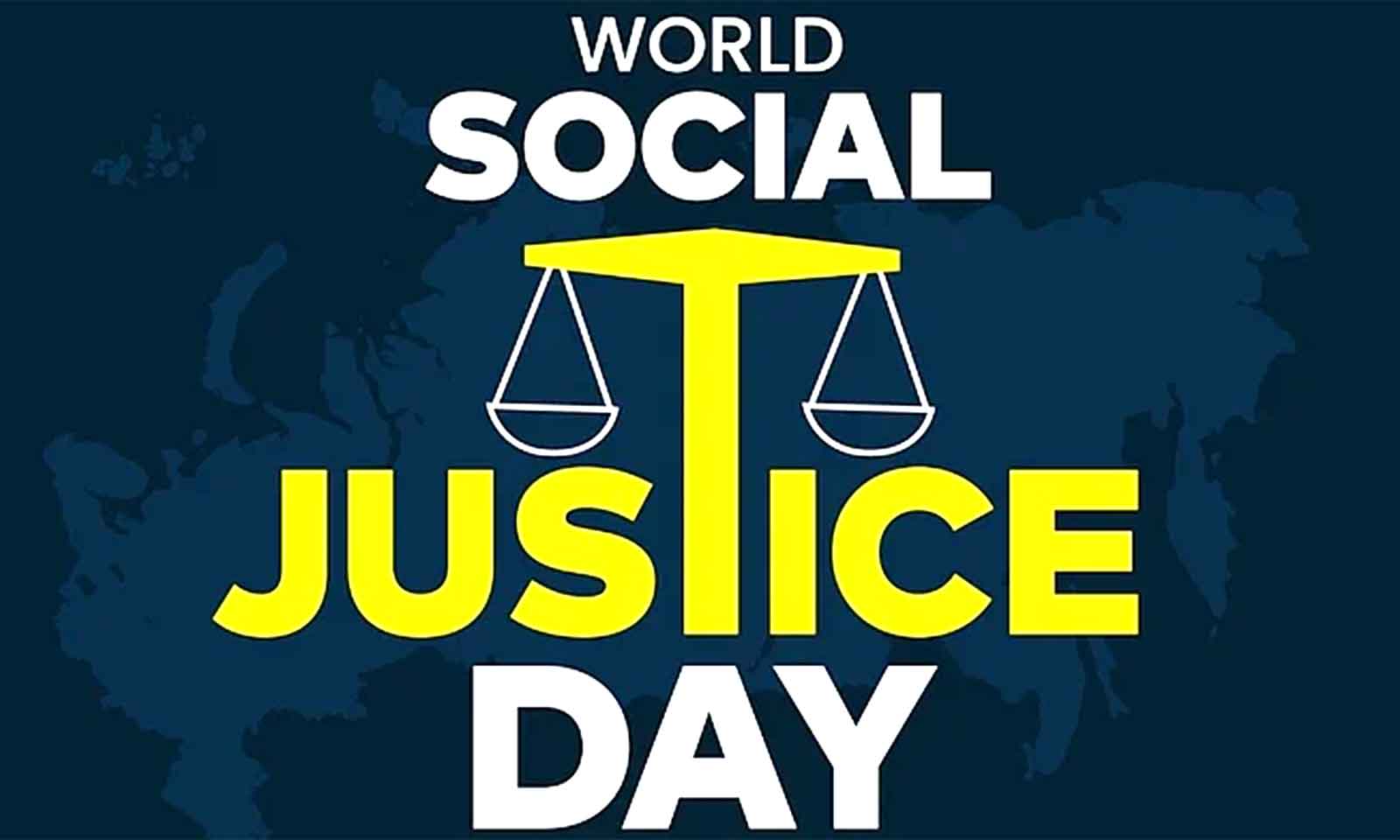
Flora Teckie
Bahá’í Perspective
The World Day of Social Justice celebrated on February 20, reminds us that in order to have international peace, we need the application of justice globally.
Social justice implies that everyone is treated equally and with dignity. It means equality before the law, equal opportunity, and a more equitable management and distribution of wealth.
“The wellbeing of mankind, its peace and security, are unattainable unless and until its unity is firmly established”, wrote Bahá’u’lláh, the founder of the Bahá’í Faith, over 100 years ago.
He also asserted that the chief instrument for the transformation of society and the achievement of unity is the establishment of justice in the affairs of humanity, further stating that, “The light of men is Justice. The purpose of justice is the appearance of unity among men”.
The moral codes and values, based on sectarianism and prejudices that place one group above the other, cannot lead us to social justice for all.
Neither justice for every member of the human family, nor the building of a peaceful world, can be achieved without embracing human diversity. Attainment of global peace is linked to global justice.
It is the requirement of justice that everyone is treated as equals, regardless of race, religion, nationality, gender, or ethnic group.
Need for new way of thinking
To honour diversity in the human family without making differences a cause for conflict requires a new way of thinking, based on the acceptance of the oneness of humankind and respect for the rights of everyone.
“The principle of the oneness of humankind,” in the Bahá’í view, “lies at the heart of the exhortation that we should treat others as we ourselves would wish to be treated. To establish justice, peace and order in an interdependent world, this principle must guide all interactions…”
To eliminate racism, religious prejudice, gender-based prejudice, and xenophobia, we must wholeheartedly embrace the concept of oneness of the human family and treat everyone with dignity and respect.
It is a requirement of justice that everyone is treated as equals, from whatever background they may be. Not by suppression of differences will we arrive at unity, but rather, by an increased awareness of, and respect for, the values of each culture, and indeed of each individual.
According to the Bahá’í Writings, “Justice is not limited, it is a universal quality. Its operation must be carried out in all classes, from the highest to the lowest. Justice must be sacred, and the rights of all the people must be considered”.
The concept of the oneness of humanity goes beyond mere tolerance and advocates a change in attitudes, requiring that an active effort be made towards establishing genuine unity among the nations, races, religions, and ethnic groups.
The Bahá’í Writings state: “Love ye all religions and all races with a love that is true and sincere and show that love through deeds and not through the tongue; for the latter hath no importance, as the majority of men are, in speech, well-wishers, while action is the best”.
Justice must be applied globally
Justice must be applied to everyone globally. Current justice systems in many parts of the world, however, not only overlook, but sanction injustices towards those who are not within their boundaries.
Building a just global order requires daily application of justice by individuals, and a “just legislation in accord with the Divine laws which guarantee the happiness of society and protect the rights of all mankind. . . laws ensuring the integrity of the members of society and their equality before the law”, the Bahá’í Writings state.
There is also a need for educational programmes that foster human solidarity, love for humanity, and service to the common good. Such programmes, in addition to transforming our social and legal systems, would be among the practical steps that can be taken towards achieving social justice and global peace.
Bahá’u’lláh states that in the sight of God, justice is “the best beloved of all things” since it permits each one of us to see with our own eyes rather than the eyes of others, to know through our own knowledge rather than the knowledge of our neighbour or a particular group that we belong to. To be just and decide with fairness, we therefore should be able to investigate the truth in all matters for ourselves, and not imitate others.
Only when everyone in society can trust that they are given equal rights and opportunities, then qualities such as honesty, an affinity for hard work, and a spirit of cooperation can be harnessed and used for the accomplishment of our collective goals.
Social justice, in addition to its basis in equal rights, opportunities and privileges for all, also implies the right of everyone to live in dignity in a just, prejudice-free and peaceful world.
Feedback: [email protected] or [email protected]