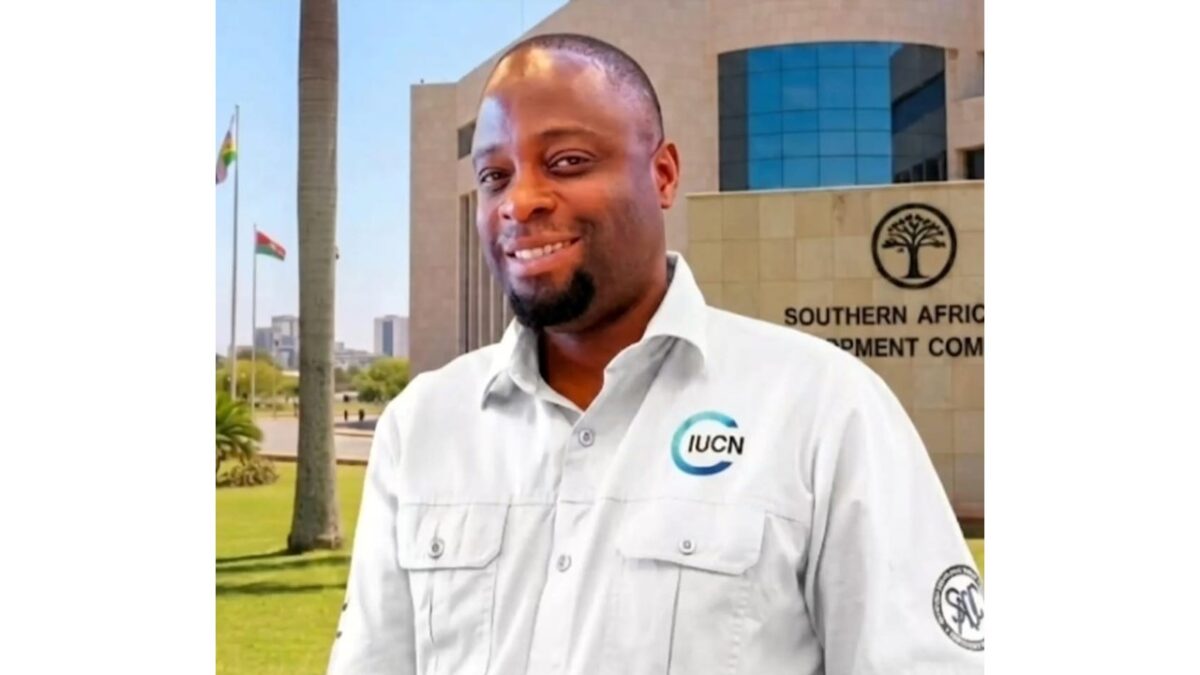
Thupeyo Muleya [email protected]
The Great Limpopo Transfrontier Conservation Area (GLTFCA) is recording major growth, with Zimbabwe, Mozambique and South Africa strengthening cooperation to link wildlife, water, tourism and community livelihoods across a 10.9-million-hectare landscape.
This was said by the GLTFCA International Coordinator, Dr Gwinyai Muti, just after the conclusion of the 2026 SADC TFCA Annual Network Meeting held in Skukuza, Kruger National Park, from 10 to 12 November 2026, under the theme “Investing in People, Nature and Partnerships.”
Dr Muti said the core mission of the GLTFCA is to bridge the gap between ecological integrity and socio-economic empowerment.
“Long-term success across the 10.9-million-hectare landscape relies on actively removing barriers to wildlife movement, strengthening anti-poaching initiatives, developing sustainable tourism, and ensuring local communities directly benefit from conservation efforts,” he said.
“Rooted in the 2002 Trilateral Treaty signed by the Heads of State of Mozambique, South Africa and Zimbabwe, the GLTFCA is now advancing an integrated approach to transboundary landscape planning, supported by 17 distinct land and seascape use plans covering 4.7 million hectares of Protected and Conserved Areas and 6.2 million hectares of Other Effective Conservation Measures.
“Long-term, blended financing for anchor parks — including initiatives from the Africa Keystone Protected Area Partnership and the Legacy Landscapes Fund — must now be leveraged to catalyse broader landscape-level connectivity.”
Dr Muti said a major milestone is the coordination of the Limpopo Tourist Access Facility and the Sengwe-Tshipise ecological corridor, which functionally links Kruger National Park with Gonarezhou National Park.
He said the corridor operates within a Trilateral Pafuri-Sengwe Joint Park Management Committee, comprising all three partner states, and is coordinated through a Joint Operational Plan.
“This connectivity is a major catalyst, stimulating over 188 income-generating activities and livelihood initiatives to ensure border communities are directly integrated into the expanding wildlife economy,” Dr Muti said.
On management effectiveness, Dr Muti said partner states were using localized monitoring frameworks — METT (Management Effectiveness Tracking Tool) and IMET (Integrated Management Effectiveness Tool) — to establish standardized baselines.
“The five national parks anchoring the GLTFCA — Mozambique’s Limpopo, Zinave and Banhine National Parks, South Africa’s Kruger National Park, and Zimbabwe’s Gonarezhou National Park — are demonstrating high management effectiveness,” he emphasized.
“However, the Sengwe-Tshipise corridor currently registers significantly lower assessment scores, as an immediate priority requiring targeted support, resource allocation and capacity-building ahead of the 2026 operational phase.
“Fully unlocking this corridor is critical to leveraging Special Economic Zone incentives and transforming Zimbabwe’s South East Lowveld into a strategic tourism hub.”
Dr Muti said sustaining the momentum generated during the August 2026 Inter-Ministerial Landscape Tour at Makonde Camp was essential to drive the regional wildlife economy and ensure robust, localized community beneficiation.
On water, Dr Muti highlighted progress from the Joint RBO–TFCA Working Session, with the GLTFCA advancing a joint freshwater strategy with LIMCOM (Limpopo Watercourse Commission) to co-implement water security and biodiversity goals.
“By aligning these basin-level actions with regional conservation targets, the GLTFCA is pioneering models for integrating payments for ecosystem services, strengthening source-to-sea linkages, and developing joint pipelines to mobilize financing,” he said.
Institutionally, the GLTFCA currently operates through 19 multi-stakeholder governance platforms, including a Trilateral Ministerial Committee and a fully functional Joint Management Board.
He said institutional stability required fixed, legally registered entities with established banking histories to safely absorb 15-year-to-permanent capital investments.