Online Reporter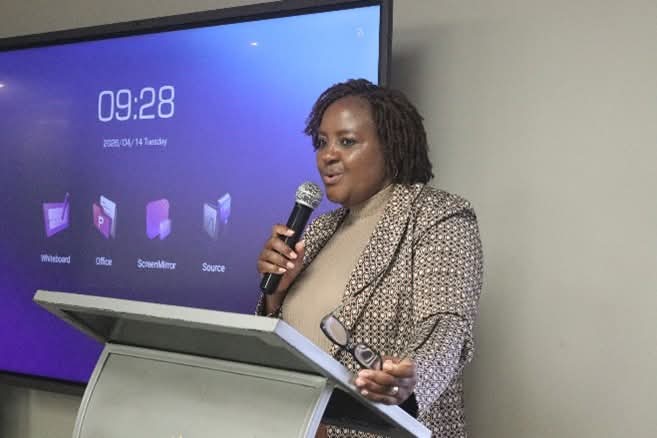
Judith Phiri
Zimpapers Business Hub
The Ministry of Women Affairs, Community, Small and Medium Enterprises Development says it continues to implement programmes that remove barriers to women’s participation in productive sectors, including mining, to promote their contribution to economic development.
This comes at a time when more women are joining Zimbabwe’s mining sector, driven by policy shifts and economic opportunities, increasingly breaking barriers and establishing a powerful footprint across the mining value chain, transitioning from artisanal miners to industrial mine owners and corporate executives.
The mining industry is the cornerstone of the nation’s economy, contributing significantly to the gross domestic product (GDP) and accounting for approximately 75 percent of national exports.
In a speech read on his behalf by Chief Director of Gender and Women Affairs, Mrs Lillian Matsika Takaendisa, at the Women in Artisanal and Small-Scale Mining Conference, held alongside Mine Entra 2026 on Thursday, Permanent Secretary Dr Mavis Sibanda, said the mining sector has been identified as one of the strategic sectors capable of transforming the livelihoods of women.
“Although mining has traditionally been a male-dominated industry, Zimbabwe is witnessing encouraging growth in the participation of women across the mining value chain.
“Women are increasingly taking up roles as mine owners, prospectors, small-scale miners, mineral processors, equipment suppliers, transport operators, jewellery manufacturers, mineral traders and providers of various mining support services, demonstrating their growing contribution to the development of the sector and the national economy,” she said.
“According to Government estimates, women constitute approximately 20 percent of participants in Zimbabwe’s artisanal and small-scale mining sector, although they remain concentrated mainly in lower levels of production and informal activities.”
She said women are increasingly participating not only in extraction but also in mineral processing, value addition, equipment hiring services, environmental management and mine support services.
Despite this progress, the permanent secretary said there remains considerable scope to expand women’s participation throughout the mining value chain.
“As Government, we believe this is not merely a gender issue; it is an economic imperative. Increasing women’s participation in mining will contribute towards increased household incomes, employment creation, poverty reduction and inclusive economic growth.
“The Ministry of Women Affairs, Community, Small and Medium Enterprises Development is mandated to promote gender equality and women’s socio-economic empowerment,” she added.
“Guided by the Constitution of Zimbabwe, Vision 2030, National Development Strategy 2 (NDS2), the National Gender Policy and the recently reviewed National Broad-Based Women’s Economic Empowerment Framework, the Ministry continues to implement programmes that remove barriers to women’s participation in productive sectors, including mining and promote their full contribution to national development.”
She said the mining sector has been identified as one of the strategic sectors capable of transforming the livelihoods of women through entrepreneurship, decent employment and wealth creation.
Dr Sibanda said the Ministry continues to work closely with the Ministry of Mines and Mining Development, mining institutions, development partners and private sector players to ensure that women are not left behind.