

 Online Reporter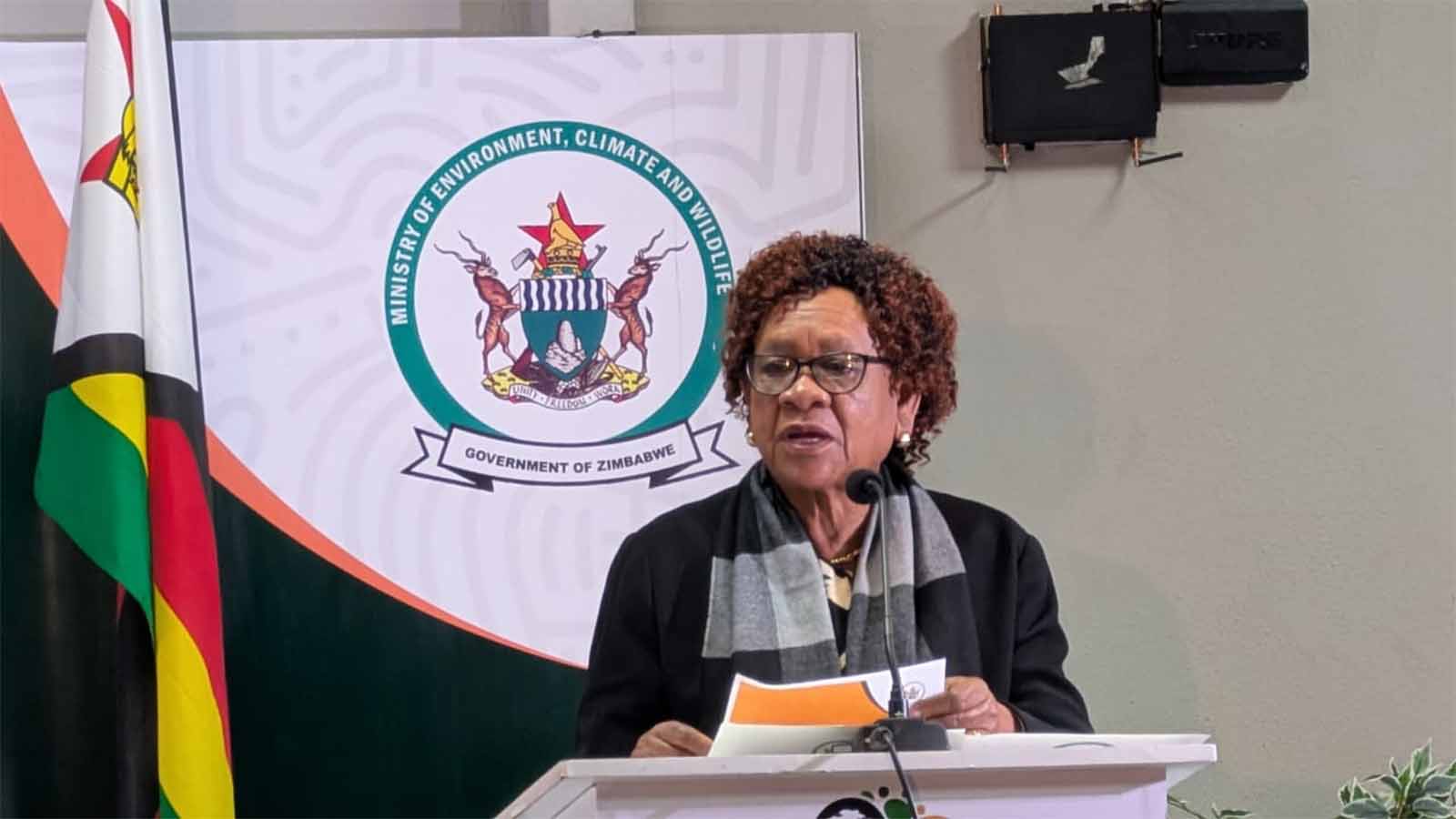
Ivan Zhakata
Herald Correspondent
GOVERNMENT has called for greater community benefits from natural resources and said people living alongside wildlife and other natural resources should derive meaningful value from conservation efforts.
Environment, Climate and Wildlife Minister, Dr Evelyn Ndlovu, said communities should be at the centre of conservation and sustainable utilisation of the country’s natural resources.
Speaking at the national convention on the future of community-based natural resources management in Zimbabwe held in Harare, Minister Ndlovu said community-based natural resources management was critical to promoting sustainable livelihoods while safeguarding biodiversity.
“Community-Based Natural Resources Management is not merely a policy approach, it is a philosophy that places communities at the centre of conservation,” she said.
“By empowering local custodians of land, wildlife and forests, we ensure that the benefits of sustainable management are shared equitably, thereby enhancing livelihoods while safeguarding biodiversity.”
Minister Ndlovu said the country’s biodiversity economy presented opportunities for communities to benefit directly from conservation efforts while stimulating local economies.
She said sustainable community conservancies could become engines of rural development by providing income, employment and social services while preserving ecosystems for future generations.
“Community conservancies, when managed sustainably, become engines of rural development-providing income, employment and social services, while simultaneously preserving ecosystems for future generations,” she said.
Minister Ndlovu said a robust community-based natural resources management strategy aligned with national development priorities was crucial to achieving Vision 2030.
She said the Zimbabwe Parks and Wildlife Amendment Act, the National Wildlife Policy and the recently developed Human-Wildlife Conflict Strategy provided a framework for strengthening conservation and community participation.
“The Zimbabwe Parks and Wildlife Amendment Act and the National Wildlife Policy provide the legal and policy backbone for our conservation efforts,” she said.
“These instruments affirm the principle of shared custodianship and recognise the role of communities in managing flora and fauna.”
Minister Ndlovu said the Human-Wildlife Conflict Strategy provided a comprehensive framework for mitigating challenges faced by communities living adjacent to protected areas.
She said the strategy emphasised proactive measures including improved land-use planning, early warning systems, compensation mechanisms and community education.
“By linking CBNRM to this strategy, we ensure that communities are not only beneficiaries of conservation but also protected from its unintended risks,” she said.
Minister Ndlovu called for stronger partnerships among Government, communities, civil society, the private sector and development partners.
“Government alone cannot achieve the ambitious targets of sustainable development; it is through multi-stakeholder platforms that bring together communities, civil society, the private sector and development partners that we can succeed,” she said.
She commended the Zimbabwe Environmental Law Organisation, Maliasili, World Wide Fund for Nature, ZimParks and other stakeholders for supporting efforts to strengthen natural resources governance.
Parliamentary Portfolio Committee on Environment, Climate and Wildlife chairperson, Cde Sam Matema, said Zimbabwe needed to critically assess its journey in community-based natural resources management and determine the best way forward.
Cde Matema said stakeholders should establish where the country was, where it wanted to go and how best it could reach its desired destination.
He said establishing a baseline and responding to challenges affecting communities would be critical to achieving success.
Cde Matema said Parliament would continue playing its role through legislation, budget allocation and oversight to ensure environmental programmes were adequately supported.
“As a committee, we are here to be working with you. We want to run with you across the board,” he said.
Cde Matema also called for greater participation by the private sector and development partners in environmental conservation.
He said climate change was real and its effects were being felt across the globe.
“Climate change is both a threat multiplier and a multiplier of opportunities,” he said.
Cde Matema said stakeholders should consider the impact of community- based natural resources management on society, the economy and ecological systems.
In a speech read on his behalf, Harare Metropolitan Provincial Affairs and Devolution Minister Charles Tavengwa said communities should remain central to the conservation, management and sustainability of Zimbabwe’s natural resources.
Minister Tavengwa said community-based natural resources management was aligned with the national mantra that “a country is built by its own people” and was critical to the attainment of Vision 2030.
“Communities must therefore remain central to the conservation, management and sustainability of Zimbabwe’s natural resources,” he said.
Minister Tavengwa said community-based natural resources management could contribute to inclusive development, poverty reduction, environmental stewardship, improved livelihoods and economic growth.
He said the approach also supported the objectives of the National Development Strategy 2, particularly climate resilience, sustainable environmental management, food security, employment creation and inclusive economic growth.
Minister Tavengwa said community-based natural resources management should not be confined to rural areas, but should also encompass urban and peri-urban natural resources.
“Ecosystems such as Lake Chivero, wetlands, rivers and green spaces are essential to the health, economy and well-being of our communities. Their protection requires collective responsibility, strong partnership and practical solutions,” he said.
He said the country needed to address challenges including human-wildlife conflict, pollution and wetland degradation.
Minister Tavengwa said the convention provided stakeholders with an opportunity to reflect on Zimbabwe’s community-based natural resources management journey, share lessons and develop a practical roadmap towards a stronger and more sustainable strategy.
Traditional leaders also pledged their support for Government’s efforts to strengthen community-based natural resources management.
Senator Chief Chundu, born Abel Mbasera, said traditional leaders welcomed Government’s commitment to strengthening community-based natural resources management, greater devolution, tackling human-wildlife conflict and increasing community benefits.
He said communities depended on wildlife, forests, water and grazing land for their livelihoods.
“When tourism and hunting revenue comes back to the community, we build clinics, we sink boreholes and we pay school fees. When elephants raid crops, our people suffer,” he said.
Chief Chundu said the Government’s commitment to reviewing policies and bringing more benefits directly to communities has given traditional leaders hope.
“On behalf of my fellow chiefs, headmen and villagers, I pledge our full support. We will mobilise our communities to protect, embrace sustainable resource use and work with ZimParks, RDCs and our partners,” he said.
He, however, urged Government and conservation authorities to continue listening to communities living alongside wildlife.
“No conservation can succeed without the people who live with the wildlife,” he said.


 Bongani Ndlovu