Online Reporter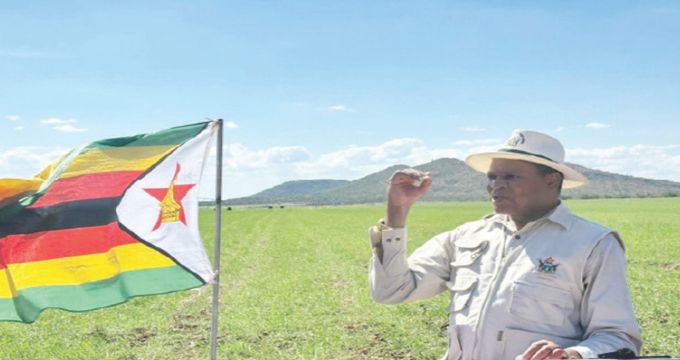
Patrick Chitumba, [email protected]
GOVERNMENT has assured winter wheat farmers of adequate electricity and fertiliser supplies for the 2026 production season as the country targets to put 125 000 hectares under wheat.
Speaking to journalists on the sidelines of the recent Midlands Province Winter Wheat Pre-Planting Seminar at DCK Farm in Kwekwe, Agriculture, Mechanisation and Water Resources Development Minister Dr Anxious Masuka said power supply arrangements have been secured in coordination with the Ministry of Energy and Power Development.
“Adequate electricity will be made available while fertiliser supplies have been set aside for the 2026 winter wheat crop production this season. We require 150 megawatts. The Minister of Energy and Power Development, July Moyo, has generously given us 125 megawatts that have already been ring-fenced,” he said.
Dr Masuka said improved water levels at Kariba Dam and increased power generation at Hwange Thermal Power Station were expected to stabilise electricity supplies throughout the winter cropping season.
“There is heightened inflows into Kariba, with 40 percent live water compared to 10 percent last year, and Hwange 7 and 8 are producing at the maximum of 614 megawatts a day,” he said.
Dr Masuka said the Government had established a coordination platform bringing together officials from the agriculture and energy sectors to enable a swift response to electricity challenges affecting farmers.
“We have a coordination platform with the Ministry of Energy and Power Development. We also have energy and wheat clusters in the wheat-growing belts, and we have a WhatsApp group that is very active.”
Dr Masuka said farmers experiencing prolonged power outages, if any, were encouraged to report them through the established communication channels.
“If any farmer goes for more than two hours without power, they must activate that WhatsApp group so that it can be ascertained whether it is a fault or not,” said Dr Masuka.
Speaking on fertiliser availability, he said adequate supplies would be in place to support farmers during the ongoing winter wheat planting season. Dr Masuka said authorities had engaged fertiliser companies to guarantee that there would be no shortages.
“There have been some concerns regarding top-dressing fertiliser. Today, with fertiliser companies, we are assured that all the fertiliser required for winter wheat will be in the country by the end of next week,” said Dr Masuka.
He said the availability of fertiliser was critical in supporting the country’s winter wheat production target of 662 500 tonnes.
Meanwhile, Dr Masuka said the country is projecting a grain surplus of between 550 000 and 900 000 tonnes as Government intensifies efforts to strengthen food security through increased agricultural production.
He said Zimbabwe remained food-secure following improved harvests and strategic grain production planning.
“We require about 2,4 to 2,5 million metric tonnes for both human and animal consumption, and collectively we will have just under three million metric tonnes in storage,” said Dr Masuka.
He said the projected surplus would depend on consumption patterns, adding that Zimbabwe’s average consumption rate remains below regional and international averages.
“The actual consumption scenario for Zimbabwe is 7,7 kilogrammes per person per month, against the SADC average of 8,5 kilogrammes per person per month and the FAO international average of 10 kilogrammes per person per month,” he said.
Dr Masuka said despite rising fuel costs, supplies remained available, while Government had mobilised resources to deal with migratory pests such as quelea birds that threaten grain crops.
He said the Government had approved a planning and pre-planting producer price of US$451 last season to cushion farmers against rising production costs.
“We have already taken into consideration the increased costs for fuel and fertiliser so that farming can become viable and profitable,” he said.