Online Reporter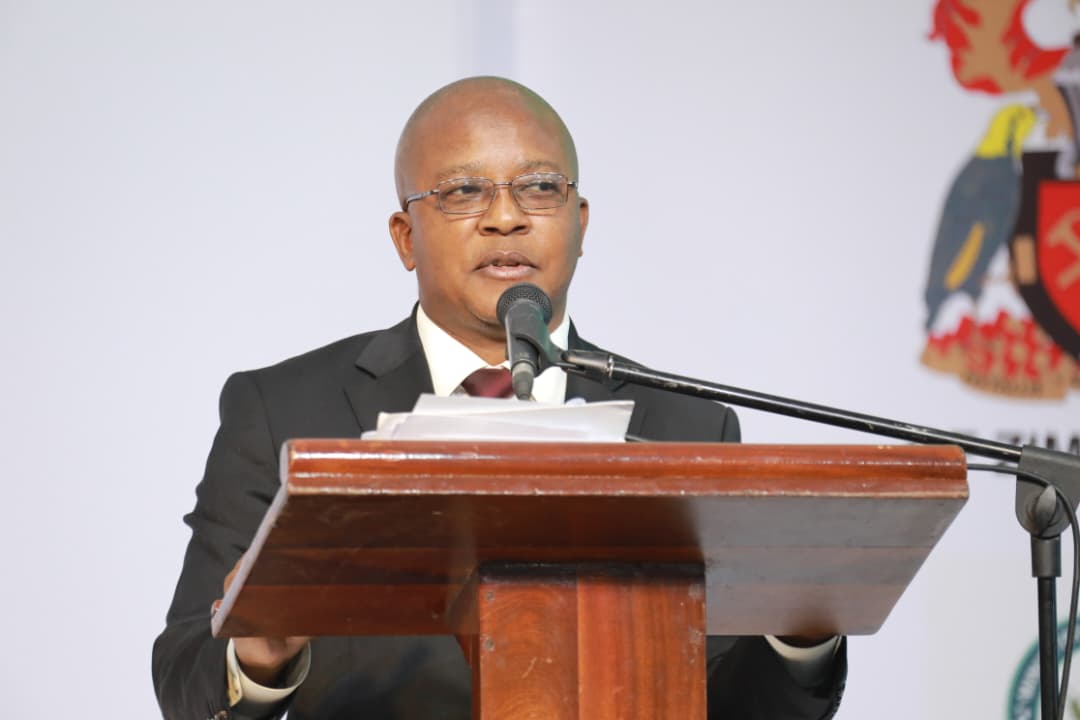
Sikhulekelani Moyo
[email protected]
THE Government is rebuilding Zimbabwe’s geological database, modernising mining title administration and introducing targeted incentives to attract exploration finance as it seeks to unlock new mineral discoveries and drive industrial growth.
Mines and Mining Development Minister Dr Polite Kambamura said Zimbabwe has world-class geology and skilled human resources but requires increased exploration financing and reliable geological data to convert its mineral potential into new mines and industries.
Addressing the Exploration Symposium at Mine Entra 2026 in Bulawayo, Dr Kambamura said exploration finance remained critical in unlocking the country’s mineral wealth.
“We have the geology, we have the human capital, what we now need is exploration finance.
“Streaming finance, equity, shares, loans, need to flow to Zimbabwe. That’s why we are gathered here,” he said.
The Minister highlighted Zimbabwe’s vast mineral endowment, including the 550km Great Dyke, which hosts some of the world’s most significant platinum group metals and chromite deposits, gold-rich Archaean greenstone belts, as well as lithium, tantalum and tin-bearing pegmatites.
He said the country also has deposits of diamonds, nickel, copper, graphite, cobalt, iron ore, phosphate, rare earth elements and other industrial minerals.
However, Dr Kambamura said Zimbabwe’s geological knowledge base had suffered setbacks over the years, with some reports, maps, drill logs and institutional knowledge becoming fragmented or ending up in private archives.
“During the years immediately preceding and following our independence, geological reports, maps, drill logs, symbols, institutional memory may have been taken out of the country. Some knowledge became fragmented, some remain in private archives,” he said.
He said Government was now moving to rebuild the country’s geological memory using modern technology.
“Let us be transformed by the renewal of our minds. This is the time to rebuild Zimbabwe’s geological memory and to build it even better with the aid of new technologies,” said Dr Kambamura.
For the past three decades, he said, systematic national exploration had been below potential, prompting Government to adopt a technology-driven approach involving high-resolution airborne magnetic and radiometric surveys, gravity and electromagnetic surveys, satellite and hyperspectral imagery, drones, 3D modelling and artificial intelligence.
He said artificial intelligence would complement, rather than replace, geologists by helping them analyse large volumes of geological information.
“AI will not replace geologists. It will help the geologists integrate decades of maps, assays, structures, and remote sensing data at a speed no human team could actually achieve unaided,” he said.
Dr Kambamura outlined Government’s priorities, including expanding the pipeline of investable exploration opportunities, diversifying mining beyond existing districts, reducing the time taken to convert exploration rights into production and preserving exploration data as national knowledge.
He said Government also wanted to link mineral discoveries to beneficiation to create jobs, increase exports and promote broad-based economic growth.
On incentives, the Minister said prospecting expenditure, including surveys, was deductible, while qualifying costs could be carried forward against future mining income.
He added that capital equipment could access customs duty relief and VAT deferment, with the Zimbabwe Investment and Development Agency (ZIDA) facilitating investment entry.
However, Dr Kambamura acknowledged that tax incentives alone did not address the financing challenges faced by pre-revenue exploration companies.
“A tax reduction, which can only be used after profits arise, is not the same as cash in the hands of a pre-revenue junior today.
“That financing gap remains part of our ongoing policy framework,” he said.
Government is also modernising the mining cadastral system to ensure mining rights are clear, secure, searchable and transferable.
“Mining rights are development assets, not certificates for indefinite speculation. We seek security for the serious explorer and use it or lose it for speculative title,” said Dr Kambamura.
Further measures under consideration include co-funding of drilling and geophysical surveys, a dedicated junior exploration incentive and a project preparation facility.
The Minister said Zimbabwe’s investment policy would continue to reserve small-scale gold mining of up to 20 claims for citizens while welcoming domestic and international investment in large-scale mining.
“This is not a closure of Zimbabwe to mining investment. It is a clear allocation of space. Citizen enterprise at small scale, domestic and international capital is welcome at the large scale,” he said.
Dr Kambamura cited the lithium policy as an example of Government’s push for beneficiation, noting that restrictions on raw ore exports were intended to promote processing into concentrates and lithium salts targeted by January 2027.
“Mineral production must build industrial capability inside this country. This is in line with Vision 2030,” he said.
He said Zimbabwe was drawing lessons from regional best practices, including public geoscience and junior financing models from South Africa, policy stability from Botswana, capital recovery frameworks from Zambia and permitting systems from Côte d’Ivoire and Senegal.
“Let Mining Entra 2026 mark the point at which Zimbabwe moves from speaking mainly about the minerals we have mined before to systematically discovering our future minerals,” said Dr Kambamura.