

 Online Reporter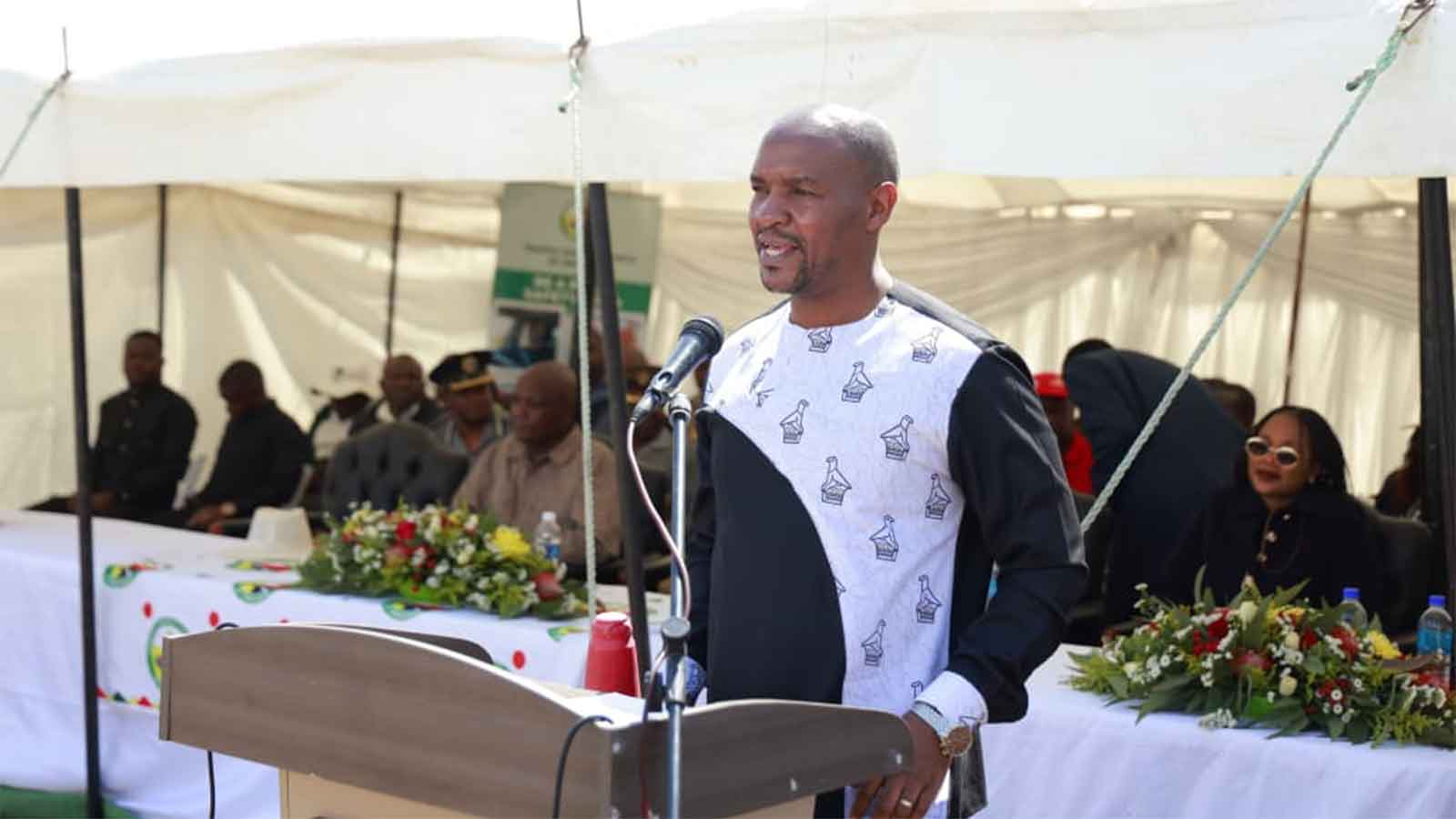
Freeman Razemba
Senior Reporter
ROAD traffic crashes are costing Zimbabwe an estimated US$400 million annually, underscoring the urgent need for stronger road safety measures, Transport and Infrastructural Development Minister Advocate Felix Mhona has said.
Speaking during the launch of the 2026 Heroes and Defence Forces Road Safety Enforcement and Educational Awareness Campaign in Mazowe, Minister Mhona said
the Government of Zimbabwe, under the Second Republic led by President Mnangagwa, regards road safety as a national priority.
The campaign is running under the theme, “Be patient, or you could end up a patient in hospital”.
“The Government of Zimbabwe, under the Second Republic led by our visionary leader, His Excellency, the President of the Republic of Zimbabwe, Cde Dr. Emmerson Dambudzo Mnangagwa, regards road safety as a national priority.
“This is in recognition of the inverse relationship between poor road safety standards and the country’s development, economic productivity, and the well-being of its citizens.
“Conscious of the fact that the cost of road crashes in Zimbabwe averages around USD400 million per year, the Government therefore remains committed to implementing policies and programmes that promote safer roads, save lives, and support sustainable national development.
“We believe the opportunity cost of the high rate of accidents — money spent supporting accident victims, lost production, supply chain delays, and damage to property — is simply too high and must be avoided at all costs.”
He said every road traffic crash poses a significant burden on their healthcare facilities, emergency services, families, employers, and the national economy at large.
“Effective prevention saves lives, protects livelihoods, reduces pressure on public services, minimises economic losses, and preserves valuable life and national resources.
“The Government of Zimbabwe is therefore committed to investing in programmes and policies that enhance the safety of our transport system,” Minister Mhona said.
“In this respect, I applaud the tireless efforts of the Traffic Safety Council of Zimbabwe in championing safer roads by implementing road safety education, defensive driving training, public awareness programmes, school road safety programmes, research, and stakeholder engagement.”
He said he believed it was not far-fetched for Zimbabwe to achieve the target of reducing road traffic crashes, injuries and deaths by 50 percent by 2030.
Minister Mhona said the Government remains dedicated to improving the capacity for traffic law enforcement in innovative ways and by leveraging technology.
“I am therefore delighted to note that, under the Smart Policing Programme, the Zimbabwe Republic Police have undertaken a massive deployment of cameras at numerous signalised intersections to assist in the management of traffic on our roads. I am pleased to note that several cameras have already been installed, and work is still underway to install even more at other identified sites.
“As road safety champions, we await with bated breath the commissioning and full utilisation of the Smart Traffic Management System, which we believe will significantly improve our ability to bring traffic rule violators of various categories to account, without fear or favour,” he said.
“There is no doubt that, once implemented, the sobering effect of paying fines will help traffic regulatory authorities curb traffic violations and encourage responsible driving practices.
“This will increase adherence to traffic laws, discourage speeding, and increase accountability for drivers. It is a testament to the Government’s dedication to improving road safety through technology and protecting lives on our roads.”
Minister Mhona said the smart traffic management system and other smart policing methods adopted lately by Government are fully aligned with the National Development Strategy (NDS)2, which recognises transport and road safety as a catalyst for economic transformation and sustainable development. NDS2 seeks to develop a transport system that is safe, efficient, reliable, modern, and inclusive.



