Judith Phiri
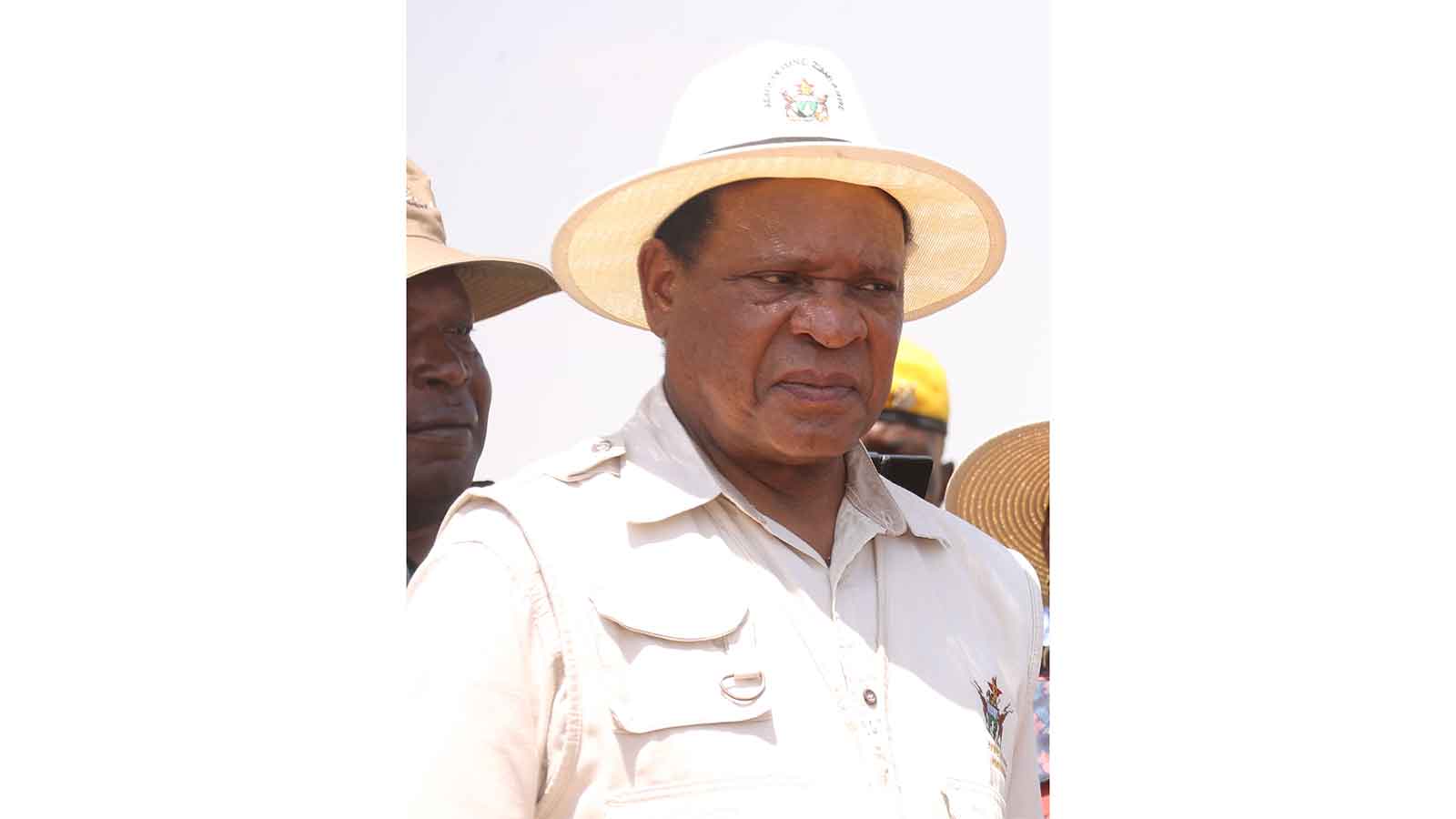
AGRICULTURE, Mechanisation and Water Resources Development Minister Dr Anxious Masuka has reassured the nation that inputs distribution for the 2026/27 summer cropping season is well on course, ahead of the predicted El Niño phenomenon.
In an interview on the sidelines of the Ministry’s five-day strategic planning workshop in Bulawayo yesterday, Minister Masuka said inputs distribution was underway, and they were stepping up efforts to meet deadlines.
“Inputs distribution is well on course: about 100 percent maize and top dressing fertiliser, just under 30 percent of basal fertiliser and liquid lime – we are beginning to get that – and about 25 percent of the sorghum seed.
“We want every farmer to be able to use liquid lime. So the inputs have come through and we launched the national Pfumvudza/Intwasa programme in Masvingo last month,” he said.
“Now Ministers of State for Provincial Affairs and Devolution are doing the provincial launches and the distribution is taking place. We hope that by mid-month to the end of the month all the inputs will have been distributed at ward level.”
Minister Masuka said they were rolling out a comprehensive six-pillar drought-mitigation strategy designed to cushion the nation against the adverse impacts of the El Niño-induced dry spell, anchored by a targeted build-up of 600 000 metric tonnes in the Strategic Grain Reserve.
He said the Meteorological Services Department has predicted that there will be a strong El Niño in 2026-2027, and the first approach is to look at an enhanced Strategic Grain Reserve at national and household levels.
“At national level, we aim to have 600 000 tonnes by August 2027. Currently, we have 352 000 tonnes, and as we complete wheat harvesting, which is going very well, we already have 106 000 tonnes of wheat harvested from 114 000 hectares.
“We think that we will close the year at 450 000 tonnes of grain. You will recall in 2024, we distributed 328 000 tonnes over 10 months to 6,5 million people. So, by the time we exit this year, we will actually have sufficient grain for social welfare purposes for about 6,5 million people, including another five million learners”.
Minister Masuka said as they climate-proof agriculture, they needed to focus on two aspects, the first being agro-ecological tailoring – that what is grown by a farmer must be dependent on the exigencies of the agro-ecological zone.
The Minister said those in regions three, four and five are advised to grow traditional grains because they are more drought tolerant, while there will be attention to matters of Pfumvudza/Intwasa so that moisture can be conserved and farmers can produce successfully even in a drought year.
“We are looking at enhanced livestock mitigation as well. Livestock are very important, especially in the Matabeleland provinces. Of the 5,7 million cattle in Zimbabwe, 2,299 million cattle, based on 2024, have been identified as potentially at risk.
“Now, we are in the process of establishing what we call drought mitigation centres, and we have 1 527 rural wards. We have now established drought mitigation centres in 751 wards and the balance is what we are chasing,” he added.
“At this ward centre, there will be a drinking and feeding place for livestock, a disease control place and, more importantly, a marketing place. We do not want any panic sales of livestock and we do not want livestock to be sold at households in villages.
“We want this to be a structured market system that will take place on a designated day at a ward so that farmers do not lose value for their livestock.”
Minister Masuka said the comprehensive plan also includes coordination, capacity building and early warning systems, as well as a new financing architecture. He said they were looking at insurance not just for crops, but also for cattle for smallholder farmers so that they can protect and insulate farmers as much as possible.
Cloud seeding will be activated from this month onwards to encourage the formation of rainfall and combat the threat of below-normal rainfall and dry spells.