Online Reporter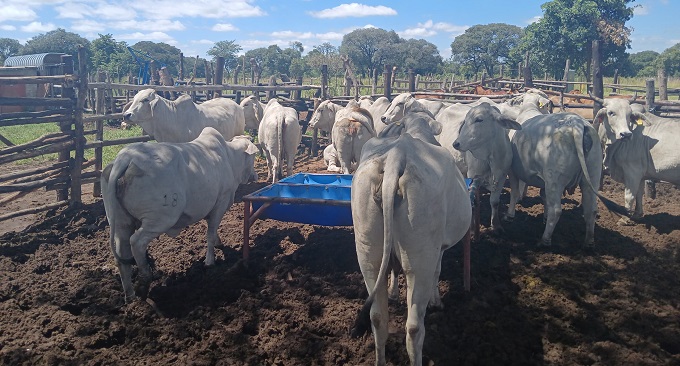
Precious Manomano-Herald Reporter
GOVERNMENT is targeting the vaccination of one million cattle against anthrax in 2027 as part of measures to protect the national herd from disease outbreaks during the anticipated dry 2026/27 agricultural season.
The livestock health intervention is part of a broader Government drought mitigation programme that includes securing water and feed for animals, controlling ticks and strengthening drought mitigation centres.
According to a report presented at the Provincial Working Party Official Meeting on Agriculture held in Kadoma on Thursday last week, Village Business Units (VBUs) with functioning water points are being designated as livestock drought mitigation centres.
The centres will be equipped with livestock watering troughs and feed to help farmers cope with potential water and feed shortages.
The National Tick Control Programme will also use 4 212 dip tanks, spray races, Ward Drought Mitigation Centres and pour-on acaricides to control ticks and reduce the incidence of tick-borne diseases.
The report said livestock body condition was currently rated between three and four nationally, considered satisfactory, but available water was estimated to last only five to six months.
Grazing distances were also becoming a concern in Mashonaland East, Matabeleland North, Matabeleland South, Midlands and Masvingo, where livestock are travelling between two and four kilometres to access grazing.
The national feed requirement for cattle considered to be at risk stands at about 404 730 tonnes against available feed of 261 120 tonnes, leaving a shortfall of about 143 610 tonnes.
The Government is expected to provide about 156 176 tonnes, with farmers and development partners expected to meet the balance.
To improve feed availability, a national mapping exercise is underway to identify existing silage stocks and facilitate redistribution from areas with surpluses to areas facing shortages.
The exercise is being supported by the baling of wheat stover, with baler sets available in all provinces.
Matabeleland South, Matabeleland North and Mashonaland East have up to eight baler sets each.
The report also showed varying performance in hay baling, with Mashonaland West having achieved 129.6 percent of its target, while Manicaland and Matabeleland North had achieved 27.2 percent and 17.2 percent, respectively.
The two provinces were flagged as critical, alongside Masvingo.
Minister of State for Provincial Affairs and Devolution for Mashonaland West Dr Marian Chombo said her province was strengthening drought preparedness, including the establishment and rehabilitation of drought mitigation centres.
Dr Chombo said 86 drought mitigation centres out of a targeted 156 had been established in the province, with efforts continuing to improve the condition of the remaining centres.