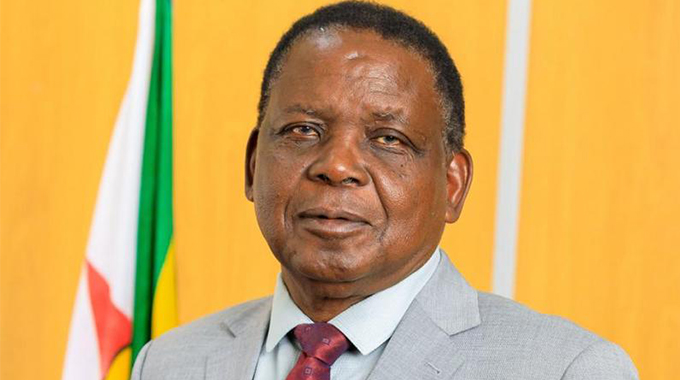
Tawanda Musarurwa in NYANGA
Zimbabwe expects to resume key elements of its national aeromagnetic survey in 2027, with the Government announcing that discussions with the financier to close out the partnership agreement are nearing completion.
The initiative aims to provide mining companies with high-resolution geological data to guide mineral exploration and investment.
An aeromagnetic survey is important for Zimbabwe’s mining sector because it maps hidden subsurface geology, addresses severe historical data gaps and could attract serious investment.
Only about 40 percent of Zimbabwe’s land area has been properly explored due to decades of under-investment and outdated geological records.
Previous large-scale aeromagnetic surveys were conducted around 1980, which has meant that many parts of the country have remained severely underexplored and suffered from a major “data drought”.
Many valuable mineral resources lie buried beneath thick soil, vegetation, or laterite cover that surface mapping cannot detect.
Magnetometers mounted on aircraft measure variations in the Earth’s magnetic field to reveal concealed faults, folds, greenstone belts and intrusive rock bodies that host minerals like gold, nickel, copper and platinum.
The mining sector is strategically important to Zimbabwe’s economy, contributing roughly 12 percent to 15 percent of its Gross Domestic Product (GDP) and accounting for over 75 percent of the country’s total export earnings.
The formal mining sector in Zimbabwe employs approximately 60 000 people, accounting for roughly 3 percent of direct formal employment in the country, while significantly more earn a living from artisanal and small-scale mining.
Deputy Minister of Mines and Mining Development Fred Moyo said the programme’s next phase had been pushed to 2027, partly due to weather-related operational constraints affecting low-altitude aircraft operations.
The survey involves fixed-wing light aircraft and helicopters flying close to the ground, making adverse weather and cloud cover significant operational considerations.
“Discussions with our financial supporter—the closure is basically done,” Deputy Minister Moyo said in an interview on the sidelines of the Association of Mine Managers of Zimbabwe’s 54th annual conference and annual general meeting at Troutbeck Hotel, in Nyanga.
He noted that moving operations to 2027 was intended to avoid complications associated with unpredictable rainfall and cloud cover.
The helicopters are also used to transport cargo, adding another logistical consideration to the programme’s scheduling.
An aeromagnetic survey measures subtle variations in the Earth’s magnetic field using airborne sensors to map underlying geological structures, rock types and mineral deposit signatures across large regions.
Zimbabwe’s Department of Geological Survey originally initiated nationwide airborne magnetic mapping in previous decades, but significant coverage gaps remain—particularly over promising, greenfield frontier areas and complex geological belts.
Modernising this spatial data is central to the Government’s goal of transforming mining into a multi-billion-dollar economic pillar.
The upcoming phase builds on recent efforts to replace legacy, low-resolution mapping with state-of-the-art geophysical datasets.
Upgrading this database is expected to help identify deeply buried mineral formations, unlock lithium and platinum group element (PGE) reserves and locate critical battery metals.
Deputy Minister Moyo emphasised to conference delegates that comprehensive geological planning is fundamental to developing the mining industry, arguing that investment in downstream mining activities delivers limited results without a reliable baseline understanding of the country’s mineral endowment.
“Everything else follows from that. If that plan is not correctly in place, you can do everything else that you want—you won’t win,” he said.
The Government intends to equip the industry with a detailed geological resource database that supports existing operations while attracting new exploration capital.
The deputy minister added that the survey will incorporate advanced geological mapping techniques capable of pinpointing smaller mineral deposits, including uranium occurrences.
Once the data is released, mining companies will be expected to intensify exploration and refine their existing mineral resource statements.
“When we put that geological map before you, we expect you to embark on serious exploration programmes,” he told mining executives.
He called for closer information-sharing between the Ministry of Mines’ Department of Geological Survey and in-house geology departments within mining companies, arguing that accurate mineral data must inform both corporate investment strategies and national economic planning.
To demonstrate deposit scale and project lifespan, mining companies should maintain rolling 5-year and 10-year development plans alongside strategic mineral resource statements.
Deputy Minister Moyo noted that better geological information would also resolve Government concerns over underutilized, large mining claims, as holders will be required to demonstrate how their acreage directly supports long-term production plans.
He further challenged both the Government and the financial sector to build stronger mechanisms for funding mineral exploration, which remains underfunded locally.
“I think when I bump into my colleague, the Minister of Finance, I should whisper to him to say: why is it so difficult for you to insist that every banker must have a dedicated line set for exploration funds?” he said.
The Chamber of Mines of Zimbabwe stressed that improving the broader business climate is equally critical if the country is to translate mineral potential into sustained investment.
Chamber chief executive officer Isaac Kwesu said the miners’ lobby group is actively engaging the Government on security of electricity supply, foreign currency allocation, taxation, mining fees and local content policies.
Reliable and competitively priced power remains a top priority for energy-intensive mining and processing operations.