

 Online Reporter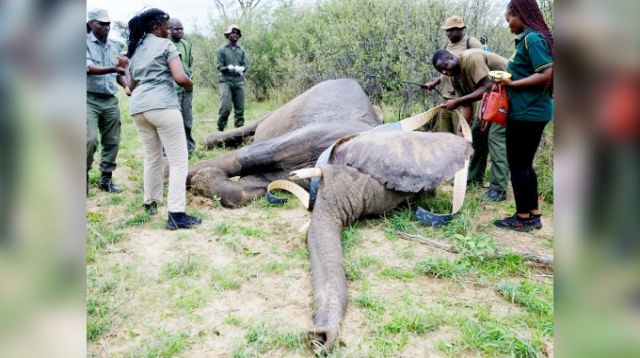
Rutendo Nyeve in Hwange
A pioneering technology-driven conservation initiative has seen more than 20 elephants fitted with advanced GPS collars in Hwange National Park, creating a digital shield to monitor herds and deliver real-time alerts to prevent conflict.
The move is expected to transform the often fraught relationship between humans and wildlife.
Communities on the periphery of Hwange National Park are set to benefit from a sophisticated early warning system, thanks to a high-tech collaboration between the Zimbabwe Parks and Wildlife Management Authority (Zimparks) and the International Fund for Animal Welfare (IFAW).
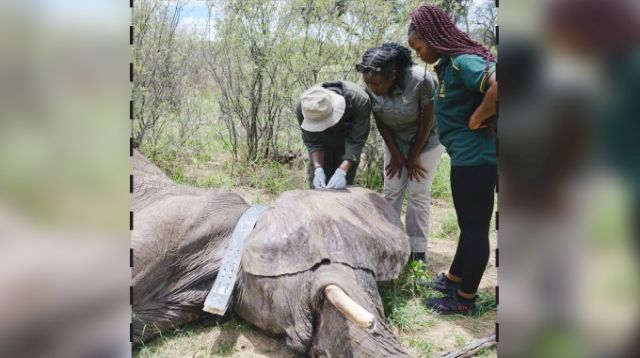
This news crew travelled to Hwange National Park on Sunday to witness the fourth and latest collaring exercise first-hand. The operation, conducted in the Ngamo area near Tsholotsho, targeted eight more elephants, successfully bringing the total number of collared jumbos to over 20.
The exercise involved a highly skilled team of veterinarians, rangers and researchers who worked meticulously to safely dart, collar and release the majestic animals.
At the heart of this initiative is a newly established control centre, manned around the clock by Zimparks authorities.
Here, data transmitted from the GPS collars is monitored on a sophisticated software platform, creating a dynamic map of elephant movement and providing crucial early warnings to safeguard both people and animals.
Zimparks Acting Public Relations Manager, Mr Tamirirashe Mudzingwa, emphasised the proactive nature of the project.
“This is a practical response and an initiative to promote a more proactive approach towards human-wildlife conflict. We create early warning systems that allow us to alert communities any time an elephant breaches the geofence.
Then the necessary reactions will take place to ensure we manage any potential conflicts between humans and wildlife,” said Mr Mudzingwa.
The geofence he referred to is a virtual boundary established using Earth Ranger software. This digital line demarcates safe havens for wildlife, including Hwange National Park, private wildlife farms and forest areas. When a collared elephant crosses this invisible fence, an immediate signal is sent to the control centre.
Mr Augustine Gomba, IFAW’s Assistant Landscape Manager, elaborated on the technical and philosophical thrust of the project, named Room to Roam.
“We are here to capacitate and explore research within the elephant population in Hwange National Park. Our thrust is to target elephants along the boundaries so that we understand their movement into communities.
The goal of Room to Roam is to explore the areas utilised by elephants so that we create safe passages for them while also ensuring safety for human beings. We want to create space for both people and animals.
“The collars are embedded in software called Earth Ranger, where we created a geofence. This geofence alerts Zimparks officials when an elephant crosses the boundary.
Once an animal crosses that line, a signal is sent to the system, alerting those monitoring Earth Ranger that a bull or herd has moved into the communities, allowing for a quick response on the ground,” said Mr Gomba.
The shift from reactive to proactive management is being hailed as a game-changer. For years, communities in Tsholotsho and surrounding areas have borne the brunt of human-wildlife conflict, with elephants regularly raiding crops, damaging grain stores and posing a direct threat to human lives.
The new system has started giving them a critical heads-up, enabling rangers to respond swiftly and guide the animals back to the park or take other preventative measures before any damage occurs.
The collaring initiative represents a significant step forward in conservation, leveraging cutting-edge technology to foster a future where Zimbabwe’s iconic elephant herds and the communities bordering their habitats can thrive in greater safety and harmony.


 Bongani Ndlovu