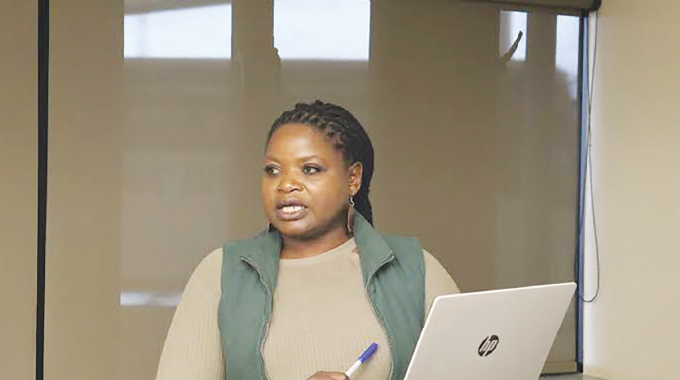
Vusumuzi Dube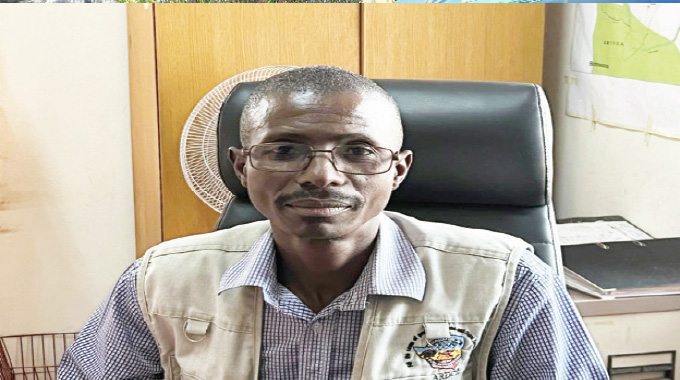
Sukulwenkosi Dube-Matutu, Mat South Bureau
GWANDA Rural District Council has crafted its first-ever disability policy, which will help the local authority to mainstream disability issues to promote inclusivity, equity and rights of Persons with Disabilities (PWDs).
The policy focuses on reducing marginalisation, empowering PWDs and ensuring their participation in local governance and decision-making structures.
This comes as the Government has taken significant steps to promote disability inclusion and empower persons with disabilities, moving towards a rights-based approach aligned with the UN Convention on the Rights of Persons with Disabilities (UNCRPD), which it ratified in 2013.
Among strategies that have been put in place, the Government and its partners are working with local authorities to ensure that new public infrastructure designs and by-laws accommodate PWDs, including the provision of ramps and other accessibility features.
In an interview, Gwanda RDC chief executive officer, Mr Ranganai Sibanda said the main purpose of the policy is to ensure that disability issues are mainstreamed into all policies, plans, programmes and activities of the local authority.
He said the process of developing the disability policy was facilitated by locally-based disability organisation, Nkomwa Foundation Trust.
“As a local authority, we acknowledge the under-representation of people with disabilities in the workplace and therefore, commit to best practice and leadership in implementing a programme for employees with disabilities to ensure the establishment of a workforce that is non-discriminatory and a workplace that shall provide reasonable accommodation.
“Discrimination against employees with disabilities is in contravention of the disability legal frameworks in Zimbabwe. The disability policy was developed in consultation with employees with disabilities and their representative committee,” he said.
Mr Sibanda said the local authority aims to bring about social transformation that shall achieve equity in the workplace by. He said the policy will help to promote equal opportunity and fair treatment in employment by eliminating unfair discrimination.
It will also facilitate the implementation of affirmative action measures to redress disadvantages in employment experienced by designated groups, to ensure their full participation in all occupational categories and levels in the work force.
“The disability policy will helps us mainstream disability in all by-laws, policies, guidelines, programmes and interventions to ensure that they are inclusive of and accessible to persons with disabilities. It will assist us attain by-laws, policies, programs and interventions that directly address the rights and concerns of persons with disabilities.
“The policy will also ensure that all planning, designing, budgeting, implementing, monitoring and evaluation of laws, policies, programmes, guidelines and interventions, across all departments are inclusive of and accessible to persons with disabilities. It will also guide and support self-representation of persons with disabilities,” he said.
Mr Sibanda said once the policy has been implemented there will be mainstreaming of disability components into the council’s policies, plans, programmes and activities. He said PWDs will also be empowered socially and economically.
Mr Sibanda said the local authority will avail resources to remove barriers and establishing appropriate structures for the institutionalisation of disability issues. He said there will also be participation and inclusion of people with disabilities in GRDC agenda, workforce and relevant decision-making structures.
Nkomwa Foundation Trust director, Mr Pick Nkomwa said having disability policies in local authorities will help local authorities to effectively fulfil their service delivery obligation while ensuring that no one is left behind.
He said persons with disabilities in Zimbabwe remain in the periphery of the development trajectory due to difficulties in accessing public spaces, goods and services owing to attitudinal, environmental and institutional barriers.
Overall lack of accessibility considerably limits participation on an equal basis with others, making it more difficult to advocate for inclusion and effectively influence change at policy and legislation levels
“As an organisation based in Matabeleland South, we have noticed that some local authorities didn’t have disability policies while others are using outdated policies. We saw it fit to engage local authorities and so far, we have worked with Gwanda Municipality, which had an outdated policy and Gwanda RDC, which didn’t have a policy at all.
“It’s important for local authorities to have disability policies as this helps to ensure inclusion of PWDs within the workplace. This impact will also translate to inclusion of PWDs in communities as they will be fully represented at local authority level,” he said. —@DubeMatutu



 Online Reporter