Remember Deketeke
Municipal Correspondent
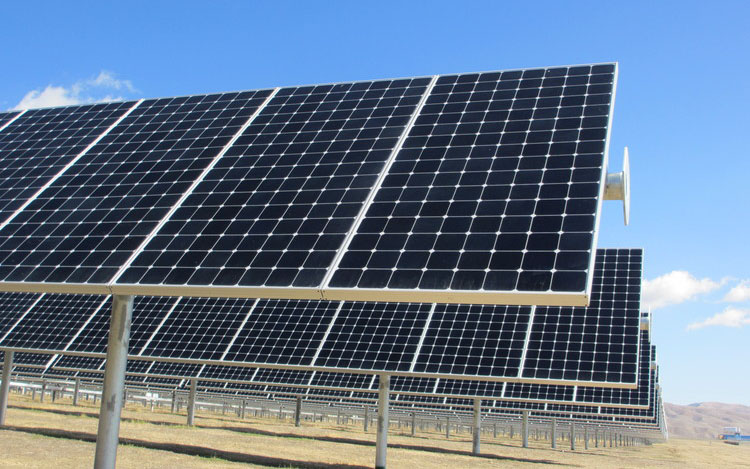
THREE successive Harare City Council budgets have carried ambitious plans for a US$50 million solar power project at Crowborough Farm, but construction has yet to begin, raising questions over the local authority’s ability to turn major capital commitments into completed infrastructure.
The project, initially presented in the 2025 budget as a 50-megawatt facility, was subsequently described as a 100MW solar farm in the 2026 and 2027 budgets, with Council saying it would help reduce electricity costs and provide a more reliable power supply for critical municipal operations.
However, three budget cycles after the project was first announced, there is no visible construction at the council-owned Crowborough Farm, while questions remain over its final capacity, financing arrangements, implementation timetable, and the status of the US$5 million capital injection proposed in 2025.
The development has drawn concern from residents, with the Combined Harare Residents Association (CHRA), saying the repeated inclusion of major projects in budget statements without corresponding implementation risked turning the city’s annual budgeting process into a catalogue of unfulfilled promises.
CHRA chairperson Mr Rueben Akili said Council needed to move beyond announcing projects and ensure that adequate resources and implementation mechanisms were put in place.
“The challenge with our local authority budget is that it becomes more of rhetoric, where statements are just issued without following up on the intended projects highlighted in the budget,” he said.
The solar project was unveiled as one of the signature investments in Harare’s 2025 budget, when the then Finance and Development Committee chairperson, Councillor Costa Mande, said Council planned to establish a 50MW solar plant at Crowborough Farm at a cost of US$50 million.
“One of the signature projects for the 2025 financial year is the Harare 50-megawatt solar plant. The pro-ject involves the establishment of a 50MW solar plant at the council-owned farm in Crowborough at a total cost of US$50 million,” he said.
“In 2025, a US$5 million capital injection has been proposed.”
The project was carried into the 2026 budget, although its proposed capacity had doubled to 100MW.
“Our commitment to sustainability opens doors for investments in solar, wind, and other renewable sources, aligning with global trends towards greener practices. The City is currently finalising external ap-provals for a 100MW solar farm at Crowborough Farm,” Cllr Mande said in the 2026 budget statement.
“The project is expected to contribute immensely to lowering power costs and ensuring continued power supply.”
Council also identified other renewable-energy opportunities, including rooftop solar projects and the use of suitable wetlands for solar farms, with a target of generating 30MW.
The project has now been carried into the proposed 2027 budget, with Council again proposing the devel-opment of a 100MW solar plant at Crowborough Farm as part of measures to reduce its electricity costs.
The repeated appearance of the project in successive budgets, however, has raised questions over what progress has been made since the initial announcement and whether the original implementation mile-stones were achieved.
In particular, the shift from a 50MW facility in 2025 to a 100MW project in subsequent budgets has created uncertainty over the project’s final scope and cost, while Council has yet to demonstrate visible construc-tion activity at the site.
The status of the US$5 million capital injection proposed in 2025 is also unclear from the budget statements provided, raising questions over whether the allocation was released, reallocated, or remains unutilised.
Mr Akili said the solar project should have been treated as a priority given the amount Council spends on electricity to operate essential municipal infrastructure.
“Looking at the US$56 million expenditure which the local authority is using for electricity, it is worrying because this project should have been a priority for the City, especially for its key water treatment plants and sewer reticulation system,” he said.
The solar investment, he said, had the potential to reduce the city’s electricity bill and free resources for other service-delivery priorities.
The implementation concerns come against the backdrop of broader questions over Council’s ability to fi-nance its capital programme.
Mr Akili said the local authority’s revenue collection had remained at between 50 and 60 per cent of pro-jected revenue over the past three years, limiting the resources available for major infrastructure projects.
“Some of these budgets or some of these dreams remain a dream if we do not prioritise them and if we do not put resources towards them,” he said.