Africa Moyo-Deputy National Editor
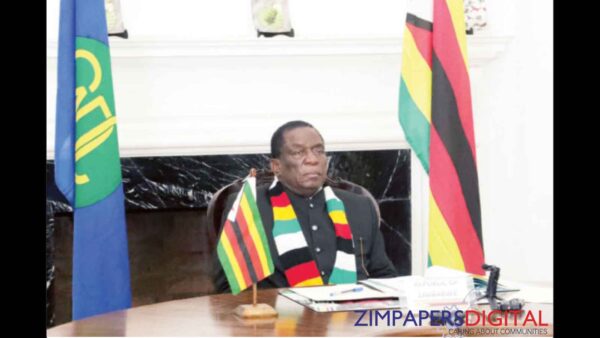
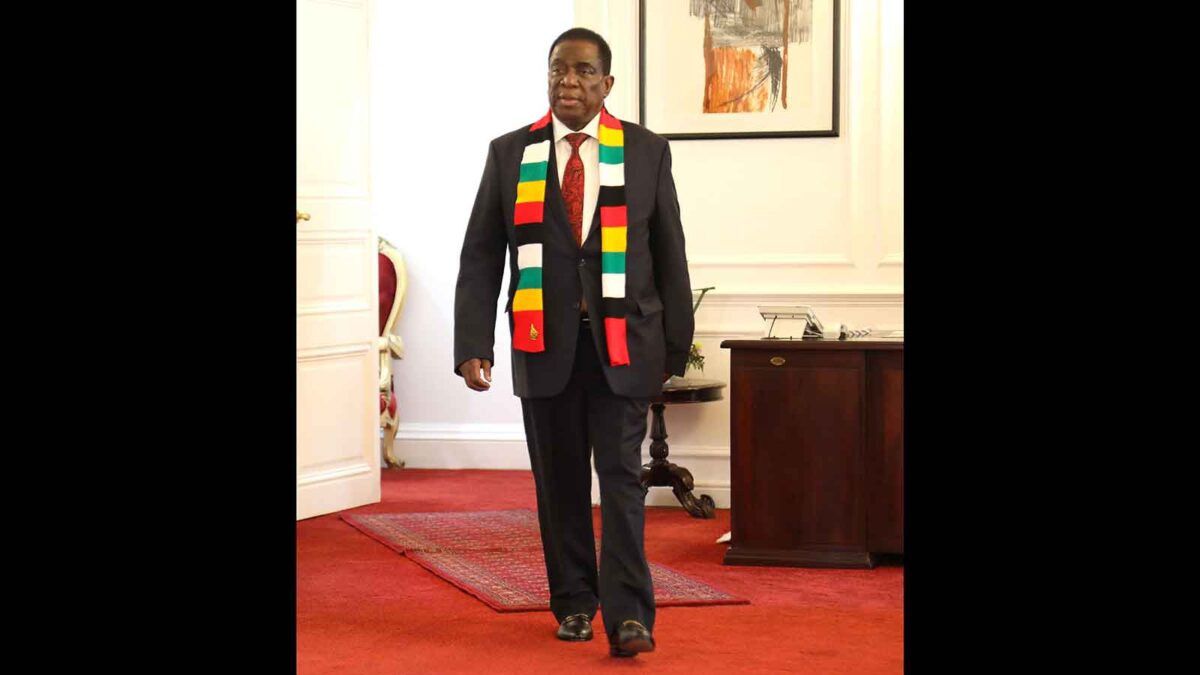
PRESIDENT Mnangagwa will assume the Chairmanship of the Common Market for Eastern and Southern Africa today, bringing to the 21-member regional bloc his recent experience leading the Southern African Development Community, as Zimbabwe steps up efforts to deepen economic integration, strengthen regional cooperation and accelerate industrialisation.
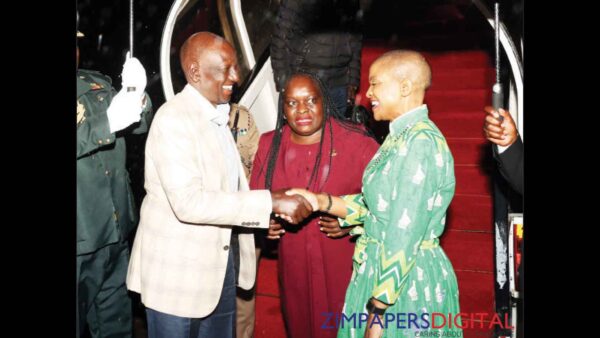
The handover from Kenya’s President Dr William Ruto at the 25th COMESA Heads of State and Government Summit at the New Parliament Building in Mount Hampden, will place President Mnangagwa at the helm of a regional economic community with a combined market of more than 600 million people and an estimated gross domestic product of about US$1 trillion.
The one-year chairmanship comes with responsibility for guiding the bloc’s strategic direction at a time when African countries are seeking to increase trade among themselves, reduce dependence on raw commodity exports and build industries capable of creating jobs and retaining more value from their natural resources.
President Mnangagwa is not new to regional leadership.
During Zimbabwe’s Chairmanship of SADC from 2024 to 2025, he presided over discussions on regional industrialisation, infrastructure development, energy security, food security and economic cooperation.
That experience is expected to inform his stewardship of COMESA, whose economic integration objectives complement those of SADC.
Both organisations seek to strengthen cooperation among member States, expand markets for businesses and promote development through regional economic integration.
His Chairmanship also presents an opportunity to build bridges between the two regional communities, encouraging countries to leverage their respective strengths in agriculture, mining, manufacturing, energy and technology to stimulate trade and investment.
The COMESA Chairmanship is not a ceremonial position. It places the President at the head of the COMESA Authority, the organisation’s supreme policy-making body, comprising the Heads of State and Government of its 21-member countries.
The Authority determines the bloc’s general policy direction, sets strategic priorities and oversees the performance of COMESA’s executive functions.
Its decisions and directives are binding on Member States and the organisation’s subordinate institutions, except the COMESA Court of Justice.
The Chairperson presides over the annual summit, leads deliberations among Member States and helps build consensus on regional priorities.
The office also provides political leadership in advancing decisions agreed upon by the Heads of State and Government. Although the Chairperson provides direction, the role is exercised collectively with other leaders. COMESA decisions are generally reached by consensus, meaning that progress depends on consultation, negotiation and the willingness of member States to translate shared commitments into national action.
The Chairperson, therefore, has to balance different national interests while keeping the bloc focused on its common economic objectives.
The office also works through COMESA’s institutional structures, including the Council of Ministers and the Secretariat, which coordinates programmes and supports implementation.
The summit is running under the theme, “One Market, One Future: Advancing Inclusive Industrialisation, Investment and Regional Integration in COMESA”, placing economic transformation at the centre of Zimbabwe’s incoming leadership.
Speaking at the 19th COMESA Business Forum and Exhibition in Harare on Tuesday, President Mnangagwa challenged businesses to develop practical solutions to obstacles limiting trade and investment among member States.
“Intra- Comesa trade and investment remain significantly low. This gap presents both a challenge, as well as an opportunity,” President Mnangagwa added. “The challenge is to develop solutions that overcome the constraints which inhibit regional commerce, while opportunities lie in developing networks that expand production, investment and trade across our member states and beyond.”
He identified rules of origin, non-tariff barriers, lengthy customs procedures and other costs of doing business as issues requiring concerted action. The President has also called for stronger partnerships between producers, manufacturers, investors and distributors across the region, arguing that national investments should complement one another rather than operate as isolated projects.
The objective is to build regional value chains in which countries contribute their strengths to the production of competitive goods for regional and international markets.
Value addition and beneficiation are expected to feature prominently during Zimbabwe’s tenure. President Mnangagwa has called on businesses to move away from exporting raw commodities towards processing and manufacturing, allowing countries to retain more of the economic benefits generated by their resources.
Zimbabwe’s restrictions on exports of unprocessed lithium ore, introduced as part of efforts to promote local processing, illustrate the approach the President wants to advance.
Similar opportunities exist in agro-processing, leather, textiles, pharmaceuticals, battery materials and clean-energy technologies. Such an approach could help COMESA countries expand industrial capacity, develop skills and create employment, particularly for young people and women. Beyond trade and industrialisation, President Mnangagwa has identified food security, peace and security, and stronger economic cooperation as priorities for his incoming Chairmanship. In an interview in September, he said COMESA members should share expertise and build on their different economic strengths to improve collective development outcomes. He cited Zimbabwe’s agricultural capacity and the mining strengths of other countries as examples of how regional complementarities could be harnessed.
The approach recognises that regional integration depends not only on trade agreements but also on the capacity of member States to produce sufficient food, maintain stable conditions for investment and cooperate when faced with common challenges.
Conflict and insecurity in parts of the region can disrupt supply chains, displace communities and divert resources from development. Strengthening regional dialogue and cooperation will therefore be important in creating conditions for businesses to invest and trade with greater confidence.
Food security is similarly central to economic resilience, particularly as climate-related shocks threaten agricultural production and place pressure on national resources. Sharing agricultural knowledge, expanding investment and improving regional trade in food could help member States respond more effectively to shortages. President Mnangagwa’s recent SADC Chairmanship offers a foundation for pursuing these priorities through regional cooperation. His experience engaging fellow leaders and advancing common development objectives will be relevant as he seeks consensus among COMESA members with different economic structures and national priorities.
The challenge will be to ensure that agreements reached at summit level translate into measurable improvements for businesses and ordinary citizens. With a large population, substantial natural resources and considerable potential for industrial growth, COMESA offers a considerable market for regional producers and investors.
But that potential depends on countries overcoming barriers that make cross-border trade expensive, slow or unpredictable.
As President Mnangagwa assumes the chairmanship, his stated priorities point towards a COMESA that trades more within the bloc, adds value to its natural resources, strengthens food security and deepens cross-border economic partnerships, with the ultimate goal of boosting national revenues, creating jobs and improving livelihoods across the region.