Online Reporter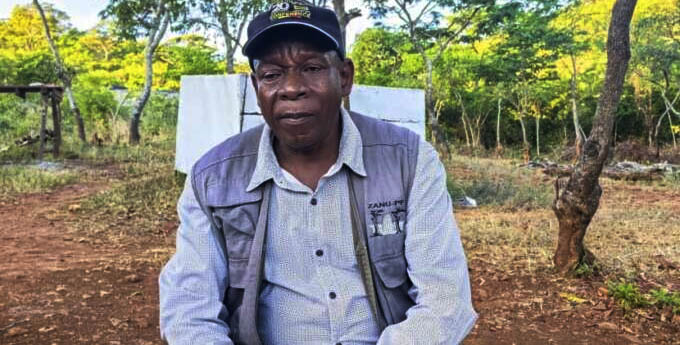
Lovemore Kadzura
Post Reporter
AS Zimbabwe commemorates Heroes Day on Monday, the nation is called upon to reflect, not only on the sacrifices that secured independence, but also on the opportunities those sacrifices continue to create for present and future generations.
Heroes Day is more than a public holiday. It is a solemn reminder of the courage, resilience and selflessness of the men and women — living and departed — who fought for Zimbabwe’s freedom.
Their unwavering commitment, together with solidarity from friendly nations and supporters of the liberation struggle, laid the foundation for a sovereign state with the right to determine its own destiny.
Zimbabweans, particularly youths, must preserve the memory of these sacrifices while embracing the responsibility of building a prosperous, self-reliant nation.
One of independence’s most significant gains has been expanded access to education.
Before 1980, educational opportunities for the majority of black Zimbabweans were severely limited. Today, thousands of schools, colleges and universities enable millions to acquire knowledge and skills for national development.
Young people now have greater scope to pursue careers in science, technology, engineering, medicine, agriculture, business and the arts.
Government-backed vocational training centres and innovation hubs have also equipped many with practical skills for entrepreneurship and employment — a direct outcome of the liberation struggle’s quest for equal education.
ZANU PF War Veterans League Manicaland provincial chairman, Cde Linda Mathathu, said it was not easy for black people to survive under the settler regime which forced thousands of young men and women to take up arms.
“It was not easy to live in Rhodesia as the regime made the life of a black person miserable and undesirable. We were not treated or viewed as human beings. Racial segregation was practiced openly. Opportunities for blacks were very limited. The independence we enjoy today was not given on a silver platter or negotiated, but blood was spilled to achieve it. Settlers were determined to hold on to this country and enjoy its resources while we, the natives, lived hand to mouth. Now, due to the sacrifices of war veterans, the country is free. Every citizen has an opportunity to thrive in areas they choose.
“We must never let this freedom slip away. Youths must actively participate in the economy and utilise all the opportunities being availed to them by Government. Let us safeguard our hard-won freedom and never forget that some who contributed to it never made it back home,” said Cde Mathathu.
Cde Mathathu urged the younger generation to learn patriotism, bravery and commitment by working hard and taking advantage of policies put in place by the Second Republic for their benefit.
Zimbabwe National War Veterans Association (ZNWVA) national secretary for historical affairs and heritage, Cde Gift Kagweda, said the liberation war opened economic, social and political doors that must be positively exploited for national development and economic growth.
Cde Kagweda warned youths against drug and substance abuse, saying discipline and focus secured the independence they enjoy today.
“We defeated colonialism and brought down racism and injustice and it is time to build our economy. When we went to war, we were clear on what we wanted to achieve. We were resolute, determined and firm. The country is free, and the ball is in the youths’ court. Youths must not partake in drug and substance abuse, but get involved in the economy and leadership. They are tomorrow’s leaders, but they cannot do so when intoxicated,” said Cde Kagweda.
Agriculture remains another enduring legacy.
Land reform has enabled Zimbabweans to participate in farming and strengthen food security.
Across the province, youthful farmers like Mr Moses Mapaona, of Headlands are embracing climate-smart agriculture, mechanisation and modern irrigation to boost productivity and exports.
From horticulture and livestock to tobacco, cotton and grain, agriculture continues to provide employment, income and business opportunities. Many youths are moving into agro-processing and value addition, transforming produce into market-ready goods.
“The primary reason for our fathers and mothers to take up arms was to fight for the land that had been unjustifiably taken from their forebears through conquest. One of the main things we should do as young people to honour the departed and living heroes is to fully utilise the land and produce in abundance. Young people are taking up agriculture as a full-time business and registering commendable success. We cannot let down our heroes by not utilising the land they fought and died for. As a beneficiary of the land reform programme, I started small, and this year I am going to plant 10 hectares of tobacco. At national level, we should push for the value addition of our produce before exporting it. We need to accrue maximum benefits from our hard work and create thousands of jobs along the value chain. By the Year 2030, we should be producing 500 million kgs which should ideally be processed in tobacco-producing zones,” said Mr Mapaona.
Zimbabwe’s vast mineral wealth also offers major opportunities arising from sovereignty.
Rich deposits of gold, platinum, diamonds, lithium, chrome and other strategic minerals position the country as a key player in global markets.
Young Miners Foundation Manicaland chairman, Mr Ngonidzashe Maobvera said youths were given the opportunity to participate in the lucrative sector, transforming many lives.
“For young Zimbabweans, the mining sector offers careers in geology, engineering, environmental management, mining technology and entrepreneurship. Beyond extraction, there is growing emphasis on mineral beneficiation and value addition, creating opportunities for innovation, manufacturing and industrial growth. Small-scale and artisanal mining, when conducted responsibly and sustainably, has also become a source of livelihoods for many communities. In Manicaland, we are witnessing the positive results of opening up the mining sector to indigenous people, with thousands of youths involved in small-scale mining. This was made possible by the sacrifices made by the heroes who fought for this country. Mining, particularly in the gold sector, is at the moment youth-led, as is being witnessed in Penhalonga, Odzi, Nyanga, Chimanimani and other places,” he said.
The sacrifices of both fallen and living heroes have also paved the way for greater youth participation in leadership, business and community development.
Youth-led enterprises are emerging in agriculture, mining, ICT, manufacturing and the creative industries, with digital technologies enabling access to markets, financial services and global networks.
The contributions of living liberation war veterans also deserve recognition. Their experience and wisdom continue to inspire younger generations to value independence, patriotism and nation-building.
“Lest We Forget” is therefore both tribute and call to action — a reminder that independence was won through immense sacrifice, and that the greatest honour to our heroes is to build a peaceful, educated, productive and prosperous Zimbabwe where the opportunities they created are fully realised for generations to come.