admin
admin
Liberty Dube
Tourism Correspondent
MANICALAND Province is endowed with an avalanche of historic, yet majestic national monuments.
Some of the charming and hidden tourism treasures are little known and off the beaten track but are worth a visit.
While the Big Tree and Chirinda Forest, Ziwa Ruins, Memorial Cross, Bridal Veil, Nyanyadzi Hot Springs, Nyachowa Falls, Nyanga Mountains and Mtarazi Falls, among others, are some of the frequently visited tourism sites in the province, there are several other sites that a traveller can visit.
In Rusape district, along the Rusape-Nyanga Road, lies the Zvipadze Monument, formerly known as Harleigh Farm.
The monument provides a quaint view and a visit to the epic treasure trove with pristine, never-ending beauty.
The first part is a well-laid dry-stone walling while the second one has a very unusual ditch and bank system, which early explorers described as a moat. After being initially deserted, the building was then briefly re-occupied.
Early European travellers reported that this site was held in great respect by neighbouring villagers since Chief Zvipadze was buried there.
His grave and three others originally had thatched huts over their graves.
However, only stone circles still stand today.
The second section is at an isolated kopje situated five hundred metres away.
Heaps of stone are often interpreted by visitors as graves, but they are not and may be the result of the clearance of land for cultivation.
Diverting from the majestic national monuments, a drive to Chipinge and Chimanimani Districts which are homes to other notable and little-known tourism sites is a magical worthwhile journey.
The districts have something for everyone.
From the sun-dappled tress canopy providing the cool fresh breeze, the majestic waterfalls, to the exotic and indigenous trees and melodious songs of birds.
At the foot of Chimanimani Mountains and in the Chimanimani National Park, there is a natural pond called Tessa’s Pool.
The pool is ideal for swimming and the water is soothing and relaxing, thereby providing the much-needed hydrotherapy.
Back in the 1950s, another settler, John Ball, was building the mountain Hut.
In his spare time, his wife Lucy would often leave him with baby Tessa at the refreshing waterfalls and pools at Outward Bound.
Later in the 60s, one of Ball’s friends, Ted Tucker, who was a surveyor, produced Tucker’s map of the mountains. In his map, he named the waterfalls and pools as Tessa’s Pool.
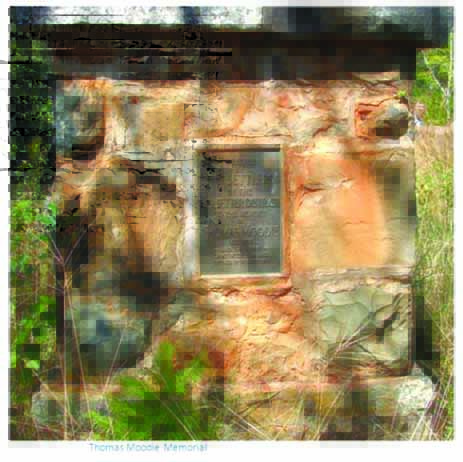
Thomas Moodie’s Grave in Chipinge is another little known site.
Moodie was one of the European explorers who settled in Chipinge.
After a long and arduous journey, the explorers, including Moodie, set out from Fort Victoria into Manicaland in November 1892.
Manicaland was a largely unexplored area.
On January 3, 1893, they reached Waterfall Farm.
Here, the trek ended and the trekkers settled down to develop the land they called Melsetter, which was later renamed Chipinge.
Moodie was taken ill in his fifty-third year and died on April 30, 1894, which was a year after his arrival.
A memorial site was erected on the farm.
His grave is on the roadside on Waterfall Farm and the site is now a national monument with great historical significance.
Some history enthusiasts visit the exotic site mainly for some pictures.
On the other side of Manicaland in the serene environs of Rusape lies Diana’s Vow, one of the country’s majestic and breathtaking rock art sites.
The site, a depiction of the unique lifestyle of locals, is one of the only two rock art sites that were declared national monuments in Manicaland.
Rock art is a reflection of the society that created it and is a manifestation of the perceptions, values, socio-economic system and beliefs of a society.
Diana’s Vow is a detailed painting and one of the finest and unique examples of Zimbabwean rock art.
The art blends both human and animal paintings on a large overhang boulder at ground level.
The main scene depicts two long friezes of human figures embellished with white pigment dots and stripe details.
Surrounding these is a wealth of detail depicting domestic artefacts, edible fruits, and items such as baskets, skins bows, quivers and so on.
Travelling to the other side of the province, in Zimunya, lies another national monument along the Mutare-Birchenough Bridge Road.
Situated at Muromo Farm, the picturesque Muromo Rock Painting is unique.
Its major painting show a maze-like drawing.
It is one of the most complicated paintings in Zimbabwe.
Tourism expert, Mr Lloyd Makonya said there is need for media and other stakeholders to create synergies and raise awareness of our heritage.
“Heritage is a shared commodity which needs to be preserved and promoted by all, starting with the local communities in the vicinity of such monuments. These are the people who are the immediate custodians of such sites.
“Different stakeholders need to identify areas in which they can help promote such monuments within their scope of work. The media, for example, is playing a huge role in profiling and creating awareness of our heritage,” he said.


 Online Reporter