Piason Maringwa
Herald Correspondent
I have always dedicated October, my birthday month, to reflecting on and writing about my life journey with HIV. My intention is not to generate sympathy but to inspire others to soldier on, knowing that there is still much life to live after testing positive.
My journey with HIV spans more than three decades, from my youth through middle age and into my senior years. Along the way, I have learnt a great deal from my personal experiences and from observing the lives of others living with HIV.
In this week’s article, I will share more about who I am, my life before testing positive and the circumstances that led me to suspect that I might have contracted HIV.
A promise to God
When I fell ill with tuberculosis (TB) and subsequently tested HIV-positive, I made a solemn promise to God. I vowed that if He restored my health and allowed me to see my two children grow into adulthood, I would glorify Him for the rest of my life.
Today, I am 61, having been born on 24 October. I am married to Sarudzai, and we are blessed with two children, both of whom are now married and have families of their own. God has further blessed us with five grandchildren.
I have since retired from teaching and now live at our rural home in Gokwe South District. Much of my teaching career was spent in Manicaland, after graduating from Mutare Teachers’ College in 1994. I taught at schools in Nyanga, Honde Valley, Mutare, Buhera and, eventually, Gokwe South, my home district.
My early working life
My working life began in 1983 when I secured a temporary teaching job in rural Gokwe. I worked for two terms before moving to the Ministry of Finance’s Department of Taxes, now the Zimbabwe Revenue Authority (ZIMRA), in Gweru. I worked there as an accounts clerk until 1987, when I was dismissed for misconduct relating to incompetence and dereliction of duty. I can no longer remember the exact wording of the charges under the Public Service Act, but I remember the dismissal.
Working in the Department of Taxes was an exciting experience. I was among the first few black people to occupy positions in a department where such jobs had previously been largely reserved for white people before independence.
I was young, energetic and fresh from deep rural Gokwe, experiencing city life for the first time. I was enjoying life in the fast lane, mixing with the rich and famous in Gweru. In a department with more than 50 employees, I considered myself one of the youngest and best-dressed members of staff. My colleagues and even our clients seemed to like me.
As I became more familiar with city life, I started joining colleagues from work at the various drinking spots dotted around Gweru. I also became increasingly interested in women and would sometimes invite female companions to my home, where we engaged in intimate relationships. It all seemed exciting, and I felt I was enjoying life as a young man.
For a while, everything appeared to be going well, both at work and socially. My immediate supervisor, a strict white woman named Mrs Mathews, was pleased with my performance. In 1985, she recommended me for promotion to a higher salary notch.
The fear of a new and deadly disease
In late 1985, I contracted a sexually transmitted infection (STI) and received treatment from one Dr Hove. Later, I contracted another STI. It was during this period that I came across an article about the emergence of a new and deadly disease called AIDS, which was associated with a virus known as HIV.
The article described the people considered to be at high risk of contracting HIV. As I read it, I began to believe that my sexual behaviour had placed me squarely in that category. I became convinced that I was doomed.
The article carried a skull-and-crossbones image, similar to the warning signs found near electrical installations. That image, together with the frightening description of the disease, left me terrified. I imagined the slow and painful death I believed awaited me.
This article changed the way I viewed my life. I had been an energetic young man with what I considered a bright future ahead of me. Suddenly, I felt hopeless, defeated and finished.
The enthusiasm I had developed for life began to disappear, and my performance at work deteriorated dramatically. Without undergoing an HIV test, I had effectively diagnosed myself as HIV-positive based on my sexual history. I convinced myself that I had no future to look forward to.
My once-promising life began to take a downward turn.
Confronting HIV at college
Once l enrolled at Mutare Teachers’ College, I came face to face with the devastating effects of the HIV/AIDS epidemic. Student after student succumbed to the disease, and we watched helplessly as some of our colleagues endured prolonged and painful illnesses.
The college bus would sometimes transport us to local hospitals to visit seriously ill fellow students. On other occasions, we travelled to bury colleagues who had passed away.
These experiences were deeply distressing. HIV/AIDS was claiming lives, and the fear surrounding the disease was immense.
However, I became so engrossed in my studies that, for the duration of my time at Mutare Teachers’ College, I had almost forgotten my earlier suspicions about my HIV status. My health had improved considerably, and the birth of my son in March 1991 brought me immense joy. I had so many positive things happening in my life that HIV was no longer at the forefront of my thoughts.
Old habits and unanswered questions
After graduating from college in 1994, I was deployed to Buhera High School. I enjoyed teaching and living there with my young family.
However, old habits die hard. Some of my friends and I soon became regular patrons of drinking spots across Buhera District. From time to time, we engaged in risky sexual encounters, oblivious to the danger we were exposing ourselves and our families to.
To this day, I cannot say with certainty when or where I contracted HIV. However, I suspect it was during some of those encounters. My experience has taught me the importance of making informed decisions about our sexual health and protecting ourselves and our loved ones.
In January 1999, I decided it was time to return to my home district of Gokwe and teach closer to my family roots. I began the school term at Mkoka Secondary School, my village school, looking forward to a new chapter in my career.
Just as I was settling into my work, I became seriously ill. At first, my symptoms appeared to resemble malaria, but my condition deteriorated and soon became life-threatening.
I was admitted to St Luke’s Hospital near Lupane, where I was diagnosed with tuberculosis and subsequently tested HIV-positive.
The diagnosis confirmed what I had feared years earlier. However, unlike the young man who had read that frightening article in 1985, I now had a family, a career and much more to live for.
I received treatment for TB, recovered and returned home and to work.
From fear to gratitude
Looking back, I am profoundly grateful to God and to everyone who has supported me throughout my journey with HIV. What began with fear, uncertainty and a sense of hopelessness has become a story of survival, faith and renewed purpose.
Today, I am retired from teaching and enjoying life at our rural home in Gokwe South. My first birthday after retirement provided an opportunity to reflect on the past and plan for the future.
My wife and I are grateful for our two children and five grandchildren. They are a source of great joy and a reminder of how much life has given us.
I have also dedicated part of my life to HIV and AIDS advocacy. I have written numerous articles on the topic. I have spoken on radio and television and addressed media representatives at workshops organised by the National AIDS Council.
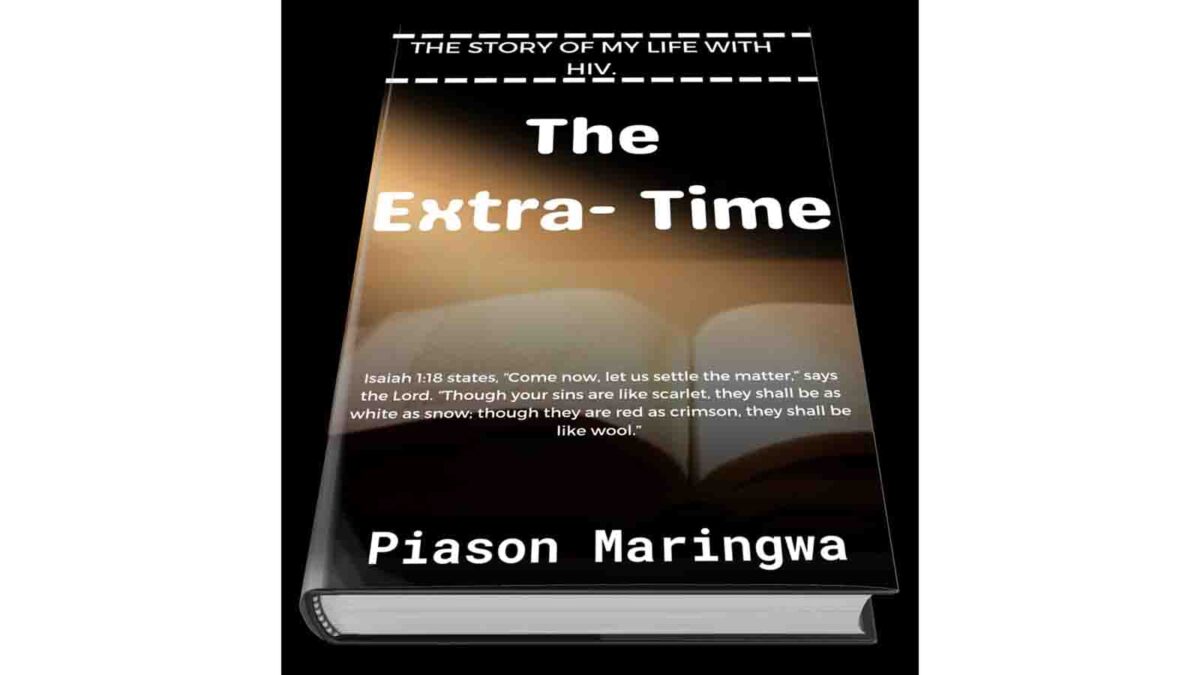
I have also published a book titled The Extra Time, which has been reviewed on several platforms.
These opportunities have enabled me to share my experiences and encourage others who may be struggling to come to terms with an HIV diagnosis.
My intention is to remind readers that a positive HIV diagnosis is not the end of the road. There is still much life to live, and everyone deserves an opportunity to grow, develop and excel in their chosen fields.
As we approach World AIDS Day on 1 December, I look forward to continuing this advocacy work. I believe sharing personal experiences can help challenge stigma, encourage people to seek appropriate care and remind those living with HIV that their lives remain valuable.
My story is not one of sympathy but of hope. It is about moving from fear to faith, from despair to purpose, and from one chapter of life to another with gratitude.
There is life after an HIV diagnosis. A positive result does not erase your dreams, talents or potential. With appropriate medical care, support and a determination to keep moving forward, it is possible to live a fulfilling life and continue contributing meaningfully to society.
As I celebrate another year of life, I am reminded that my journey has truly been one of grace upon grace.
Here is to life, hope, and ageing gracefully with HIV!