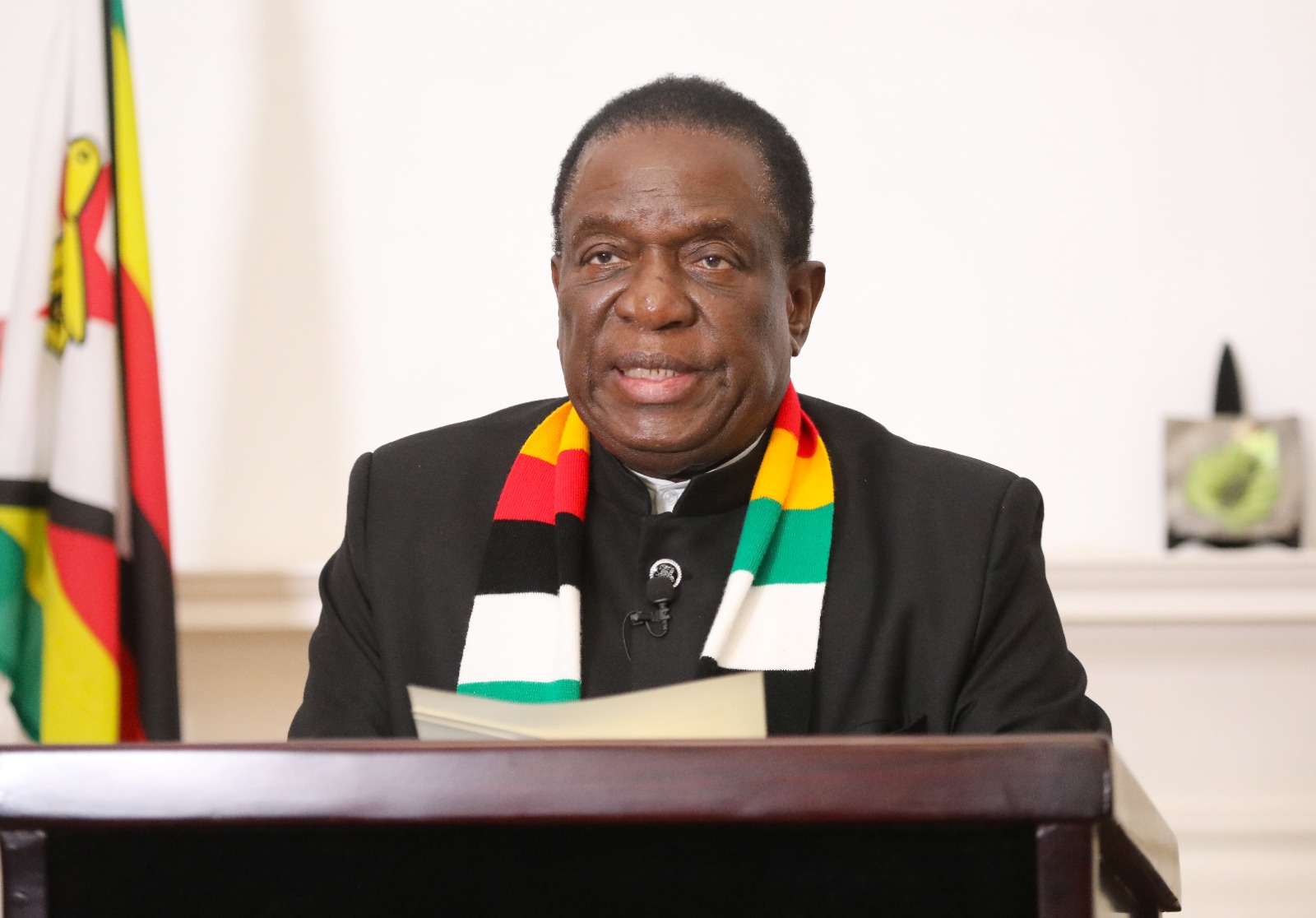
Gibson Mhaka, Zimpapers Politics Hub
WHEN history renders its objective ledger on the Second Republic under the leadership of President Mnangagwa, it will record that national economic transformation was achieved not through poetic rhetoric or political slogans, but chiselled through deliberate, grounded and relentless policy execution.
At the absolute epicentre of this monumental national march towards Vision 2030, the unambiguous target of transforming Zimbabwe into an empowered, prosperous upper-middle-income society with a high quality of life for all citizens, is a profound, mutually reinforcing synergy between President Mnangagwa’s domestic structural reforms and his assertive foreign policy drive.
Far from operating as isolated imperatives, the President’s domestic policies provide the internal structural bedrock, while his foreign diplomacy secures the critical external catalysts required to power the nation’s socio-economic matrix.
This integrated approach ensures that every domestic milestone is reinforced by international cooperation, capital inflows, and technology transfer.
The foreign policy framework executed under the Second Republic represents a masterstroke in trade diplomacy, investment promotion, and international realignment.
Breaking away from decades of isolation, President Mnangagwa introduced an assertive, pragmatically driven foreign policy anchored on the doctrine: “Friend to all and enemy to none.”
Built on two distinct pillars — re-engagement with traditional Western partners and the deep consolidation of strategic relations with allies in Eastern Europe, Asia and the Global South,
Zimbabwe’s diplomatic missions were systematically re-purposed from purely political outfits into dynamic trade and investment outposts.
The international dividend has been immediate and tangible, driving massive foreign direct investment into strategic national sectors.
Multi-billion-dollar projects in lithium exploration and processing, steel manufacturing at the massive Manhize plant, and platinum expansion have re-anchored Zimbabwe directly onto global critical mineral supply chains, opening up new export markets and generating vital foreign currency revenues.
Addressing international investors, multilateral partners, and diplomatic missions on the core ethos of this foreign policy thrust, President Mnangagwa declared: “Zimbabwe is open for business.
“We are reforming our investment environment, protecting property rights, and building a predictable economic landscape that rewards investors while transforming the living standards of our people.”
Furthermore, active participation in regional economic structures, including the Common Market for Eastern (COMESA) and Southern Africa, the Southern African Development Community (SADC) and the landmark African Continental Free Trade Area (ACFTA), has significantly expanded Zimbabwe’s commercial footprint across the African continent.
The nation’s structured re-engagement efforts with international financial institutions regarding comprehensive debt resolution reflect a disciplined, transparent approach to financial governance, laying a solid foundation for eventual re-integration into global capital markets and unlocking fresh development finance.
Domestically, the Second Republic shifted the governance gear from administrative management to aggressive, results-oriented structural transformation.
The development architecture evolved systematically from the Transitional Stabilisation Programme into the National Development Strategy 1 and its successor framework, NDS2, covering 2026 to 2030.
These policy frameworks systematically corrected longstanding macroeconomic distortions, modernised agriculture, accelerated industrialisation, overhauled national infrastructure, and prioritised human capital development, ensuring continuity, institutional efficiency, and heightened productivity across all sectors of the national economy.
As President Mnangagwa succinctly articulated when establishing the foundational architecture of the State’s strategic vector: “The realisation of Vision 2030 requires policy clarity, consistency and a deliberate focus on productivity.
“We are building a modern, industrialised nation using our own resources while opening our doors to global partnerships based on mutual respect and shared prosperity.”
At the core of this internal engine is the philosophy “Nyika inovakwa nevene vayo / Ilizwe lakhiwa ngabanikazi balo” (a country is built by its own people), capturing the fundamental truth that national development cannot be outsourced, even as external partnerships remain vital. Agriculture, the heartbeat of Zimbabwe’s socio-economic fabric, stands out as a primary exemplar of this domestic policy victory.
Shifting away from rain-fed vulnerability, the Government introduced climate-proofed agricultural interventions, most notably the Pfumvudza/Intwasa scheme alongside vast dam construction, irrigation development, and mechanisation drives.
These interventions delivered record-breaking grain harvests, guaranteeing national food security, curbing rural poverty, and insulating the sovereign treasury from unsustainable food import pressures.
Addressing farmers and agricultural stakeholders on the imperative of modern technology and self-reliance, President Mnangagwa noted: “I urge our farmers to continue expanding their value chains, increasing productivity and improving the quality and volume of their harvests so that we can adequately feed our nation while generating greater economic value.”
In tandem with agricultural productivity, industrialisation under the Second Republic has ceased to be an academic concept.
By promoting heritage-based Education 5.0 in tertiary institutions and incentivising local value addition and resource beneficiation, Zimbabwean industries are increasingly processing local raw materials into finished consumer goods, populating domestic retail shelves with proud local products, creating downstream employment, and retaining critical capital within domestic borders.
Infrastructure development serves as the indispensable enabler of this economic velocity. Recognising that no country achieves upper-middle-income status on dilapidated utilities, the
Government instituted a masterclass in domestic capital mobilisation without resorting to destructive external debt traps.
Internal resources were mobilised to rehabilitate key transport arteries, most notably the Beitbridge-Harare-Chirundu highway.
This critical logistics corridor has facilitated seamless domestic trade while positioning Zimbabwe as the undisputed transit hub for the wider regional market.
Simultaneously, massive investments in energy anchored by the commissioning of Hwange Thermal Power Station’s Units 7 and 8 expanded baseline power generation for expanding mines, factories, and residential settlements.
Most importantly, the true measure of these dual policy thrusts lies in their tangible, transformative impact on daily human livelihoods.
Job creation across agriculture, mining, manufacturing, construction, and small-to-medium enterprises has provided vital lifelines for thousands of young people.
Concurrently, devolution funds disbursed directly to local authorities have democratised development, funding primary healthcare clinics, rural electrification, classroom blocks, and clean water points across all provinces and districts.
As the President constantly reminds the nation: “Development must be inclusive, no one and no place must be left behind as we move toward Vision 2030.”
Vision 2030 is no longer a distant horizon; it is an unfolding reality built block by block through policy consistency, domestic resilience, and strategic global engagement.
By aligning internal structural reforms with a pragmatic foreign policy, President Mnangagwa has firmly placed Zimbabwe on an irreversible trajectory toward upper-middle-income status.