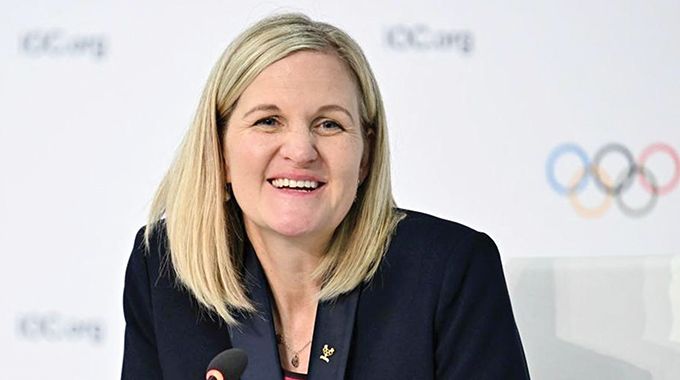
DAKAR. — AS Dakar prepares to host the 2026 Youth Olympic Games, the IOC president Kirsty Coventry reflected on her African roots, the power of sport to unite communities and her vision for an Olympic Movement that puts athletes at its heart.
The first African to lead the International Olympic Committee, she recognises what a milestone the upcoming Youth Olympics is, noting that Senegal and her home country Zimbabwe have a shared culture and she’s felt a sense of familiarity in her visit to the West African nation.
It is a connection grounded not simply in geography, but in the importance of community and the relationships that bind people together.
“I’m really excited … to share that feeling with everyone coming to Senegal and to Africa for the first time. I hope they feel the African spirit of friendliness, and respect for one another and acceptance.
“And one of the things I’ve personally come to love about Dakar is just how active and outdoors-oriented the city is.
“You constantly see people out on the beach, training, playing sports, or simply spending time with their kids in the streets. It’s really lovely to see, and it reminds me of my own youth, too,” Coventry said.
As young athletes from across the world prepare to compete in Dakar, Coventry will see another facet of her own youth play out in the coming weeks.
The former competitive swimmer made her Olympic debut at the Sydney 2000 Games, aged just 16. She would go on to become an Olympic champion and, with seven Olympic medals, the most decorated African Olympian in history.
She reflected on her own experiences as a competitor.
“You miss a lot of the other experiences when you are just focused on competing: the camaraderie between athletes, the friendships you create, the adventure of travelling around the world and getting to experience the local culture of these different places… You don’t really allow yourself to enjoy all of that when you are so focused on medals and records,” the Zimbabwean shared.
Now at the helm of the Olympic Movement, she offered a bit of advice to this generation of athletes.
“Looking ahead to Dakar 2026, I hope athletes get to experience the Olympic Movement beyond their competitions.
Being driven by medals is not a bad thing — every athlete will go through it at one stage; but I think that being more closely connected to that latter stage of my career as an athlete is very helpful in my job today.
“The athlete experience is central to my mandate, and I know first-hand that experience is far broader than the podium moments.”
Coventry’s approach to the presidency, however, is also defined by a determination to lead in a way that meets the organisation’s current needs.
“I’m very comfortable with the kind of leader I am. I think what you realise is that some people will like it, some people will not like it, and that’s their choice,” she said.
Coventry acknowledges that stepping into the role at a younger age — at 41, she was the second-youngest president after Pierre de Coubertin — than most of her predecessors can invite scepticism, but she welcomes the challenge.
“I’m not interested in talking about leadership. I want to demonstrate through my actions that I can be a strong, decisive leader.”
Since kicking off her term in June 2025, the former swimmer has sought to establish her priorities through her staple “Fit for the Future” programme, which she began with a deliberate pause to reflect on the organisation’s direction and purpose.
“The world around us is changing quickly, and we need to be able to change with it, while staying true to who we are and what we stand for.
“It’s about being open to new ideas, becoming more flexible in the way we work, and focusing our energy where we can make the greatest difference.
“Ultimately, it’s about making sure the Olympic Movement remains relevant and continues to have a positive impact for generations to come,” she explained, adding that the process had created an opportunity to consider how the organisation could evolve, return to the core business of sport and the Olympic Games, and make a greater impact.
One of the decisions that came from the organisation’s reflections is sure to make an impact on the athletes that power the Games.
In June, the IOC announced a financial initiative allocating an estimated US$140 million per Olympiad to benefit approximately 14 000 athletes per cycle.
“Every Olympian is eligible for US$10 000 designed to directly support their sporting career, or to help them transition into a next life stage,” Coventry said, underscoring the importance of embedding athletes’ voices in decision-making, ensuring they have real influence over the Movement’s future.
Its next stars will be showcased at Dakar 2026, which will open today.
The Youth Olympics are set to run until November 13, with 2 655 young athletes, aged 14 to 17, expected to take part in 25 competition and 10 engagement sports.