
Walter Nyamukondiwa in KARIBA
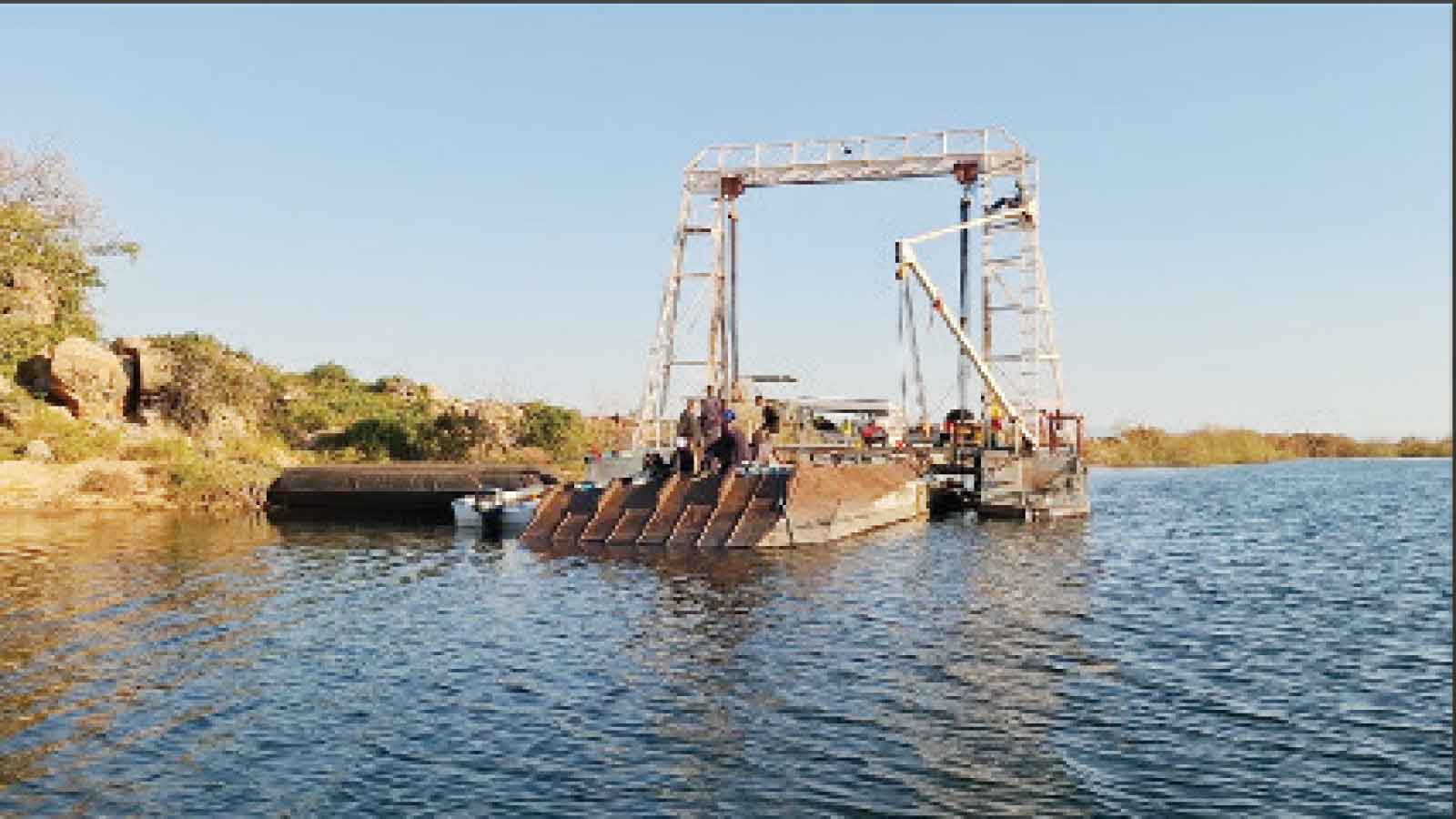
THE RIDA-owned Mbuya Nehanda ferry — a 41-year-old vessel that capsized on August 11 on Lake Kariba near Long Island and claimed 97 lives — was battling inclement weather before it went down, with survivors reporting strong winds and waves washing over the vessel.
The vessel was one of three ferries built by Struer Shipyard in Denmark and shipped into Zimbabwe in 1985.
The other two were Chaminuka and Nyaminyami, which operated on the Binga route.
Captain Takemore Matambo, who has been working in Lake Kariba for 34 years, still recalls the arrival of the vessels with nostalgia.
“I know there were three vessels, which were subsequently named Chaminuka, Nyaminyami (operated in Binga) and the capsized Mbuya Nehanda ferry,” he said.
“Being in the industry for a long time, I know that the boat was made of strong material, which is no longer used for newer boats.”
His colleague, Mr Crispen Mjokeri, said the ferry had recently undergone engine work, with two new engines fitted before the disaster.
RIDA(Rural Infrastructure Development Authority) director-general Mr Christopher Shumba confirmed that two new engines had indeed been fitted on the vessel last year.
“We added two new engines on the boat to support the movement of goods and people on the route. The centrality of travel by water informed the decision,” said Mr Shumba.
“Business viability, socio-economic activity is anchored in a sound water transportation system. It’s the lifeblood.”
Mbuya Nehanda could carry a maximum of 90 passengers and five crew members, with capacity for up to 20 tonnes of cargo.
It plied the Kariba-Chalala route, with stopovers at fishing camps in Gachegache, Musambakaruma and King’s Camp, among others.
Outbound trips typically carried groceries, furniture and other goods destined for remote communities, while return journeys ferried fish to markets in Kariba and beyond.
A full crossing, including stopovers, could take up to eight hours.
For communities scattered along the southern shores of Lake Kariba, the ferry was more than a means of transport.
It was a vital link to food, markets, livelihoods and essential services.
The warning signs
Weather has emerged as a central factor in the disaster.
Southern Africa was in the grip of a cold front in the days before the accident, with rain reported in parts of the region.
The conditions fed into strong winds and rough waters on Lake Kariba.
The Meteorological Services Department had issued a disaster-risk advisory, citing strong winds and waves as recurring dangers on Lake Kariba.
It also issued an early warning advising lake users against sailing because of adverse conditions.
The vessel was subsequently caught in strong winds, locally known as the “Binga Wave”, near Long Island.
Survivors say the warning signs were visible even before the ferry left the harbour.
Strong winds were already sweeping across the lake when the vessel prepared to depart, while a battery and inverter destined for Mola were swept overboard as passengers prepared for the journey.
Conditions worsened after departure, with more belongings falling into the water.
However, the situation only became graver when water began seeping into the vessel.
Some passengers began questioning whether the crossing should continue.
Mariners say it typically becomes more dangerous later in the day when afternoon winds pick up over exposed sections of the lake to create localised choppy conditions.
How the vessel capsized
Preliminary technical accounts suggest that heavy waves washed over the ferry’s sides, allowing water to accumulate on its flat, open deck.
The bilge pump, designed to remove accumulated water, was then overwhelmed or rendered ineffective, according to the technical reconstruction.
The accumulation of water would have affected the vessel’s stability, potentially causing it to turn broadside to the waves before eventually capsizing.
The precise sequence of events and the extent to which weather, vessel design, loading, mechanical systems or other factors contributed to the accident remain matters for the formal investigation.
The wreck subsequently drifted from the scene of the tragedy near Long Island, roughly 20km from the Andora Harbour shoreline.
It moved about five kilometres on the first day before drifting a further seven kilometres on the second day, when it was towed to Twin Sister Islands at Musambakaruma Islands.
The accident site had a depth of approximately 50 metres, but the vessel drifted to a depth of around 80 metres by the third day before being moved.
Ten days in the water
The scale of the search operation matched the scale of the tragedy.
At its peak, it involved 27 divers and other support service providers, working with up to 10 boats and a helicopter.
Search teams typically entered the water around 8.30am each day, although their working day began much earlier, with preparations such as filling oxygen tanks getting underway well before launch.
Teams returned to shore around 6pm. Conditions in the water were harshest during the early phase of the search.
The water was cold during the first three days of the operation, with temperatures improving as the days went on.
Waves were also stronger during that initial three-day period, mirroring the conditions that caused the capsizing before easing as the operation progressed.
Bodies were recovered within a 10km radius of the accident scene, drifting east or west depending on the direction of the wind at any given time.
The operation was as psychologically taxing as it was physically demanding.
Divers retrieved up to 97 bodies in different states of decomposition over the 10-day search.
“The first days we were retrieving bodies trapped in the vessel and those in the vicinity.
“We managed to retrieve five bodies, (then) 24 in one day before it slowed down and shot up again to around 31 bodies in a single day,” said diver Mr Wonder Mujokeri.
“Seeing the dead bodies has affected me in ways that are difficult to explain.
“I now have difficulties sleeping and have times when I want to be alone. Eating has been a challenge, especially meat has stopped being part of my diet.”
Mr Mujokeri said all divers required psychological support and counselling to recover from the trauma of the operation.
Was the vessel compliant?
Despite its age, Mbuya Nehanda had been inspected and issued with a certificate of survey — Number 183254 — on June 17, 2026, in terms of the Inland Waters Shipping Act of 1971.
Mashonaland West Provincial Affairs and Devolution Minister Marian Chombo confirmed that the vessel was insured, with cover valid until 2027.
“The vessel was insured and the insurance is valid until 2027. So, the normal procedures for insurance claims apply to assist in the recovery of property and compensate the affected families,” she said.
The policy, brokered through Momentum with Misty Insurance Company as insurer, valued the ferry at US$750 000.
Passenger liability in the event of death could not be ascertained, while it would cover up to 78 passengers.
RIDA director-general Mr Shumba said all documentation required by the insurer had been submitted and the organisation was awaiting a decision.
He confirmed that the vessel had the required legal documents to operate, including a certificate from the Ministry of Transport and Infrastructural Development.
The existence of a valid certificate of survey, however, does not by itself answer the broader questions surrounding the disaster — including whether the vessel should have sailed in the prevailing weather conditions and whether its design, loading, pumping system or other factors contributed to its loss of stability.
Those questions are central to the investigations into Zimbabwe’s deadliest ferry disaster.
The salvage operation
Efforts to right the vessel ahead of towing it to shore were underway at the time of writing, with completion expected by the end of the week.
Salvage specialist Mr Craig Hall explained the technical complexity of the operation, which involves puncturing holes on one side of the hull so that side sinks while the opposite side is simultaneously lifted.
The operation is the latest chapter in a disaster that has already tested the limits of Zimbabwe’s search-and-rescue capacity — and left communities around Lake Kariba confronting the human and socio-economic cost of losing one of their most important links to the outside world.