Theseus Mauruki Shambare Features Writer
WHEN Lorcadia Murehwa got married in September 2021, aged just 19, she looked forward to starting a family.
But during her pregnancy, even some of the simplest cravings proved difficult to satisfy.
She would crave fresh green mealies, cucumbers and other produce commonly desired by expectant mothers, but living in the drought-prone agro-ecological Region V of Mutoko meant these were often beyond reach.
Water scarcity compounded her struggles.
Even when heavily pregnant, she had to walk approximately a kilometre to the nearest river to fetch water for household use.
Today, the young mother can enjoy fresh green mealies straight from a garden that has transformed her family’s food security and economic prospects.
Reflecting on how far her life has changed, Murehwa laughed and remarked: “Even if I choose to get pregnant again, I will no longer fear cravings!”
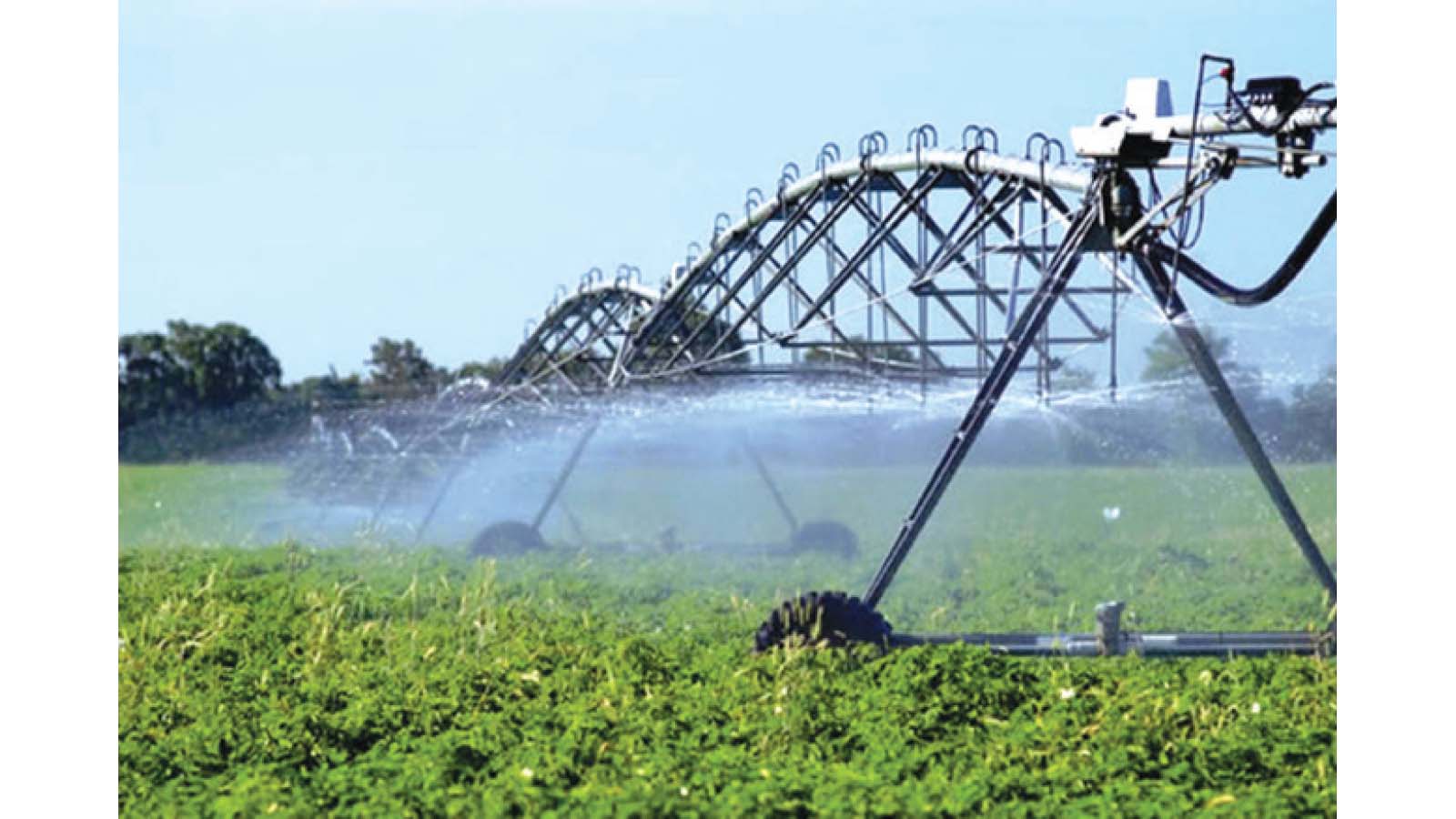
Where thick woodland once stood, dominated by acacia and other indigenous trees, stands a solar-powered drip irrigation enterprise producing crops throughout the year.
For Murehwa, the transformation goes beyond having food on the table.
It has given her an opportunity to become an agripreneur, create another source of income through poultry production and reconsider the meaning of employment in rural Zimbabwe.
“When I got married, I would crave green mealies, cucumbers and other fresh produce, but having settled in an agro-ecological Region V, these seemed like distant dreams.
“Water scarcity was part of our everyday struggles. Even when I was heavily pregnant, I had to walk about a kilometre to the nearest river to fetch water for household use. But with support from the project, we established this garden and our lives have changed.
“We can now produce crops throughout the year without having to stop because of the dry season,” she said.
The garden has become a source of both food and income, allowing Murehwa to diversify beyond crop production.
“Today, I no longer dream of getting employed somewhere because I have become my own boss. We produce, sell our crops and access structured markets through the project. Government agricultural business advisors also continue to guide and support us.
“The income I am earning from this garden has even enabled me to venture into broiler production. People now affectionately call me ‘Mai Huku’,” she said.
Her experience captures an emerging agricultural reality in Zimbabwe, where smallholder irrigation is increasingly being positioned as an alternative to the vulnerabilities of rain-fed farming.
As climate change intensifies pressure on agricultural production through increasingly unpredictable rainfall, prolonged dry spells and rising temperatures, the ability to produce food beyond the rainy season is becoming an important determinant of rural food security and economic resilience.
At Nyamashuka Village Business Unit in Ward 15 of Mutoko District, Mashonaland East, this transition is taking shape through a community-based irrigation model supported by the Government and development partners.
Established in March 2025 through the Smallholder Agriculture Cluster Project (SACP), the facility covers 1,25 hectares, comprising a one-hectare commercial production plot and a 0,25-hectare nutrition garden.
The US$22 456,91 investment by the Government, the International Fund for Agricultural Development (IFAD) and the OPEC Fund for International Development transformed an existing borehole, previously operated through a bush pump, into a solar-powered multipurpose water facility.
Before the intervention, individual households maintained small gardens but had to manually fetch and transport water from the borehole to irrigate their crops.
While those a distant away like Murehwa, would end up using unprotected water sources like rivers.
Following community-level infrastructure planning meetings, upgrading the water point emerged as a priority.
Water-capacity assessments conducted in collaboration with the Zimbabwe National Water Authority (Zinwa) and the Rural Infrastructure Development Agency (Rida) established its suitability for the proposed development.
The project subsequently installed a solar-powered pumping system, water storage tanks, drip irrigation infrastructure, drinking points, wash basins and livestock watering facilities.
The community also participated in selecting the site and committing land for the development, making the intervention a collective investment rather than simply an externally delivered infrastructure project.
For Philbert Manhando, another beneficiary who is the project chairperson, the transformation is particularly significant because of the land’s history.
He said the area had not been cultivated since 1976 and had gradually become a thick woodland dominated by large hardwood trees.
Reclaiming it for agriculture was not an easy undertaking.
“When we decided to transform this seemingly unproductive piece of land, we initially approached tractor owners to help us clear and prepare it, but their machines struggled to penetrate the hard ground and repeatedly broke down.
“We then tried using animal-drawn ploughs, but that approach also proved unsuccessful. We refused to give up. Eventually, we resorted to using hoes and picks to dig, clear and prepare the land by hand,” he said.
The effort has since created an agricultural production base supporting household livelihoods.
Manhando said proceeds from the enterprise were helping families pay school fees and diversify into other small livestock projects at household level.
The business unit has 30 registered members, comprising 17 women and 13 men, including 13 young people and two persons with disabilities.
Its production model combines cereals and horticultural crops, including maize, peas, carrots, rape and tomatoes, with current crops including green mealies, tomatoes and covo.
Farmers sell their produce to local markets in Makaha and Makosa, creating an income stream while improving household access to fresh food.
In 2025, the group cultivated 0,4 hectares of maize, producing approximately 500 dozen green maize cobs and generating a reported net profit of US$2 034.
This year, production has expanded to include 0,2 hectares of SC727 maize, which generated US$313 in net profit, 0,2 hectares of Rio Grande tomatoes, which have so far generated US$673 in net sales, and 0,2 hectares of sugar beans, generating US$80 in net profit.
Although these figures illustrate the potential of small-scale irrigation to generate income, they also point to the importance of strengthening market access, production planning and financial management as farmers expand their operations.
For Agriculture, Mechanisation and Water Resources Development Permanent Secretary Professor Obert Jiri, such village-based enterprises could become an important pillar of Zimbabwe’s food security strategy.
Government wants every village with access to water resources to establish an irrigation scheme, enabling communities to convert available water into productive agricultural assets.
“If we have an irrigation scheme business unit in every village, as we are planning as Government, these are able to really ensure that we have food security in every village.
“There is no need for anyone to go hungry when they can invest in a village business unit to ensure that they have enough food for their village,” he said.
Prof Jiri said irrigation schemes should be managed as businesses, with farmers coordinating production according to market requirements while ensuring that household food needs remain a priority.
The proposed model reflects a broader shift towards commercialising smallholder agriculture, where farmers are encouraged to move beyond producing primarily for subsistence and become organised suppliers of agricultural commodities.
However, the urgency of that transition is underscored by the changing climate.
Food and Agriculture Organisation (FAO) Sub-Regional Coordinator for Southern Africa and Country Representative in Zimbabwe Dr Patrice Talla Takoukam said countries needed to accelerate investment in smallholder irrigation instead of relying predominantly on rainfall.
“The time of rain-fed agriculture is over. Either the Government and partners need to figure out how to really strengthen support for small-scale farmers through irrigation schemes,” he said.
His remarks highlight the growing importance of water infrastructure in protecting agricultural production against climate-related shocks, particularly in communities located in drier agro-ecological regions.
Yet producing more food is only one part of the agricultural transformation equation.
The ability of farmers to store, process and market their produce will determine whether increased production translates into sustainable income and improved livelihoods.
World Food Programme (WFP) Country Director Barbara Clemens said greater investment in agro-processing, cold storage and warehousing was necessary to help smallholder farmers capture more value from their production.
“Not all tomatoes have to be sold in Mbare and mass markets in their raw form. We can have tomato paste, tomato sauce, tomato juice, we need factories, we need cold storage facilities,” she said.
She urged the private sector to complement the Government and development partner interventions by investing in rural production communities and establishing processing facilities.
“I think the private sector needs to come in and invest in communities like this to create an ecosystem for adding value to tomatoes,” she said.
For farmers at Nyamashuka, this is an important next step.
While local markets currently provide an outlet for their produce, expanding production will require stronger market linkages, reliable transportation and mechanisms to manage seasonal surpluses.
The SACP, under which the business unit was established, is a six-year programme being implemented by the Government with support from IFAD and the OPEC Fund, targeting 78 000 farmers across 18 districts.
Its interventions include rehabilitating irrigation schemes, providing climate-resilient infrastructure, organising farmers into agricultural producer groups and strengthening their business and financial management capabilities.
National coordinator Alex Nyakatsamba said the project was combining production support with financing and market linkages to help smallholder farmers become more productive and commercially oriented.
“We are then also coming in with financing, which are the loans and the grants as the two financing instruments. We are trying to catalyse the smallholder production system so that they increase production and productivity and then link them to formal markets,” he said.
At Nyamashuka, beneficiaries have received training in climate-smart agriculture, nutrition and food security, group governance, business development, financial management and the operation and maintenance of installed infrastructure.
They have also established an Operation and Maintenance Fund to finance repairs and help sustain the facility beyond the project’s direct intervention.
Their future plans include securing a project grant to acquire a two-tonne truck and a two-wheel tractor, investments expected to improve transportation and agricultural operations.
The existence of such a maintenance mechanism is particularly important because the long-term viability of irrigation schemes depends not only on the initial infrastructure investment but also on communities’ capacity to maintain equipment, manage finances and organise production.
For Zimbabwe, the emerging village irrigation economy presents an opportunity to address several interconnected development challenges: climate vulnerability, rural unemployment, food insecurity and the limited commercial participation of smallholder farmers.
But its success will ultimately depend on whether communities can sustain their infrastructure, access reliable markets, manage water resources responsibly and generate sufficient returns to reinvest in production.
At Nyamashuka, Murehwa’s journey from walking a kilometre to fetch water while pregnant to earning an income from horticulture and poultry offers a glimpse of what that transformation could mean.
As she enjoys fresh green mealies from the garden, the significance extends beyond the harvest itself.
For a community that once depended on rainfall and struggled to access water, the ability to continue producing food throughout the year represents a different agricultural future.
One in which the village does not have to wait for the rains to feed itself, create livelihoods and participate in the wider economy.