Walter Nyamukondiwa Mashonaland West Bureau Chief
The waters of Lake Kariba could soon yield more than fish. With new fishing equipment, targeted financing and growing investment in aquaculture, Zimbabwe is seeking to transform its vast freshwater resources into a US$1 billion industry capable of creating jobs, raising rural incomes and strengthening national food security.
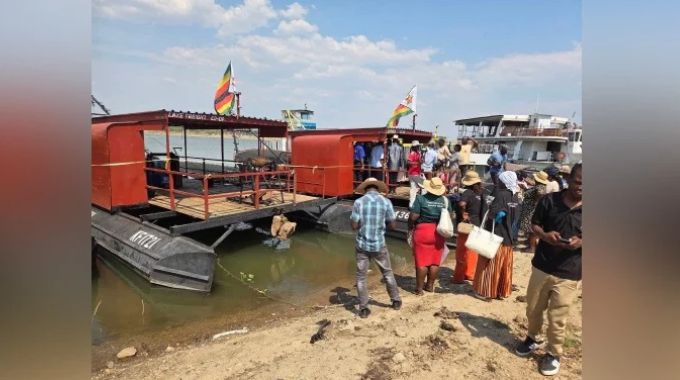
Five fishing rigs recently handed over to cooperatives in Kariba, with four more earmarked for Binga, are part of a broader drive to commercialise the fisheries sector and unlock opportunities for thousands of small-scale operators.
The intervention comes at a time when Zimbabwe is making progress in increasing fish production, but still has a substantial supply gap to bridge.
Annual production has risen from about 20 000 tonnes to 35 000 tonnes over the past two years, yet national demand stands at approximately 60 000 tonnes, leaving a deficit of 25 000 tonnes.
Closing that gap will require more than simply putting additional boats on the water. It calls for investment across the entire fisheries value chain, from fingerling production and modern fishing equipment to processing, storage, transportation and marketing.
The Government is pursuing this broader approach through targeted financing, equipment support and rural development programmes, with the ultimate ambition of building a US$1 billion aquaculture economy under Vision 2030 and the National Development Strategy 2 (NDS2).
The Small and Medium Enterprises Development Corporation (SMEDCO), which is spearheading the fishing equipment intervention, is preparing a US$10 million Fishing Commercialisation and Development Scheme for 2027 to widen participation and stimulate investment.
SMEDCO chief executive Mr Obert Ngwenya described Kariba and Binga as pilot areas for the programme, which seeks to move fishing cooperatives and other small businesses towards commercially sustainable operations.
“This ceremony and this event, it’s a precursor to Vision 2030 and NDS2 where the aquaculture economy is expected to be at least US$1 billion,” he said.
From subsistence to commercial fishing
For many fishing cooperatives operating on Lake Kariba, ageing vessels and inadequate equipment have constrained production, increased operating costs and exposed fishers to safety risks.
The five rigs handed over in Kariba are intended to improve fishing operations, increase productivity and give cooperatives a stronger foundation for participating in the formal economy.
Women Affairs, Community, Small and Medium Enterprises Development Minister Monica Mutsvangwa said the intervention followed engagements with fishing cooperatives in Kariba, where she observed that many were relying on old, worn-out and unsafe vessels.
Her Ministry subsequently engaged the then Ministry of Finance, Economic Development and Investment Promotion, resulting in funding for the acquisition of the equipment.
The handover was also accompanied by a two-day training programme involving several Government departments to equip beneficiaries with the necessary skills to manage their operations.
Four additional rigs are expected to benefit cooperatives in Binga, extending the programme to another important fishing community along Lake Kariba.
But the equipment distribution is only the beginning of a much larger financing intervention.
US$10m to unlock opportunities
Mr Ngwenya said SMEDCO had developed a Fishing Commercialisation and Development Scheme targeting an initial US$10 million in 2027.
The facility is expected to finance and capacitate at least 500 beneficiaries, benefit approximately 15 000 households and generate projected annual income of at least US$48 million.
Importantly, the scheme will not be restricted to fishing cooperatives.
Sole traders, companies and individuals operating in the fisheries sector will also be eligible, opening opportunities for businesses involved in processing, transportation, storage, packaging and marketing.
This recognises that the economic value of fish extends well beyond the moment it is caught.
A fisher may bring in a substantial catch, but without reliable transportation, refrigeration, processing and access to markets, much of that value can be lost before the product reaches consumers.
The proposed financing scheme therefore seeks to support businesses across the value chain, allowing more players to participate in the growing industry.
Aquaculture takes centre stage
While Lake Kariba remains a major source of fish, the Government is also looking beyond capture fishing to expand aquaculture production across the country.
Under the Agriculture Food Systems and Rural Transformation Strategy, efforts are being intensified to increase fish production through the distribution of fingerlings and improved access to water.
At least 25 million fingerlings have been distributed so far in 2026, as part of approximately 180 million targeted for distribution alongside the rollout of the Presidential Borehole Scheme.
The borehole programme targets 35 000 boreholes, one in each village, creating opportunities for communities to integrate fish farming into their existing agricultural activities.
The combination of water infrastructure and fingerling distribution addresses two important requirements for aquaculture: a reliable water source and access to fish seed.
It also offers rural households an opportunity to diversify their sources of income rather than depend entirely on traditional agricultural activities.
Small-scale fish farming could become part of integrated village production systems, complementing crop production and livestock rearing while contributing to household nutrition.
The wider ambition is to establish fisheries as a significant contributor to rural economic transformation, with communities participating in production, processing and marketing.
Making fish affordable, accessible
For ordinary Zimbabweans, the success of the fisheries expansion will ultimately be measured not only by increased production but also by whether more fish becomes available at affordable prices.
The current production of approximately 35 000 tonnes falls short of the estimated annual national requirement of 60 000 tonnes, with imports helping to bridge the deficit.
Government trade data shows that Zimbabwe imported an average of 9 482 tonnes of fish annually between 2017 and 2020, at an average cost of US$10,2 million a year.
Increasing domestic production could reduce reliance on imported supplies while retaining more economic value within the country.
However, fish consumption remains relatively low.
The 2017 ZimStat Poverty, Income, Consumption and Expenditure Survey put annual fish consumption at 3,72kg per person in Zimbabwe, compared to 15,4kg in South Africa and 6,5kg in Zambia.
High prices, inadequate supplies and weaknesses in distribution infrastructure have been identified among the factors limiting consumption.
In some communities, the challenge is not necessarily the absence of fish in nearby water bodies, but the difficulty of getting it to consumers while maintaining quality.
Lake Kariba’s fish value chain, for instance, relies heavily on the transportation of ice from Kariba to preserve catches during distribution.
This arrangement is vulnerable to disruptions, particularly where transport challenges interfere with the timely movement of fish and ice to markets.
The capsizing of the RIDA Mbuya Nehanda ferry in August exposed some of these weaknesses, with disruptions to transportation affecting the movement and preservation of fish.
Such experiences highlight the need for more reliable cold-chain infrastructure, including refrigeration, processing facilities and improved transportation systems.
Minister Mutsvangwa challenged financial institutions and other stakeholders to broaden their investments beyond fishing equipment to include processing, branding, solar drying and cold-storage facilities.
These investments could reduce post-harvest losses, extend the shelf life of fish, improve market access and ultimately contribute to more affordable supplies.
Building stronger MSMEs
The fisheries initiative is also part of a wider strategy to position micro, small and medium enterprises (MSMEs) as important drivers of economic growth.
Mr Ngwenya said the country had at least 3,5 million MSMEs, which contributed between 60 and 70 percent of Gross Domestic Product (GDP).
He said access to affordable financing, structured around the needs of individual businesses, remained critical to unlocking their productive potential.
SMEDCO is targeting a balance sheet and lending capacity of at least US$100 million, which Mr Ngwenya described as the minimum underwriting capacity required to meet the financing needs of the sector.
“They need accessible and affordable finance in the right amount, in the right quantity and at the right time,” he said.
With limited fiscal space constraining the extent of Treasury support, the corporation is also looking to the market to raise additional capital.
SMEDCO recently secured an investment-grade rating from an independent rating agency, which Mr Ngwenya said had strengthened its credibility and capacity to attract funding.
He also reported a 50 percent increase in loan uptake, while 3 139 clubs had been established and strengthened, with more than 5 000 members capacitated and linked to funding.
Beyond providing loans, SMEDCO has developed a national MSME database to track businesses as they grow from micro to small, small to medium and eventually into larger industrial enterprises.
The objective is to nurture sustainable businesses capable of expanding their operations, creating employment and contributing meaningfully to the economy.
Protecting the resource
As investment and production increase, sustainability will remain central to the future of Lake Kariba’s fisheries.
The lake is an important economic resource supporting thousands of livelihoods, making responsible management essential if its benefits are to be enjoyed by future generations.
Minister Mutsvangwa identified climate change, poaching, high permit costs and unsustainable fishing practices among the challenges facing the industry.
She urged operators to respect closed fishing seasons and adopt responsible fishing methods to protect fish stocks.
The policy environment is also being strengthened through the National Cooperatives Development Policy and the review of the Cooperative Societies Act, whose Bill Principles were approved by Cabinet in October 2026.
The reforms seek to promote autonomous, sustainable and commercially viable cooperatives capable of participating meaningfully in the mainstream economy.
Ultimately, the success of the Kariba intervention will not be measured simply by the number of fishing rigs distributed or fingerlings released into water bodies.
It will be reflected in increased fish reaching the market, stronger businesses emerging from fishing communities, more jobs being created and improved incomes for participating households.
For cooperatives in Kariba and Binga, the new rigs offer an opportunity to improve productivity and build more viable enterprises.
For rural communities across the country, expanding aquaculture presents another avenue for economic participation and food production.
And for Zimbabwe, the bigger ambition is to turn its freshwater resources and growing aquaculture capacity into a US$1 billion industry that reduces import dependence, strengthens food security and makes fish more accessible to ordinary households.