Online Reporter
Raymond Jaravaza, [email protected]
GOVERNMENT has activated plans to relocate 806 families who will be affected by the Lake Gwayi-Shangani project at an estimated cost of US$28 million, with alternative land already identified in the Kanono area of Lupane District under Chief Mabhikwa, ahead of the dam beginning to impound water.
The new homes proposed by Government comprise modern four-roomed houses with kitchens for each affected family under the “build back better” model, in line with President Mnangagwa’s vision of improving rural livelihoods.
The families will also be allocated land for both crop cultivation and grazing.
The affected households are from the Lubimbi area under Chief Kavula in Binga District, Matabeleland North, whose land will be submerged once the dam begins accumulating millions of cubic metres of water.
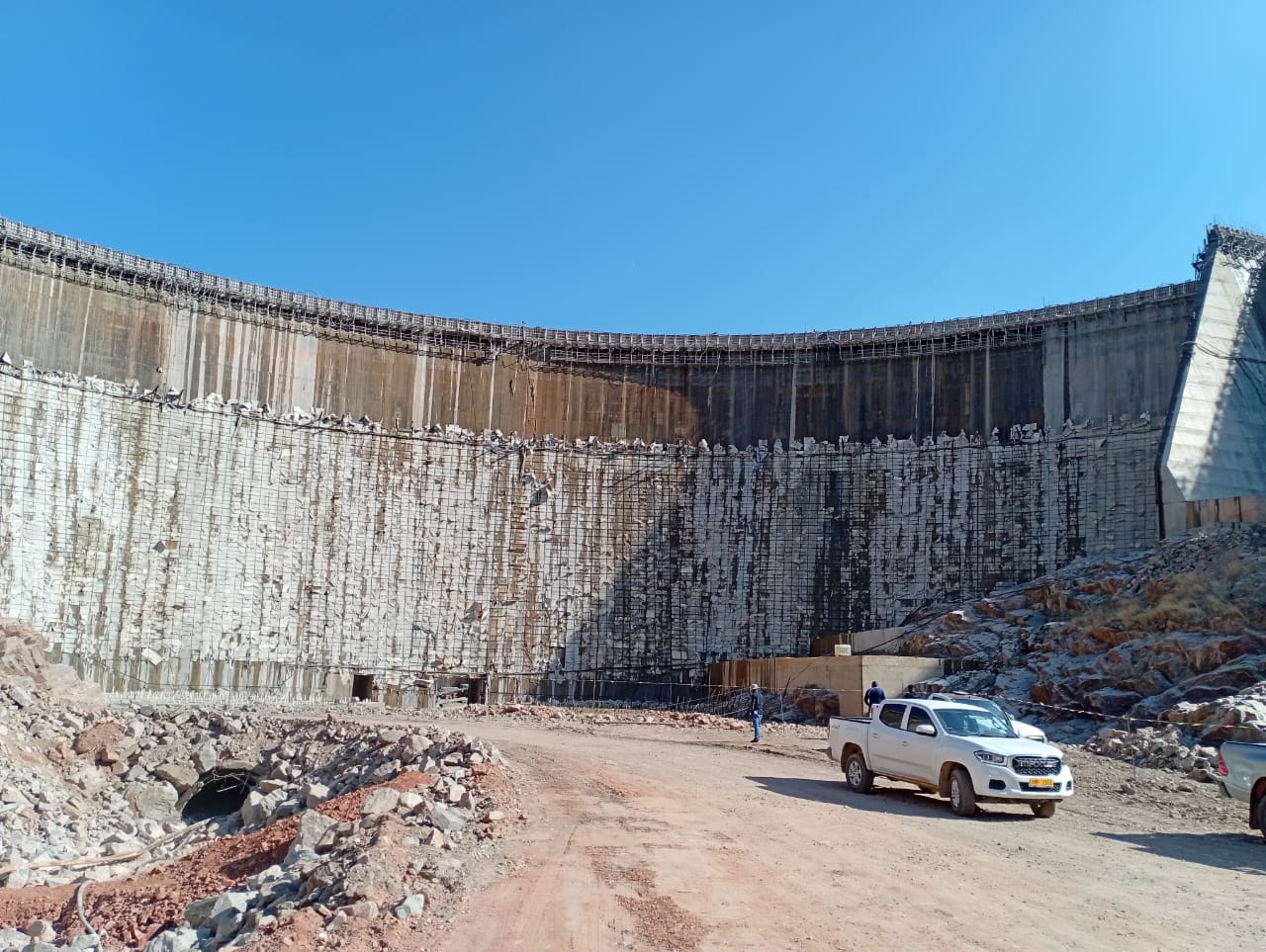
Lake Gwayi-Shangani assistant resident engineer, Mr Joachim Banda, said the dam cannot begin impounding water until all 806 families have been successfully relocated.
“The dam will take a space of 10 000 hectares of land where the 806 families are living and they all have to be relocated before we start impounding water,” he told a visiting delegation from the province on Friday, which was led by Matabeleland North Provincial Affairs and Devolution Minister Richard Moyo.
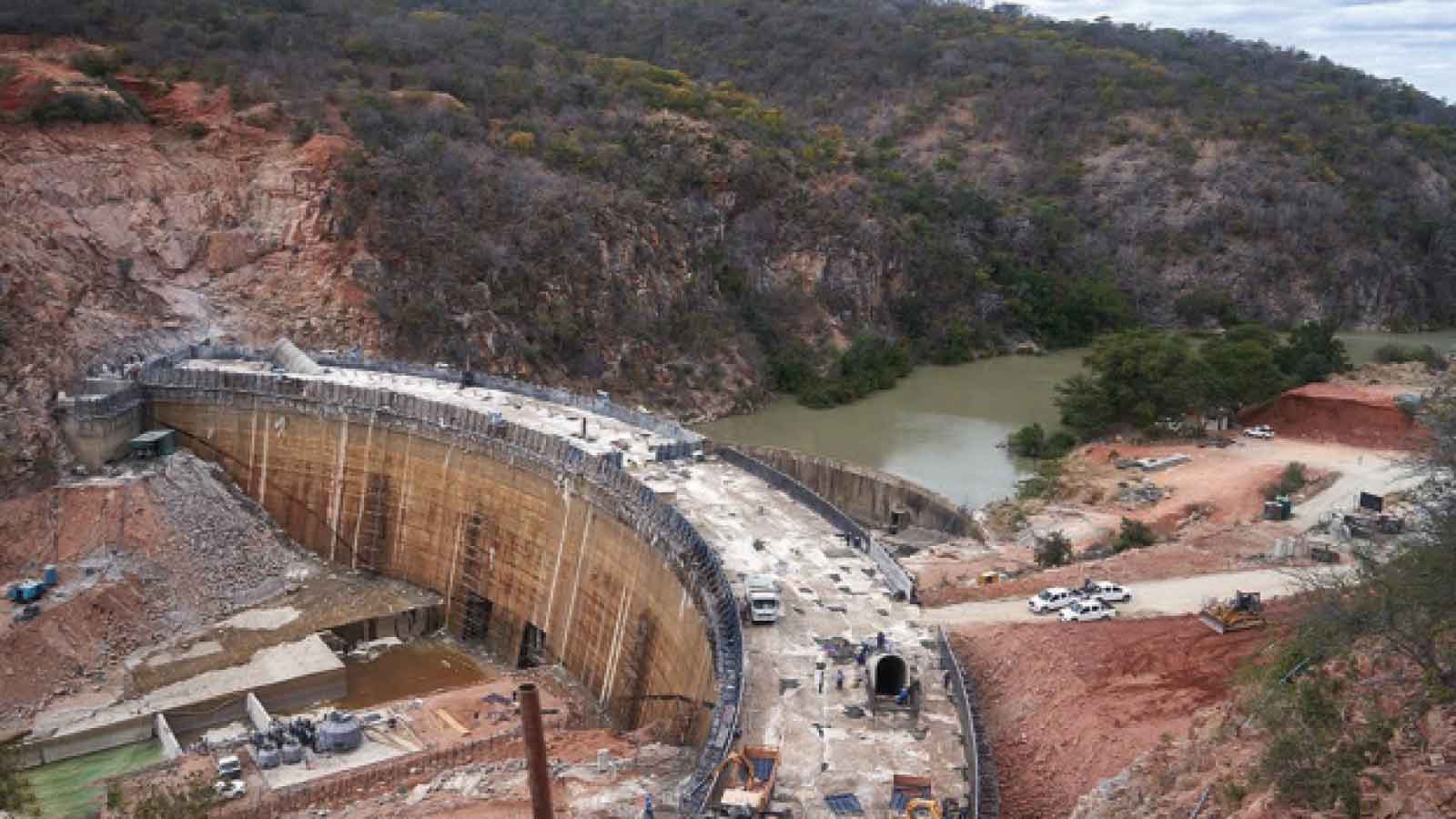
“We hope to complete the construction of the dam wall by the end of the year but for us to meet that target we must get consistent monthly funding from Government, which has been increased to US$8 million from the initial US$5 million that we have been getting.
“We cannot, however, start impounding water by closing the bottom outlets at the dam that are allowing water from the river to pass through because the 806 families that will be affected by the push back of water from the dam have not been relocated. The cost of constructing the new homes stands at US$28 million,” said Eng Banda.
He said a bill of quantities for the construction of the houses had already been submitted to the Procurement Regulatory Authority of Zimbabwe (PRAZ) for approval, with construction expected to commence next year.
“Six pump stations will pump water from the dam all the way to Bulawayo where a water treatment plant will be constructed in Cowdray Park. At every pump station along the 252 kilometre pipeline, 200 hectare irrigation plots will be established while 600 hectares of another irrigation plot will be established in the vicinity of the dam. The contractor for the 600 hectare irrigation project has already been identified and we expect them to start working as soon as the funds are released by Government.”
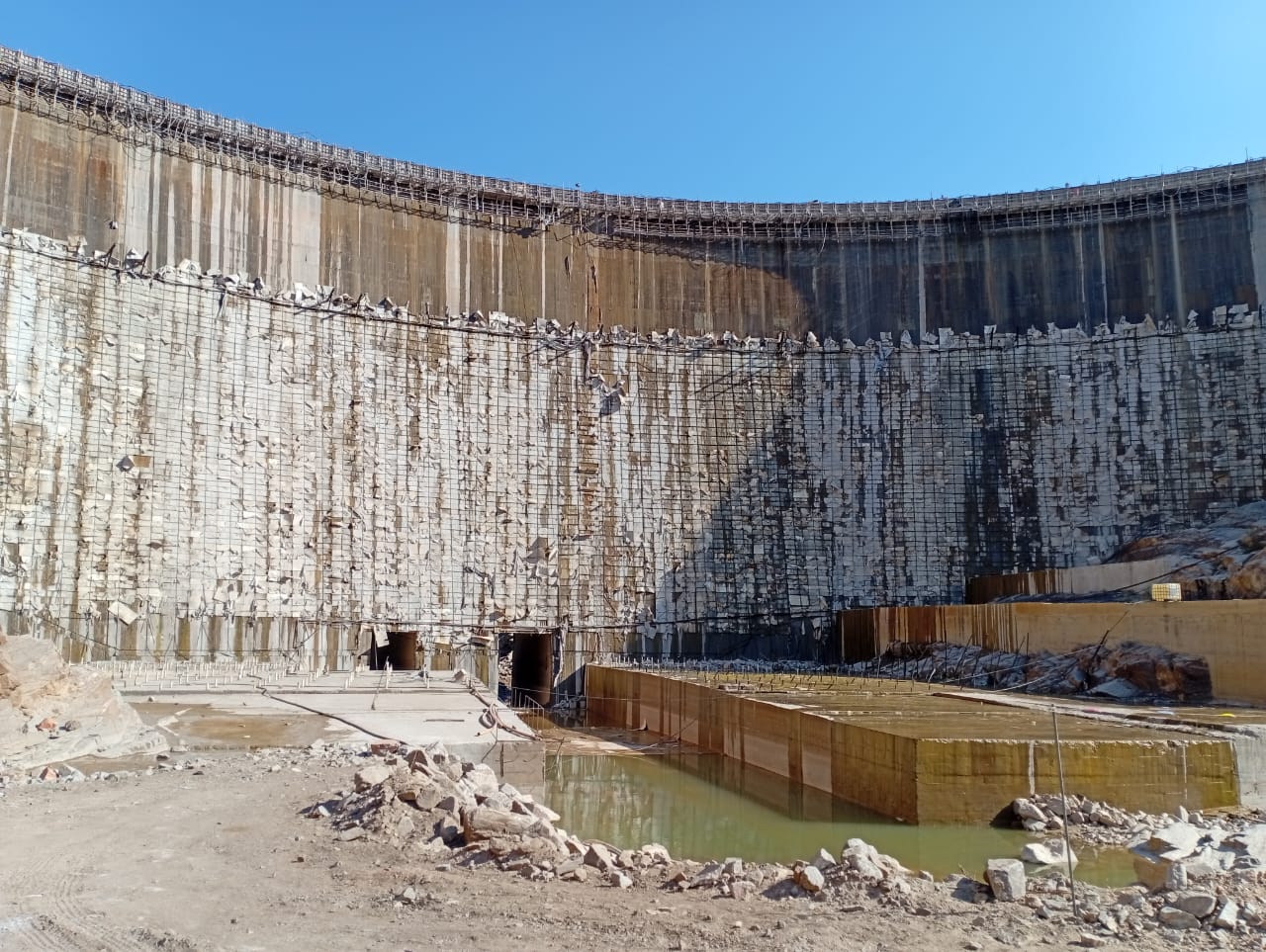
He said construction of the power station, which will generate 10MW, was progressing steadily.
“Construction of the power station is sitting at 75 percent completion of the civil works and the target is to complete it by the end of the year before equipping the mini hydro with the electro mechanicals, turbines and the switch gear,” said Eng Banda.
In an interview, one of the community leaders representing the 806 families, Mr Pedious Midzi Ndlovu, said cultural considerations should be prioritised before relocations are carried out.
“People have cultural rites they follow hence it is important to consult to avoid violating people’s traditions. People have graves of their mothers, fathers and grandparents and a way has to be found to deal with this issue,” said Mr Ndlovu.
The multi-million-dollar project is a key component of the National Matabeleland Zambezi Water Project (NMZWP) and forms part of broader efforts to improve water security, agricultural production and economic development in the Matabeleland region.
The completion of Lake Gwayi-Shangani is expected to unlock opportunities in irrigation farming, tourism and rural industrialisation, while strengthening climate resilience in Matabeleland North.
Other components of the project are also progressing, with the pipeline and Pump Station Three reported to be 46 percent complete, while the power station has reached 75 percent completion.
The water treatment plant to be constructed in Cowdray Park will have the capacity to process more than 100 megalitres of water per day and will play a critical role in supplying treated water to Bulawayo residents. Once completed, Lake Gwayi-Shangani will be Zimbabwe’s third-largest inland water body, with a planned storage capacity of 634,27 million cubic metres of water.
The project is expected to provide a reliable water supply to Bulawayo, delivering 220 megalitres per day, a volume that exceeds the city’s current daily demand of 165 megalitres and is expected to significantly ease long-standing water shortages.
Zimbabwe National Water Authority (Zinwa) engineer Mr Gift Ziweya said increased Government funding was intended to accelerate completion of the dam.
“The dam wall is now at 82 percent complete and we anticipate that construction of the dam will be complete by the end of the year as long as Government continues giving us the monthly allocation of US$8 million. The funds were increased to US$8 million from US$5 million per month,” said Eng Ziweya.
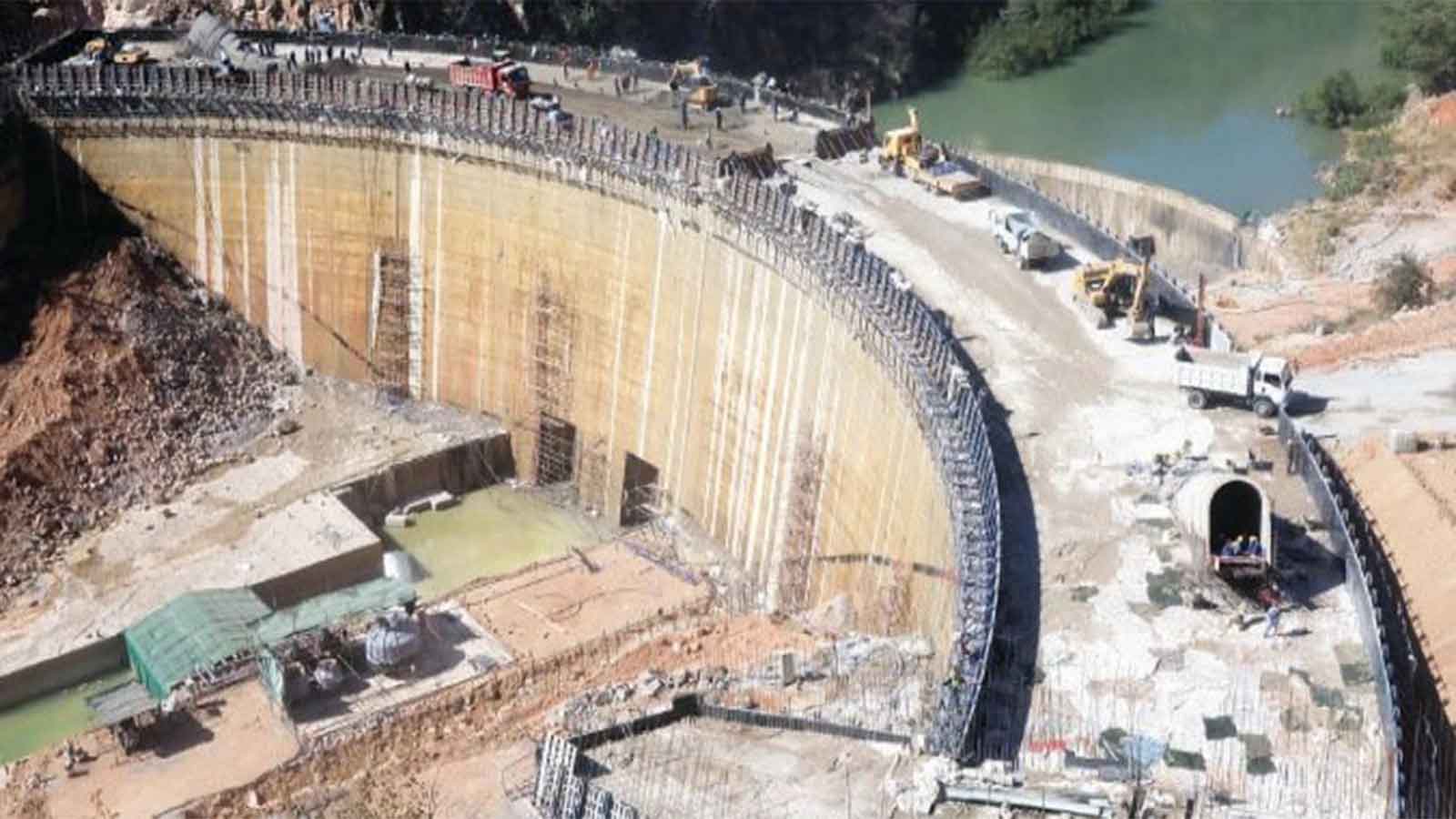
He said progress was being made beyond the dam wall itself, with supporting infrastructure required to convey, distribute and utilise the water also advancing.
Completion of the project is expected to transform agricultural production in Matabeleland North by supporting irrigation schemes along the pipeline corridor and creating new opportunities for large-scale commercial farming.