Online Reporter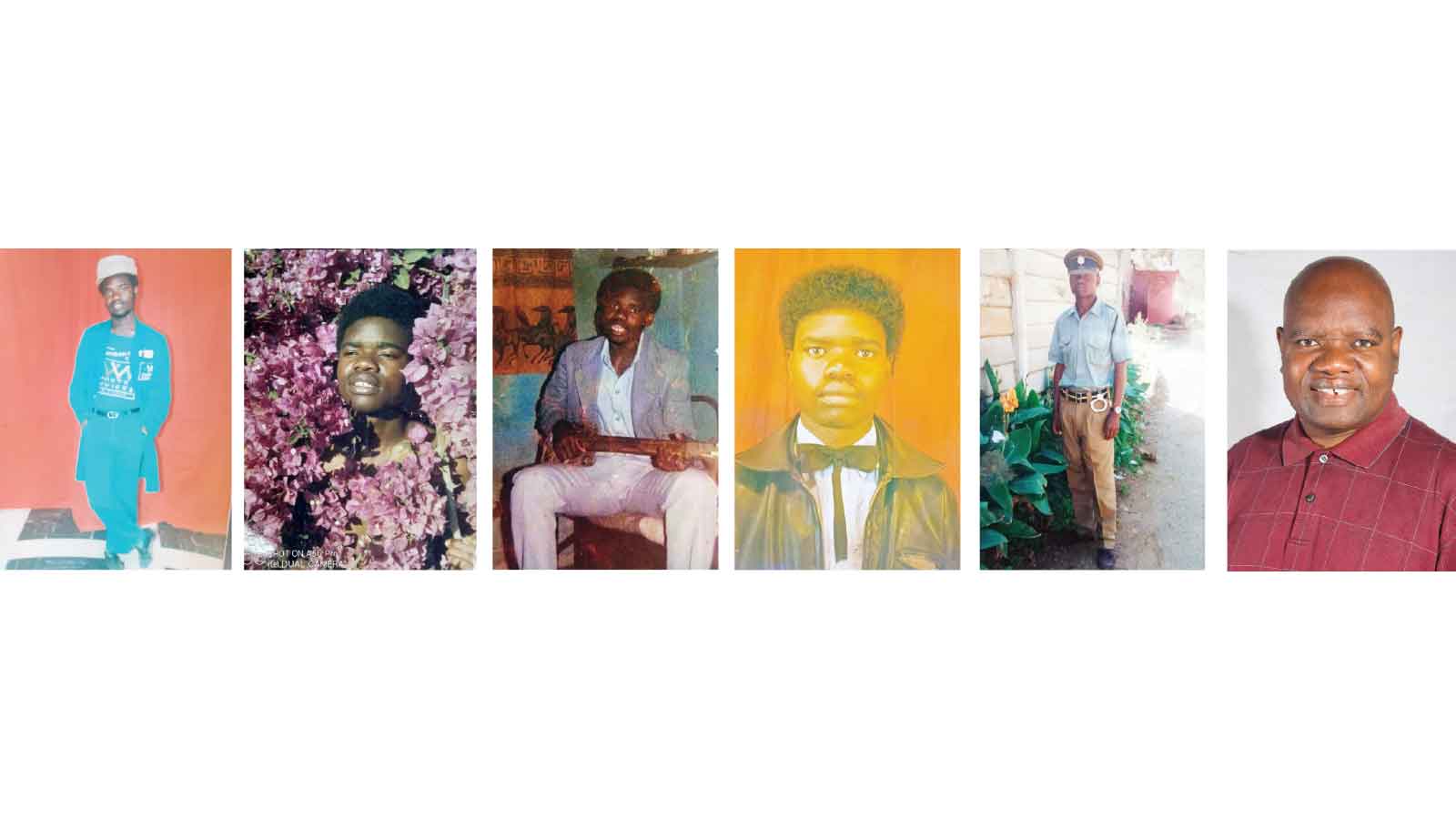
Trust Khosa
SOLO guitarist Kireni Zulu is far more than an accomplished entertainer.
He remains a gifted storyteller, whose music preserves the memories, history and lived experiences of ordinary Zimbabweans.
Whether through his witty stage performances or reflective conversations, the veteran musician effortlessly blends humour with hard truths while documenting moments that shaped both his life and the nation’s history.
A walking archive of Zimbabwe’s cultural and liberation history, Zulu recalls past events with remarkable clarity.
His vivid recollections, delivered with his trademark humour, can sometimes leave listeners wondering whether he is embellishing his stories.
Yet behind his infectious laughter lies painful memories that continue to haunt him.
One such memory dates back to a bitterly cold afternoon in July 1977, when his family endured a terrifying ordeal at the hands of Rhodesian Security Forces.
The traumatic incident remains deeply etched in Zulu’s mind, serving as a constant reminder of the heavy price rural families paid for Zimbabwe’s independence.
His father, Asoni Zulu, and his siblings were brutally tortured on suspicion of providing food and shelter to freedom fighters in Mazvihwa, Midlands province.
Zulu, who was only in Grade One at the time, watched helplessly as his family was subjected to the soldiers’ brutality.
As Zimbabwe prepares to commemorate Heroes’ Day on August 10, the affable Marabi exponent reflected on the horrific incident, calling it one of the darkest chapters of his life.
At one point, he genuinely believed that his entire family would be killed as heavily armed Rhodesian soldiers stormed their homestead, searched every corner and terrorised everyone in the compound.
“In 1977, my father slaughtered a beast to feed the family, but I suspect a sellout tipped off the Rhodesian soldiers that the meat was meant for guerrillas,” recalled Zulu.
“In no time, two lorries carrying Rhodesian soldiers stormed our homestead and gave my father and brothers a thorough beating. We were tortured for the greater part of the day, and it was clear they were extremely angry with us. I had heard stories about their brutality, but on that day, I witnessed it first-hand. To this day, I still have a vivid picture of what happened.”
Now a father of 10, Zulu said he never imagined he would live long enough to tell the story.
“I was in my early teens, although I was still in Grade One because I started school late due to the war,” he explained.
“The soldiers ate all the meat, feasted at our homestead and left us watching helplessly. They even carried away the rest of the meat and left us with nothing as a form of punishment.”
Zulu recalled how his family fled their rural home in Mazvihwa under the cover of darkness following the attack.
“After the harrowing experience at the hands of the Rhodesian Security Forces, my father feared for our lives because they had promised to come back and finish us off,” he said.
“We left our homestead in Shonhayi village, under Chief Mazvihwa, around 10pm. I was strapped onto my father’s bicycle with a piece of cloth, and we briefly settled at a farm called KwaMarko, near Mhondoro.
“We later moved to Martin Spare Farm near Kadoma, where we lived for several years during the liberation war.”
He still regrets being unable to join the liberation struggle because of his young age and small frame.
“After the torture I was subjected to, I wanted to join the liberation struggle, but I was still too young and my parents were strongly against it,” he chronicled.
“Since I was young, I consider myself a war collaborator because we used to give guerrillas information about the whereabouts of Rhodesian forces.
“Although we were children, we had been groomed to cooperate with the guerrillas.
“We also attended all-night pungwes, where we sang alongside the comrades. It was quite an experience and despite the dangers, we cherished those moments growing up.”
During the war, Zulu, who was largely taught to play the guitar by his late father and elder brothers, wrote more than 15 songs that he never had the opportunity to record.
“I have many songs that I composed at the height of the liberation struggle because it was a movement that we could not afford to ignore,” he noted.
Life after the struggle
After they moved from Mazvihwa in 1977, Zulu never returned to Shonhayi village.
“I still miss those days when my late mother brewed opaque beer, which she sold during tea parties where renowned solo guitarists such as Ngwaru Mapundu would perform,” he said.
“To be honest, we started a new life in Kadoma, where I later pursued my education through adult learning. Reflecting on those events, it has not been easy to reach where I am today.”
In an independent Zimbabwe, the multi-talented artiste pursued his education at Mabika Primary School, Munyaradzi High School and Rimuka High School.
“Kadoma became my favourite town because it gave me everything I have today. I worked as a street photographer in Kadoma alongside my brothers before moving to Harare. At one point, I even worked as a police officer, but music has always been my true calling,” he said.
Musically, Zulu has built a rich catalogue, establishing himself alongside Rusape-based Steve Makoni as one of Zimbabwe’s premier solo guitarists of his generation.
His extensive discography includes the albums “Panyika Pano” (1998), “Mazai Adhimba” (2000), “Mupata Wachidembo,” (2003), “Nyevero” (2004), “Marabi Music” (2005), “Sekuru” (2007), “Vhura Chivharo” (2010), “Marabi Queens” (2010) and “Prophet Kitwell” (2016), along with several singles.
He is also a published author, with titles such as “Miromo Yevakuru”, “Chisi Hachieri Musi Wacharimwa”, “Nyoka Yapinda Mumba” and “Mutikitivha Majuru”.
Coming from a family of 11 children — 10 boys and one girl — Zulu credits divine protection for surviving the war.
“Looking back, I believe God has protected me all these years, and I can never stop praising Him,” he said.
With Heroes Day and Defence Forces Day approaching, the occasion holds deep personal significance for Zulu.
Ultimately, he believes his experiences — and those of his family — underscore the true cost of independence.
He hopes younger generations will take time to learn about these sacrifices, ensuring that Zimbabwe’s liberation history is both understood and preserved.