Online Reporter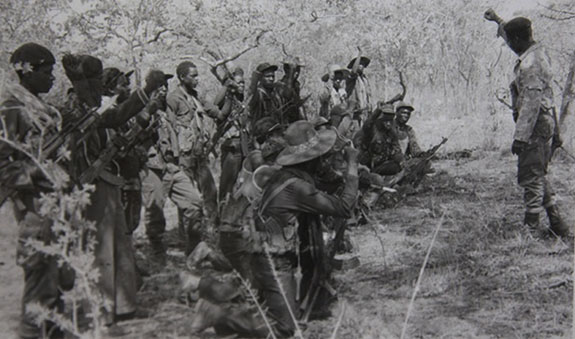
Lloyd Makonya
Correspondent
FORTY-SIX years after Zimbabwe attained independence, an entire generation has grown up knowing only the freedoms their parents and grandparents could once only dream of.
They have never crossed rivers under the cover of darkness to evade colonial patrols or watched villages endure brutal reprisals for daring to support the liberation struggle. For many young Zimbabweans, freedom has always been a given.
Yet freedom was never free.
It was earned through courage, sacrifice and an unwavering belief that one day Zimbabweans would govern themselves, determine their own destiny and reclaim their dignity.
As the nation commemorates Heroes’ Day under the theme: “Lest We Forget,” Zimbabwe is reminded that memory is, not merely an act of looking backwards, but it is a national responsibility. It is through remembrance that a people honour those who paid the ultimate price for the country they now call their own.
Freedom has a memory. It remembers the young men and women who left the comfort of their homes to join the liberation struggle, many never to return. It remembers those whose final resting places remain unknown, their lives woven forever into the fabric of Zimbabwe’s independence.
It remembers countless unnamed heroes whose stories were never written into history books but whose sacrifices became the foundation upon which an independent Zimbabwe was built.
However, the story of Zimbabwe’s liberation was never written by the gun alone. Behind every freedom fighter was a network of ordinary people whose courage often went unnoticed. Women carried food through forests and mountains, concealed messages, gathered intelligence and nursed the wounded. Mothers bid farewell to sons and daughters knowing they might never see them again. Villagers shared the little they had, opened their homes to freedom fighters and accepted unimaginable risks simply because they believed in the dream of a free Zimbabwe.
These were the quiet heroes of the liberation struggle. Their names may never appear on monuments or in history textbooks, but without their unwavering support, the struggle for independence would have been immeasurably more difficult. They understood that freedom demanded sacrifice not only from those carrying rifles, but also from those sustaining the struggle from behind the frontlines.
For Manicaland, the liberation struggle occupies a unique place in the nation’s history. Bordering Mozambique, the province became one of the most strategic corridors during the war. Its mountains, valleys and dense forests were more than geographical features; they became lifelines of the revolution. Thousands of young Zimbabweans crossed through Manicaland into neighbouring Mozambique to join the liberation struggle, while many returned through the same routes after training or military operations.
Communities in areas such as Mutare, Chimanimani, Chipinge, Nyanga and Honde Valley found themselves at the centre of events far greater than themselves. They became the custodians of secret routes, providers of food and shelter and trusted sources of intelligence. Every journey across the border carried enormous danger. Discovery often meant imprisonment, torture or death. Families mourned sons and daughters who never returned. Border communities lived with the constant uncertainty of war, while the province remained a vital link between the liberation fighters and the communities they sought to free. The liberation struggle therefore belonged, not only to those who fought in distant camps and battlefields, but also to the communities whose resilience sustained them.
Heroes’ Day also calls upon Zimbabweans to remember those who survived the war. Many veterans continue to carry physical injuries sustained during the struggle. Others bear emotional wounds that time has never fully healed. Widows remember husbands who never came home. Children grew up without parents. Entire families were displaced and many communities were left to rebuild lives interrupted by conflict.
Independence brought peace, but not every scar disappeared. For many, memories of the liberation struggle remain vivid reminders of the enormous price that was paid for the freedoms Zimbabwe enjoys today. Those freedoms extended far beyond the lowering of one flag and the raising of another.
The struggle was fought for political self-determination, so that Zimbabweans could govern themselves. It was fought for economic emancipation, so that the country’s resources would serve its own people. It was fought for social justice, equal opportunity and the restoration of dignity to a people who had endured decades of colonial dispossession and discrimination. It was fought so that future generations would inherit a nation where their aspirations were determined not by race but by their ability and ambition.
These ideals remain as relevant today as they were in 1980.Remembering the liberation struggle is therefore not about glorifying war. It is about understanding the cost of peace, appreciating the value of freedom and recognising that nation-building is a responsibility passed from one generation to the next.
As the years pass, the generation that witnessed the liberation struggle grows smaller. Their stories, once told around family firesides and community gatherings, risk fading into silence. That reality places a greater responsibility on today’s Zimbabweans to preserve the memories of those who lived through the defining chapter of the nation’s history.
Museums, schools, universities, community archives, traditional leaders, churches, the media and families all have an indispensable role in ensuring that the stories of the liberation struggle are documented and shared. Oral histories should be recorded while those who experienced the war are still with us. Young people must be encouraged to engage with the nation’s history, not as a distant chapter in a textbook but as a living inheritance that shaped the Zimbabwe they know today.
To forget would be to diminish the sacrifices of those who gave everything so that others might live in freedom.
Heroes’ Day is therefore more than a public holiday. It is a solemn reminder that the liberties enjoyed today were purchased at great cost. It is an opportunity to honour not only the decorated heroes whose names are etched into the nation’s history, but also the countless ordinary Zimbabweans whose quiet acts of courage sustained an extraordinary struggle.
Forty-six years after independence, Zimbabwe’s greatest tribute to its heroes is not remembrance for a single day, but a lifelong commitment to uphold the values for which they fought, which are unity, justice, dignity, hard work and an unwavering belief in the country’s future. For freedom has a memory. And a nation that remembers its past is better equipped to protect its future.