Online Reporter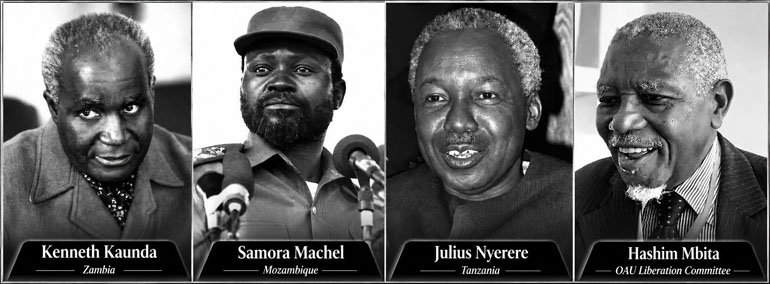
Lloyd Makonya
Correspondent
ON April 18, 1980, the Zimbabwean flag rose for the first time over a free nation, signalling the end of nearly a century of colonial rule.
For millions of Zimbabweans, it was the dawn of a new era, a moment born out of extraordinary courage, sacrifice and resilience. It was the culmination of a protracted liberation struggle that claimed thousands of lives and forever altered the course of the nation’s history.
Yet, as Zimbabwe commemorates Heroes Day on Monday under the theme: “Lest We Forget,” remembrance must extend beyond revered shrines like Chimoio, Nyadzonia, Tembwe, Freedom Camp, Mkushi, Mavonde and countless other places etched into the country’s liberation history.
It must also embrace the African nations that stood shoulder to shoulder with Zimbabwe during its darkest years, the visionary statesmen who placed principle above political expediency and the ordinary citizens across the continent who shared in the pain, burden and hope of Zimbabwe’s quest for freedom.
To remember only Zimbabwe’s heroes is to tell only part of the liberation story. The triumph of 1980 was not won by Zimbabweans alone. It was also won in the corridors of power in Dar es Salaam, Lusaka, Gaborone, Maputo and Luanda.
It was defended in refugee camps, military training centres and diplomatic conferences across Africa. It was financed by countries whose own economies were fragile and protected by leaders who knowingly exposed their nations to military reprisals because they believed that Africa could never be truly free while colonialism endured anywhere on the continent. Indeed, Zimbabwe’s independence became Africa’s independence project.
The Spirit of Pan-Africanism
The liberation of Zimbabwe was rooted in an enduring philosophy that had gathered momentum across the continent following the wave of African independence in the late 1950s and 1960s. It was the belief that the political freedom of one African nation was inseparable from that of another.
This Pan-Africanism philosophy rejected the notion that newly independent African countries should concern themselves only with their domestic affairs while neighbouring states remained under colonial or minority rule. Instead, it demanded solidarity, shared sacrifice and collective action.
As one territory after another gained independence, attention increasingly shifted to Southern Africa, where Zimbabwe, Namibia and South Africa remained under white minority rule, while Portuguese colonialism continued to dominate Mozambique and Angola until the mid-1970s.
To many African leaders, Zimbabwe’s struggle was not simply a Zimbabwean problem. It was an African responsibility. No leader embodied this conviction more profoundly than Tanzania’s founding President, the late Julius Nyerere.
Julius Nyerere: The Philosopher of African Liberation
History remembers Julius Kambarage Nyerere as one of Africa’s greatest statesmen. Reverently known as Mwalimu—”The Teacher”—he believed political leadership carried a moral obligation beyond national borders. Under his leadership, Tanzania became far more than an independent state. It became the diplomatic headquarters of Africa’s liberation movements. At a time when many governments hesitated to antagonise colonial powers, Nyerere opened Tanzania’s doors to liberation organisations from Zimbabwe, South Africa, Namibia, Mozambique and Angola.
Dar es Salaam evolved into what many historians have described as the capital of African liberation. Exiled nationalist leaders found sanctuary there. Military recruits received training. Diplomats coordinated strategy. International journalists reported on liberation struggles from the Tanzanian capital. Students fleeing colonial oppression found opportunities for education.
For Zimbabwean freedom fighters, Tanzania became both a refuge and a launching pad. Nyerere’s commitment came at considerable cost. Supporting liberation movements strained Tanzania’s limited financial resources and attracted hostility from colonial governments. Yet he remained unwavering.
He consistently argued that African independence would remain incomplete until every nation on the continent had achieved freedom. His moral authority helped persuade the international community that colonialism in Southern Africa was not merely a regional issue but a global injustice demanding urgent action.
Hashim Mbita: The Strategist Behind African Solidarity
If Julius Nyerere provided the vision, Hashim Mbita transformed that vision into practical support. Although less celebrated than many political leaders, Brigadier-General Hashim Mbita became one of the most influential architects of Southern Africa’s liberation.
Serving as Executive Secretary of the Organisation of African Unity (OAU) Liberation Committee from 1973 to 1999, Mbita coordinated one of the most ambitious continental solidarity programmes in modern African history.
Operating from Dar es Salaam, the Liberation Committee mobilised financial assistance from African governments, coordinated military training opportunities, procured equipment, facilitated diplomatic recognition and ensured that recognised liberation movements received sustained political and logistical support.
For Zimbabwe’s liberation movements, this assistance proved indispensable. The committee became the bridge connecting newly independent African states with liberation movements still fighting colonial regimes.
Its work extended far beyond funding. It organised scholarships for young Africans displaced by war, coordinated humanitarian assistance for refugees, facilitated international advocacy and strengthened diplomatic efforts within the United Nations and other global institutions. Historians widely acknowledge that without his organisational leadership, continental support for liberation movements would have been significantly less coordinated and far less effective.
Birth of the Frontline States
By the mid-1970s, a remarkable alliance had begun to emerge across Southern Africa. Known collectively as the Frontline States, these countries recognised that the survival of colonialism in Zimbabwe, Namibia and apartheid South Africa threatened the security and future of the entire region.
Although differing in size, economic strength and political systems, Tanzania, Zambia, Botswana, Mozambique and later Angola forged an extraordinary partnership dedicated to supporting liberation movements. Their cooperation was unprecedented. They shared intelligence. They coordinated diplomatic initiatives. They hosted liberation fighters. They accepted refugees. They endured military retaliation. Most importantly, they demonstrated that African unity was more than an ideal, it was a practical instrument for dismantling colonialism.
Kaunda’s Legacy
If Tanzania provided the ideological heart of the liberation struggle, Zambia, Mozambique, Botswana and Angola became its lifeblood. Among the towering figures of African liberation stands Kenneth Kaunda, Zambia’s founding President and one of Zimbabwe’s most steadfast allies.
When Zambia attained independence in 1964, it inherited a fragile economy heavily dependent on transport routes that passed through Rhodesia and apartheid South Africa. Any confrontation with these regimes threatened Zambia’s economic survival. Kaunda understood the risks. Yet he believed that independence carried responsibilities beyond national borders. For him, freedom was indivisible. As long as Zimbabwe, Namibia and South Africa remained under colonial or apartheid rule, Zambia’s own independence would remain incomplete.
Under his leadership, Lusaka evolved into the political capital of Southern Africa’s liberation movements. The headquarters of ZAPU, ANC, SWAPO and other liberation organisations operated from Zambia. International journalists, diplomats and solidarity organisations converged on Lusaka, transforming the city into the diplomatic nerve centre of anti-colonial resistance.
Zimbabwean nationalists found sanctuary there. Political leaders held crucial consultations. Military recruits departed from Zambia for training in friendly African countries. Weapons and humanitarian supplies passed through Zambian territory despite constant threats from Rhodesian forces. Kaunda’s commitment came at a devastating price. Throughout the 1970s, Rhodesian and South African forces repeatedly launched cross-border attacks into Zambia. Yet Zambia refused to abandon the liberation movements.
Instead, Kaunda intensified diplomatic efforts, lobbying the United Nations, the Commonwealth and the Non-Aligned Movement to isolate the Rhodesian regime. He demonstrated that moral leadership sometimes requires extraordinary sacrifice. For Zimbabweans, Lusaka became more than a neighbouring capital. It became a second home in exile.
Samora Machel: The Revolutionary Who Opened Mozambique’s Gates to Freedom
When Mozambique achieved independence from Portuguese colonial rule in June 1975 under Samora Machel, the country inherited enormous developmental challenges after centuries of colonial exploitation.
Many newly independent governments would have concentrated solely on rebuilding their own nation. Machel chose a different path. He declared that Mozambique’s independence would have little meaning while Zimbabwe remained under colonial rule. Almost immediately, Mozambique became the principal rear base for ZANLA operations. Thousands of Zimbabwean freedom fighters established camps inside Mozambique. Training facilities expanded. Supply routes were strengthened. The long and porous Mozambique-Zimbabwe border fundamentally altered the dynamics of the liberation struggle.
For Rhodesian security forces, this represented a major strategic setback. For Zimbabwean guerrillas, it created new opportunities to intensify military operations. The Rhodesian response was swift and brutal. Cross-border raids became increasingly frequent. Civilian infrastructure was destroyed. The economic consequences were equally severe. Resources desperately needed for Mozambique’s own reconstruction had to be diverted towards security and humanitarian assistance.
Despite these hardships, Machel never retreated from his commitment. He frequently reminded the world that the struggle against colonialism could not be divided by artificial borders created during the colonial era. His government understood that defending Zimbabwe’s liberation was ultimately defending Mozambique’s own future.
Today, countless Zimbabwean families owe their freedom to the generosity and resilience of Mozambican communities that shared food, shelter and security during one of the most turbulent periods in Southern African history.
It is easy to speak of African solidarity in abstract terms. It is much harder to appreciate its true cost. Supporting Zimbabwe’s liberation meant accepting refugee populations numbering in the hundreds of thousands. It meant diverting scarce national resources from schools, hospitals and development projects towards security and humanitarian assistance.
It meant living with the fear of bombings, sabotage and military reprisals. It meant burying civilians who had never carried a weapon but became casualties simply because their governments chose justice over convenience. These were sacrifices made not for territorial gain or economic benefit. They were sacrifices made because African leaders believed that the dignity of one nation depended upon the freedom of another.
That conviction transformed Southern Africa’s political landscape forever. As Zimbabwe prepares to commemorate Heroes Day, the stories of Kaunda, Machel, Nyerere and the nations they led remind us that independence was not secured by courage alone. It was sustained by friendship. It was protected by solidarity. It was paid for by neighbours who accepted hardship so that Zimbabweans might one day celebrate freedom beneath their own flag.
Lest We Forget, their sacrifices deserve a permanent place in Zimbabwe’s national memory. There is an African proverb that says, “If you want to go fast, go alone. If you want to go far, go together.” Few chapters in African history illustrate this truth more profoundly than Zimbabwe’s liberation struggle.
The road to independence was long, arduous and stained with sacrifice. It was travelled by young men and women who crossed rivers into neighbouring countries to join the liberation struggle, by mothers who bid farewell to children they might never see again and by communities that lived under the shadow of war. Yet alongside these Zimbabwean sacrifices stood countless others friends from across Africa and beyond who believed that the cause of Zimbabwe’s freedom was also the cause of humanity.
And it must also remember the African presidents who chose courage over convenience; the diplomats like Mbita who fought tirelessly in international forums. The story of Zimbabwe’s liberation belongs to an Africa that refused to abandon one of its own. As we gather at shrines across the country this Heroes Day, laying wreaths and lowering our heads in silent tribute, let us remember that our national flag flies today because many hands, from many nations, helped raise it.
The men and women who lie in Zimbabwe’s Heroes Acres will forever occupy a sacred place in our national memory. Their courage gave us our independence. Yet history also calls upon us to honour the friends who walked beside us, who carried our burdens as if they were their own and who believed that the freedom of Zimbabwe would complete the unfinished journey of African liberation.