Gibson Mhaka
Bulawayo Bureau
PRESIDENT Mnangagwa has challenged investors, businesses and Government institutions to turn Zimbabwe’s sporting talent, music, arts and cultural heritage into commercially viable industries capable of creating jobs, attracting investment and generating export earnings.
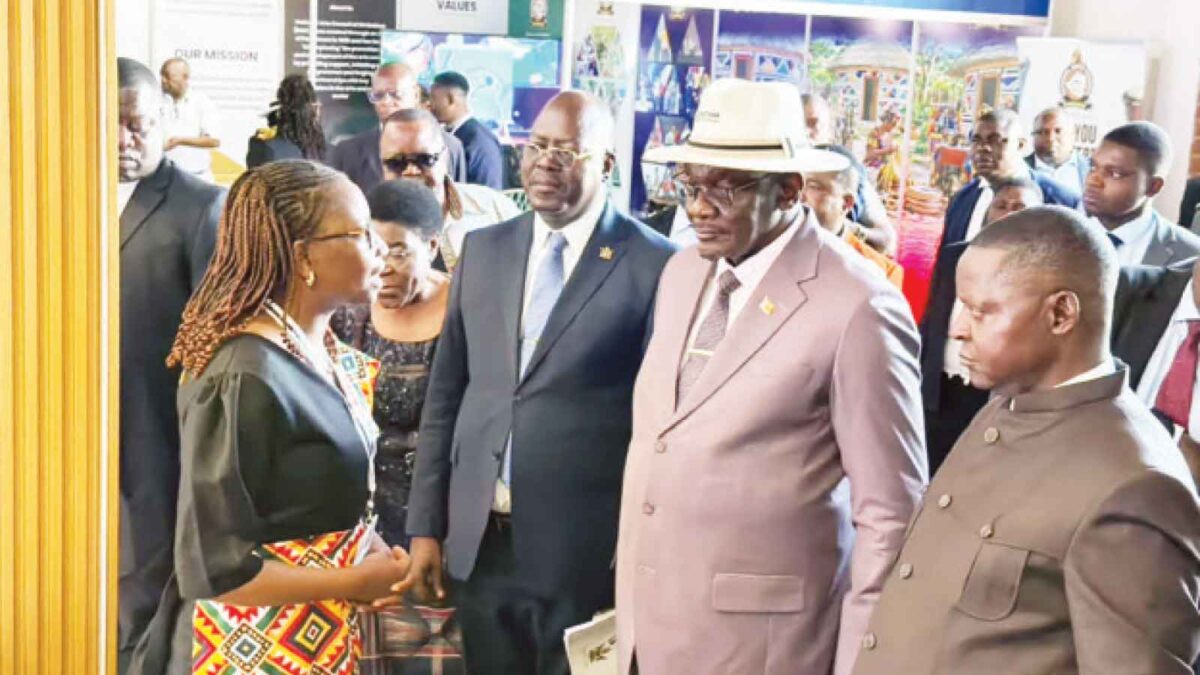
In a speech read on his behalf by Vice President Dr Kembo Mohadi at the official opening of the inaugural Kuzana Sport and Creative Economy Expo Zimbabwe 2026 (SCEEZ) in Bulawayo yesterday, the President said the country can no longer afford to treat sport and the creative arts merely as recreational and entertainment activities when they have the potential to become significant contributors to economic growth under the National Development Strategy 2 (NDS2) and Vision 2030.
The President said Zimbabwe need to move beyond conventional sponsorship arrangements towards long-term business partnerships that enable athletes, artists and other creatives to earn from their intellectual property, build brands and compete in regional and international markets.
“Sport and arts are economically viable industries worldwide, and Zimbabwe must draw economic value from these areas,” he said.
The President said the exhibition represented an important shift in how Zimbabwe viewed the two sectors, which have often operated separately and struggled to realise their full commercial potential.
Running under the theme, “Towards Vision 2030 through Sport and Creative Industries”, the expo seeks to reposition sport, arts and culture as engines of investment, innovation, employment creation and national development.
“For many years, sport and the creative industries have generally operated independently of each other, with sport largely regarded as a recreational activity and arts largely seen as entertainment.
“The hosting of Kuzana Expo has come to change the people’s mindset towards arts and sport,” said President Mnangagwa.
He said Zimbabwe has the talent, cultural heritage and creative capacity to build competitive industries, but unlocking that potential required investment, professional development, supportive policies and access to viable markets.
“If properly supported and commercially developed, then these sectors present significant job creation, generators of innovation, vehicles for national pride, tourist attractions and drivers of economic growth,” said President Mnangagwa.
The President said the creative economy extends far beyond performances on the pitch and stage, encompassing broadcasting, digital media, gaming, film, music, design, tourism, construction, technology and professional services.
These interconnected value chains, he said, offered opportunities for businesses to develop products and services around Zimbabwean talent while creating employment for young people and expanding the country’s export base.
“We need to create an environment that enables Zimbabwean talent to produce Zimbabwean value, while allowing our products, brands and cultural expressions to compete competitively on regional and international levels,” said President Mnangagwa.
He said the commercialisation drive was consistent with NDS2 and the national ambition to build a prosperous and empowered upper-middle-income society by 2030.
He invoked the national development philosophy, “Nyika inovakwa nevene vayo, ilizwe lakhiwa ngabanikazi balo”, emphasising the need for Zimbabweans to take ownership of economic transformation by investing in local talent and turning home-grown creativity into marketable products.
The President challenged organisers to make Kuzana SCEEZ Expo more than an annual exhibition, urging them to use the platform to broker investment deals, establish business partnerships and connect athletes, artists, film-makers, sporting associations, technology innovators and corporate brands.
“Kuzana SCEEZ Expo must, therefore, be much more than just an exhibition. It must serve as a marketplace of ideas, investments, and opportunities,” he said.
President Mnangagwa said intellectual property protection would be central to building a sustainable creative economy, ensuring that musicians, performers, filmmakers, designers and other creators benefited financially from their work.
“Creative economy must be an economy based on intellectual property, creating wealth and jobs. An economy based on our heritage attracting tourists, an economy based on our stories going around the world, and an economy based on our creativity becoming a competitive export product,” he said.
To support this transformation, Government would strengthen policy, regulatory and institutional frameworks while improving access to infrastructure, finance, technology and markets.
President Mnangagwa cited the National Languages Policy, the Cultural and Creative Industries Strategy 2020–2030, the Arts, Culture and Heritage Policy and the Sport and Recreation Policy as instruments supporting the development of the sectors.
He also called for stronger protection of intellectual property rights to ensure that creators and performers received appropriate compensation and could build sustainable livelihoods from their work.
The President welcomed a partnership between the National Arts Council of Zimbabwe and Bindura University of Science Education to digitise artists’ registration and permit applications, saying the initiative supported the Government’s ease-of-doing-business agenda.
He said efforts to safeguard and commercialise Zimbabwe’s intangible cultural heritage could also generate economic opportunities, citing the ongoing process to register AmaBhiza dance on the United Nations Educational, Scientific and Cultural Organisation’s (UNESCO) Intangible Cultural Heritage list.
AmaBhiza would join the mbira instrument and Jerusarema Mbende dance among Zimbabwe’s cultural expressions recognised on UNESCO’s intangible cultural heritage list.
The President said cultural preservation should go hand in hand with creating opportunities for communities to benefit economically through tourism and the promotion of indigenous knowledge and artistic expression.
He challenged investors and captains of industry to explore opportunities at the intersection of sport, arts, culture and technology, including brand development, entertainment, manufacturing, tourism and digital enterprise.
“I encourage you to go beyond sponsorship and consider entering into partnerships and arrangements that create long-term economic value,” said President Mnangagwa.
He also urged young people to approach their talents professionally and acquire the skills, knowledge and discipline needed to succeed in increasingly competitive markets.
“To our youth, I say this expo is yours. Whether you are an athlete striving for achievement, a musician seeking for your voice to be heard, a filmmaker telling the Zimbabwean story, a designer developing your brand, an artist transforming public space or a technology entrepreneur developing tomorrow’s innovative solutions for sport and art, your talent holds economic value,” said President Mnangagwa.
He called on the Ministry of Sport, Recreation, Arts and Culture to ensure talent identification and development programmes reached all provinces and communities, while promoting professionalism, integrity, inclusiveness and excellence.
President Mnangagwa said the success of the expo should ultimately be judged by the businesses established, jobs created, investments secured and Zimbabwean products that reached international markets, rather than the number of exhibitions held.
“Our success will not be measured simply by how many times we host exhibitions, but by how many businesses are created, jobs produced, investments secured, intellectual property commercialised and Zimbabwean products successfully marketed abroad,” he said.
The President congratulated the ministry and its partners on organising the inaugural expo, expressing hope that the engagements will produce concrete initiatives that strengthen the creative economy and contribute to Zimbabwe’s long-term development objectives.