Online Reporter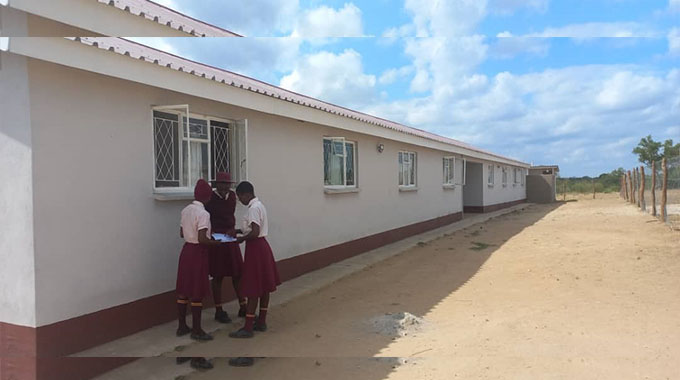
Thupeyo Muleya
Beitbridge Bureau
THE construction of two low-cost boarding facilities at Sihlengeni High and Bayethe Secondary schools in Umzingwane District, Matabeleland South Province, has improved service delivery in the education sector while reducing long distances travelled by female lerners.
The sustainable and affordable boarding model has brought relief to the community, whose children used to walk nearly 20km to school.
The project is supported by the Global Fund through the United Nations Development Programme (UNDP), with the National Aids Council and Plan International as implementing partners.
The intervention falls under the Determined, Resilient, Empowered, AIDS-free, Mentored and Safe (DREAMS) Modified programme.
Each boarding facility accommodates 32 girls, and learners started using the infrastructure in January 2023.
Speaking during a tour of HIV and AIDS intervention projects by journalists recently, National AIDS Council (NAC) Umzingwane District AIDS Coordinator, Mr Mduduzi Ngwenya, said the boarding facilities are expected to reduce the HIV prevalence rate among children of school-going age.
“We have the DREAMS Programme, which is being implemented in all seven districts of the province. In six districts, the project is being implemented under ZHI, while in Umzingwane we have the DREAMS Modified programme,” he said.
“The DREAMS programme, which targets adolescent girls and young women, is a response to the high HIV rate within this age group. We realised some of the major drivers are lack of schooling and teenage pregnancies.
“Some of the girls in these two schools were failing to access schooling due to long distances and, as such, with our partner Plan International, through funding from UNDP, we saw it fit to establish these low-cost boarding facilities.”
He said the district has a population of 73 000 and 10 000 people living with HIV. The prevalence rate stands at 13,3 percent and incidence at 0,3 percent. Teenage pregnancies have also dropped to 222 in the first half of this year, down from 238 in the same period last year.
Bayethe Secondary School Deputy Head, Mr Njabulo Dube, said since the start of the low-cost boarding facility, the school’s pass rate had increased from 14 percent previously to 50 percent, with girls making up the majority.
He said the school is servicing a total of five feeder primary schools. Vice Chairperson of the Bayethe School Development Committee (SDC), Mrs Skumbuzo Gumbo, said cases of teenage pregnancy had started going down at the school.
“Previously we would record at least 10 pregnancies among learners, and now, with the support of NAC and its partners, children are now conscious of HIV prevention and have also changed their sexual behaviour. In addition, this boarding facility has made a huge difference for these vulnerable female pupils,” she said.
“Going forward, we also need to look at the plight of the male pupils who also suffer the same fate. Some are even dropping out of school because of walking distances and are getting into the business of artisanal mining.”
A representative of Chief Sigola, Mr Nqabutho Sigola, said the opening of the low-cost boarding school had brought relief to the community.
He said they are now pooling resources to build another block so that they may accommodate more female pupils and reduce cases of bush boarding, where children have to stay in rented rooms or with relatives close to the secondary school.
Umzingwane Schools Inspector, Mr Thuthani Nkomo, said the facilities are bridging gaps in service delivery in the education sector.
“This intervention by the partners was timely. We have had issues of girls dropping out of school,” he said.
“The boarding facility ensures pupils are not exposed to issues that drive the spread of HIV and AIDS or affect their performance in school, as they had to walk for longer distances.
“At these facilities, they are also learning life skills and making proper decisions in terms of sexuality.
“That goal of reducing early pregnancy and increasing performance in girls dovetails with a reduction of HIV and AIDS cases in adolescent girls and young women. The enrolment of girls in secondary schools is now increasing.”
Plan International Programme Facilitator for Umzingwane, Mr Owen Mutanga, said they are rolling out the DREAMS project and are assisting at least 908 girls around Umzingwane.