Thandiwe Chidzungu [email protected]
“NANGU uNamatwins! Le cobra eyi red, le black, le lavender!”
Her voice echoes through the dusty streets of New Magwegwe and Old Magwegwe, covering the Marisha, Green area, Caltex, eClub, eSidukudukwini, eMaflethini, and eZitineni ezibomvu as they call parts of Magwegwe in Bulawayo’s western suburbs.
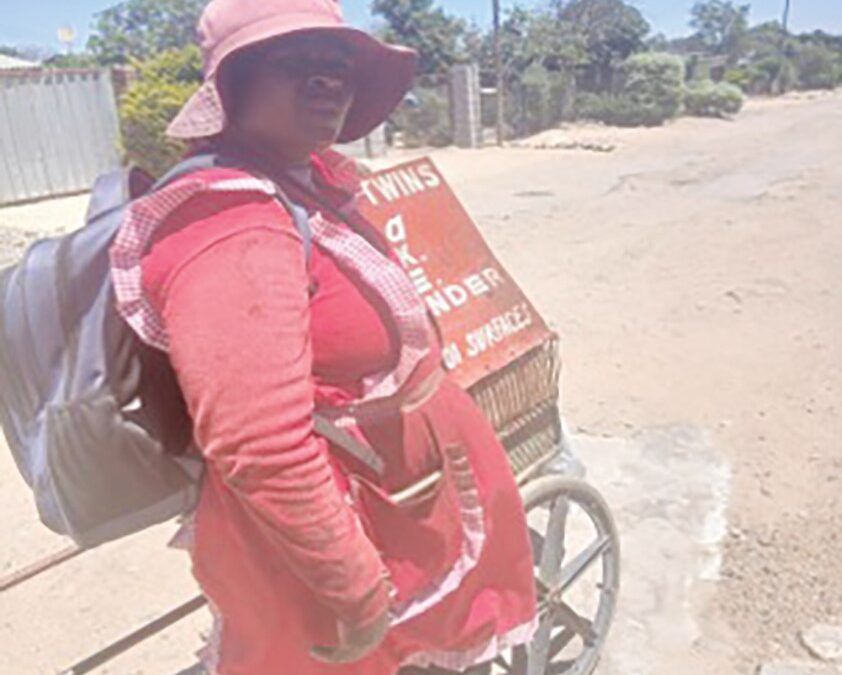
For Angelina Ndlovu, popularly known as NanguNamaTwins, this familiar call is more than a way of attracting customers. It is the sound of a woman determined to make a living, support her family and rise above life’s challenges.
Every morning presents another opportunity for Angelina to work towards a better future. While others are still preparing to start their day, she is already packing her wares, ready to face the uncertainties of street vending. Hers is a story of perseverance, sacrifice and the belief that taking initiative can make a difference, even when circumstances are difficult.
Born at Mpilo Hospital and bred in Gwanda at eMawane in the early 1980s, Angelina completed her primary education in her hometown before attending Magwegwe High School for her secondary education. She later ventured into street vending, driven by a desire to help her husband ease the financial burden of raising a family.
“I started selling so that I could help my husband and ease the burden of raising a family. It is difficult to wait for one’s husband’s income,” she explains.
For Angelina, business is not simply about making money. It is about shared responsibility, providing for her children and contributing to the well-being of her household.
Angelina specialises in floor polish, which she sells in various colours, including lavender, red and black. Although her product range is focused, keeping the business running demands considerable effort and resilience.
“Business is not always smooth. At times you fall, and at other times you rise again,” she says.
Her words capture the realities of small-scale street vending, where earnings fluctuate and success is never guaranteed. The rainy and winter seasons are particularly difficult, as fewer people venture outdoors to buy goods. Sales decline, leaving her with very little income despite the effort she puts into her work.
“We continue selling, but it is not easy. During the rainy season, we make very little money,” she says.
Yet Angelina presses on, understanding that setbacks are part of the journey. Her experience shows that running a small business requires patience, adaptability and the determination to keep going, even when profits are low.
Angelina’s working hours depend largely on the season and the habits of her customers. By 5am she is already awake, packing her wares in preparation for the day. During the hot season, she begins selling at around 6am, while in winter she starts at approximately 7:30am, adjusting her routine to the time people are likely to wake up and venture outside.
She generally works until 1pm, although during winter she may continue until 3pm. Her schedule reflects the flexibility required to survive in a business where opportunities change with the weather and customer demand.
Making floor polish is also demanding. Her children sometimes help by making the fire needed during the preparation process, but their schooling remains a priority. Angelina wants them to concentrate on their education while she continues working to meet the family’s needs.
Through her business, she is able to support her children and assist her husband with household expenses. Every sale, however small, contributes towards keeping the family going.
Despite the hard work involved, Angelina notes that vending is often looked down upon by some members of society. Such attitudes overlook the effort required to earn an honest living and the important role small traders play in supporting their families.
For Angelina, dignity is not determined by the size of a business or the title attached to a job. What matters is the willingness to work, take responsibility and make a contribution.
When asked what she is most proud of as she reflects on her journey, she responds with humour: “That’s classified.”
Her playful answer leaves some achievements unspoken, but her commitment to her family and her persistence in business speak volumes.
Angelina’s strongest message is directed at women who may be waiting for their husbands to provide for every household need. Drawing from her own experience, she encourages women to take initiative and find ways to earn an income, no matter how small they begin.
“Wake up as a woman and do something for yourself. Do not just sit and wait for your husband to bring relish. For life to be easier, you need to help each other,” she advises.
She encourages women to start with what is accessible, whether selling tomatoes, vegetables or other goods at the market. They do not need to wait for substantial capital or perfect circumstances before making a start.
Angelina’s journey reminds us that behind every small business is a person with responsibilities, aspirations and a story worth telling. Her days begin early, her income rises and falls with the seasons, and her work demands persistence even when the rewards are modest.
Yet she continues to answer the call of each new day, selling her floor polish and doing what she can for her family.
For Angelina, vending is more than a means of survival. It is her contribution to her family, a demonstration of resilience and a call to other women to recognise their own potential.
Her message rings as clearly as her familiar street cry: do not wait for life to become easy. Start where you are, do what you can, and keep moving forward.