Judith Phiri [email protected]
MATABLELAND commercial layer farmers have come together to establish a regional network aimed at tackling production bottlenecks, improving collaboration and unlocking opportunities in the growing egg industry.
The newly formed Matabeleland Commercial Layer Farmers Network seeks to provide a common platform for producers to share knowledge, explore solutions to operational challenges and strengthen their competitiveness in a sector with significant potential for income generation and employment creation.
The initiative comes as farmers grapple with high start-up costs, limited access to finance, shortages of quality day-old chicks, rising production expenses and the effects of climate variability on poultry farming.
Speaking on the sidelines of a breakfast meeting that brought together commercial layer farmers from across Matabeleland on Sunday, Big Dutchman Sales Executive for Zimbabwe (Layers), Mr
Charles Ziwa, said the gathering was aimed at understanding farmers’ challenges and creating opportunities for collaboration.
He said the growth of the layer industry presented opportunities for both established and aspiring farmers, but there was a need for stronger connections across the value chain.
“It was also to engage each other on how best they can improve and we managed to actually connect them. This has been one of the best days because these are the people who are feeding the nation and, if I can tell you, the egg is the highest source of protein that we have in the world, so to speak,” said Mr Ziwa.
He said the proposed network would also encourage emerging farmers to explore opportunities in commercial egg production and related businesses.
“The idea of forming a network for commercial farmers is because we realised that the layer industry is actually growing big and we want to motivate other layer farmers who are upcoming so that they can look at the potential market.
“There is huge potential in the value chain that they can actually join. There is a good source of income and also creation of jobs that is taking place. We want to secure the next future generation as Big Dutchman and to us it is also pivotal to be part of the solution,” he said.
He said farmers at the meeting raised concerns over access to finance when seeking to expand their operations, manure removal and the impact of El Niño-related conditions on poultry production.
Mr Ziwa said Big Dutchman was keen to support farmers in exploring facilities and solutions that could help them overcome some of the challenges and improve productivity.
Poultry farmer Mrs Veronica Musarurwa, from Kensington, who has been in the industry for more than 15 years, said layer farming required substantial capital investment long before farmers could
begin earning returns from egg sales.
She said the period between purchasing day-old chicks and the onset of egg production was particularly demanding, as farmers had to finance feed, vaccines and other essential inputs for several months.
“The challenges with layer farming is that it’s not an easy thing because, first of all, you need capital to start with. Even if you want to buy day-old chicks, you need money to buy them and the feed up to 20 weeks until they start laying.
“They can only start giving you money to buy feed probably around 21 to 23 weeks there, but then from the beginning up to those weeks you need money. So the challenge that I have faced is capital to ensure the first 23 weeks runs smoothly,” she said.
Mrs Musarurwa said she had been forced to seek alternative sources of funding to keep production going, adding that the high cost of day-old chicks, feed and vaccines placed considerable pressure on farmers.
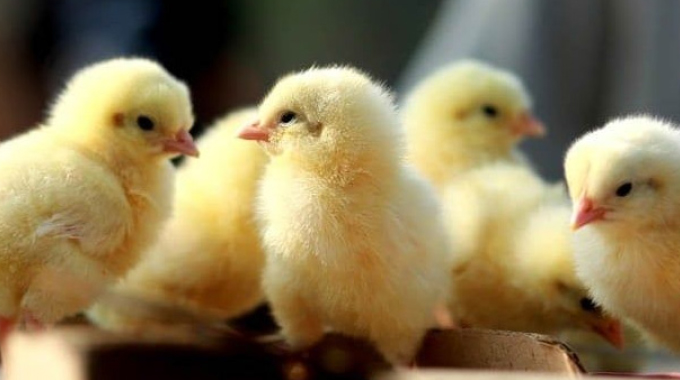
Another farmer, Mr Ben Tesa, from Figtree, said inconsistent supplies of day-old chicks and concerns over their quality were undermining production planning and increasing losses.
He said farmers sometimes waited between four and six months to secure chicks, with some experiencing high mortality rates after delivery.
“It’s very difficult to get day-old chicks. Sometimes you are in the queue, you wait for almost four to six months without getting those chicks and when you get them they are of poor quality.
“For example, you buy 2 000 chicks and you have got a mortality of almost 30 to 40 percent. So you find that the chicks that are sold in Bulawayo are of poor quality and this affects us as farmers,” he said.
The formation of the network is expected to provide farmers with a platform to collectively engage suppliers and other stakeholders, share practical production knowledge and identify opportunities to improve access to finance, inputs and markets.