Online Reporter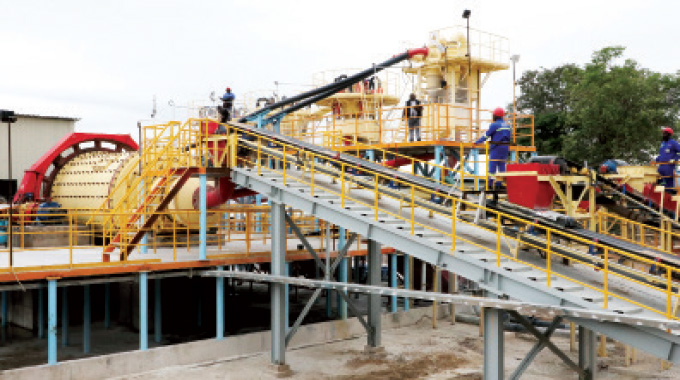
Rutendo Nyeve, Victoria Falls Reporter
MATABELELAND North is increasingly consolidating its position as one of Zimbabwe’s most strategic economic frontiers, with an estimated gross domestic product (GDP) of about US$3 billion and a surge of new investments worth approximately US$9 billion recorded over the past year.
The performance underscores the province’s growing national significance as a tourism powerhouse, mining hub, energy corridor and agricultural frontier, in line with the Vision 2030 agenda to transform Zimbabwe into an upper-middle-income economy.
Matabeleland North occupies a critical position in Zimbabwe’s development architecture, anchoring the country’s tourism, energy, mining and regional trade corridors.
The province shares borders with Zambia and Botswana, positioning it as a key gateway for regional commerce and tourism.
Officially opening the 2026-2030 Strategic Planning Workshop for Matabeleland North in Victoria Falls on Thursday, Minister of State for Provincial Affairs and Devolution Richard Moyo said the province’s economic momentum reflects tangible gains from devolution, infrastructure development and rising investor confidence.
“As at December 2025, Matabeleland North recorded a GDP estimated at approximately US$3 billion, supported by strong activity in agriculture, mining, tourism and related value chains,” he said.
Minister Moyo said the scale of new investments — estimated at US$9 billion within a single year — signals growing confidence in the province’s long-term role as a driver of national economic growth.
“These investments span mining expansions, tourism facilities in Victoria Falls and Hwange, renewable and conventional energy projects, as well as agro-based and value addition initiatives,” he said.
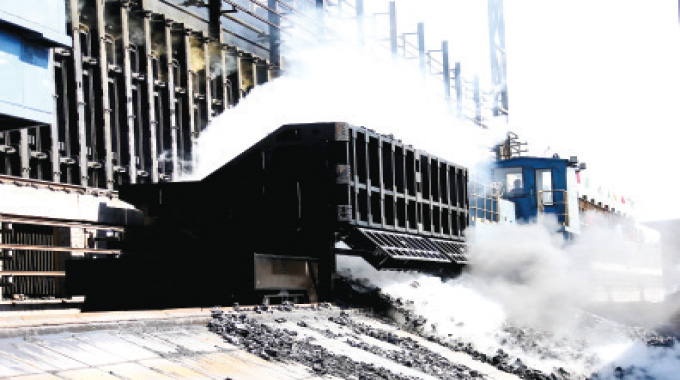
At national level, the province hosts some of the country’s most critical economic assets, including Hwange Thermal Power Station, the country’s largest electricity producer, Hwange National Park, Victoria Falls, a global tourism icon, and vast mineral and agricultural land.
In mining, Matabeleland North is endowed with coal, methane gas, gold and other minerals, supporting the Government’s drive towards value addition and industrialisation.
Minister Moyo said flagship infrastructure projects are reinforcing Matabeleland North’s status as a vital economic corridor linking Zimbabwe with the region.
“We are particularly grateful for the commencement of the Bulawayo-Victoria Falls Road rehabilitation, a transformative project that will enhance connectivity, stimulate trade and tourism, reduce the cost of doing business and strengthen the province’s contribution to the national economy,” he said.
The minister attributed the renewed investment and economic acceleration to President Mnangagwa’s infrastructure led development approach, saying it has unlocked new opportunities across the province.
“These developments are already inspiring investor confidence and positioning Matabeleland North as a preferred investment destination,” he said.
Beyond headline investment figures, Minister Moyo noted that the devolution programme has enabled communities to play a more direct role in development initiatives, ensuring that local priorities are aligned with national goals.
“The year 2025 marked continued progress in the implementation of devolution and decentralisation. Communities are increasingly taking ownership of development,” he said.
However, the minister cautioned that sustaining the current growth trajectory requires unity and effective coordination among all stakeholders.
“While notable progress has been achieved, the full potential of Matabeleland North can only be unlocked through unity, effective coordination and unconditional collaboration,” he said.
Minister Moyo urged public officials to embrace the Whole-of-Government and Whole-of-Society Approach, stressing professionalism, integrity and servant leadership to ensure that development outcomes translate into improved livelihoods for communities.
“As we plan for 2026-2030, we must be honest in our assessments, realistic in our planning and bold in our strategies.
“The outcomes of this workshop must deliver tangible results for our people,” he said.
The strategic planning workshop is expected to produce a comprehensive implementation roadmap that aligns provincial priorities with National Development Strategy 2 (2026-2030) and Vision 2030.