Patrick Chitumba, [email protected]
FARMERS in Mberengwa District have intensified preparations for the 2026/27 summer cropping season, with early land preparation and input distribution under the Pfumvudza/Intwasa programme expected to strengthen resilience against drought and safeguard household food security.
The preparations come as the Government steps up efforts to improve national food security and nutrition through climate-smart agriculture, in line with Vision 2030 and the National Development Strategy 2 (NDS2).
Across the country, about 2,3 million Pfumvudza/Intwasa plots covering one million hectares have reportedly been prepared, reflecting continued adoption of conservation agriculture to manage erratic rainfall and improve smallholder productivity.
The programme promotes practices such as potholing, mulching, timely planting and efficient use of agricultural inputs to conserve soil moisture and improve yields, particularly in drought-prone areas such as Mberengwa.
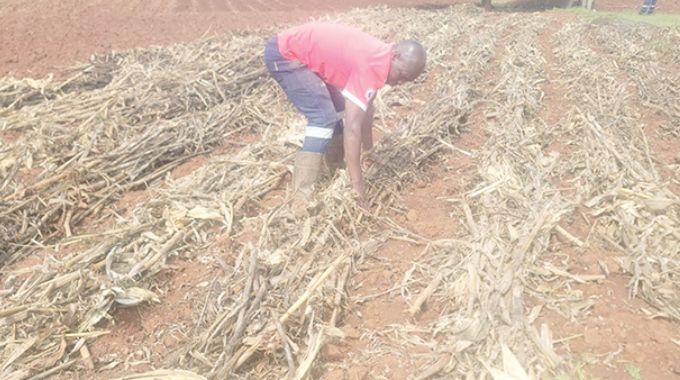
For 67-year-old Mberengwa farmer Mr Simbarashe Maphosa, the approach has become essential to sustaining household food security and agricultural production.
“Our plots are ready, as you can see. The ground is wet and we managed to secure seed for us to embark on the Pfumvudza cropping season,” he said.
Mr Maphosa said he was optimistic that the programme would once again deliver a good harvest, potentially leaving his household with surplus grain to sell.
“Out of the four Pfumvudza plots we have here, we are hoping to get enough grain and have a surplus which we are going to supply to the Grain Marketing Board. We have always had good results through this farming method and we depend on it,” he said.
His experience highlights the importance of climate-smart farming methods in helping smallholder households maintain food supplies and generate income despite increasingly unpredictable weather patterns.
Agricultural and Rural Development Advisory Services Midlands provincial director Ms Busiso Olga
Mavankeni said field assessments had revealed encouraging progress in preparations for the season.
“We are assessing how farmers are doing as far as preparedness for Pfumvudza potholing is concerned,” she said.
Ms Mavankeni said some farmers in Mberengwa had already prepared their plots and applied mulch ahead of the rains.
“As Midlands Province, we are progressing very well. We are encouraging farmers to engage their extension officers for guidance on rainfall patterns and when to plant,” she said.
She said the early distribution of seed, basal fertiliser and top-dressing fertiliser was helping farmers prepare in time, while agricultural extension officers continued to provide guidance on recommended farming practices.
The Government is also promoting crop diversification to improve household nutrition and reduce over-reliance on maize, particularly in areas vulnerable to prolonged dry spells.
Ms Mavankeni said farmers were being encouraged to grow small grains such as sorghum and millet alongside legumes such as cowpeas and groundnuts.
The approach is intended to improve dietary diversity while giving farmers access to crops suited to varying rainfall conditions.
Minister of State for Midlands Provincial Affairs and Devolution Owen Ncube said food security should be measured not only by grain availability but also by access to nutritious food, particularly for children, pregnant women and older people.
He said Pfumvudza/Intwasa plots incorporating vegetables, pulses and oilseeds could help households diversify their diets and improve nutrition.
“The programme ensures that even if rains fail, a family can still harvest something. That is the essence of Vision 2030 of leaving no one and no place behind in food security,” he said.
Mr Ncube said early input distribution and dry-season land preparation reflected lessons learnt from previous droughts, when delayed planting and inadequate moisture conservation undermined crop production.
“By preparing potholes and applying mulch during the dry season, farmers retain moisture and reduce labour pressure when the rains begin,” he said.
The Pfumvudza/Intwasa programme remains a key component of the Government’s strategy to strengthen agricultural resilience, improve household food security and sustain rural livelihoods, particularly in communities vulnerable to drought.