Theseus Mauruki Shambare
VILLAGERS in drought-prone Mbire District are seeking solar-powered irrigation systems to transform rehabilitated community boreholes into productive agricultural assets, as they move to strengthen food security and reduce dependence on rainfall ahead of the anticipated El Niño-induced drought.
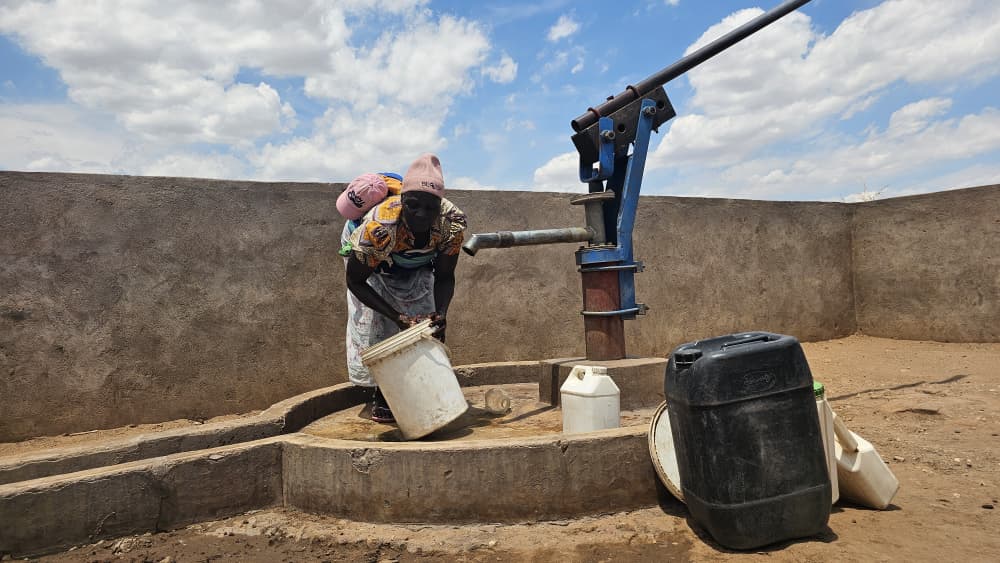
The villagers, who recently benefited from the rehabilitation of 33 boreholes under a Nutrition-Sensitive and Climate-Resilient Water, Sanitation and Hygiene (WASH) project implemented by Welthungerhilfe (WHH) with support from the UNICEF Japanese Fund, say reliable water supplies have created an opportunity to venture into year-round agricultural production.
In Matsiwo Village under Chief Matsiwo, residents want to build on improved access to safe drinking water by investing in solar-powered pumping systems and drip irrigation to support commercial crop production.
Village head Ernest Karamba said the community had demonstrated its capacity to manage development infrastructure and is now looking to move beyond donor dependence towards self-sustaining livelihoods.
“As a village, we have proven that we can utilise donated infrastructure. After having been given the borehole, we organised ourselves and managed to secure our water source,” he said.
“Right now we have a committee which oversees day-to-day operations of the borehole, ensuring that we do not get contaminated water.”
Karamba said the community is keen to become an agribusiness village but requires initial support to unlock the productive potential of its water resources.
“We want to move away from donor dependence to a self-sustaining community. We have the zeal, what is missing is the starting point. If we get a solar system and irrigation system, we see ourselves flourishing,” he said.
For 64-year-old villager Dambudzo Chari, the restored borehole has not only eased access to safe drinking water but also rekindled hopes of expanding agricultural production.
She said previous borehole breakdowns forced villagers to rely on river water exposed to contamination from livestock, while households sometimes travelled long distances in search of alternative sources.
Chari said children were also frequently affected by diarrhoeal illnesses during periods when safe water was unavailable.
“We are truly overjoyed to have our borehole back. What used to weigh heavily on us was that when our borehole broke down, we had to rely on river water. It was unsafe,” she said.
She said the community now wants to exploit the availability of groundwater to venture into banana and sugarcane production, arguing that reliable irrigation would help shield households from erratic rainfall.
Fellow villager Isaac Joko said residents are prepared to work together to protect the rehabilitated infrastructure and ensure it contributes to improved livelihoods.
“We do not want this water source to only benefit us through drinking water; we want to use it productively to improve our livelihoods,” he said.
Joko said with solar-powered irrigation, villagers could produce throughout the year, generate income and strengthen their capacity to withstand drought.
WHH head of WASH projects Shadreck Kundishora said the rehabilitated 33 water points had restored reliable water access for approximately 11 274 people in drought-prone Mbire.
All 33 boreholes recorded no detectable faecal coliforms in post-rehabilitation water quality tests.
“Given the area’s vulnerability to recurrent droughts and other climate-related shocks, restoring these water facilities has helped address one of the most critical needs of rural households,” he said.
Kundishora said the project also strengthened community capacity to sustain the infrastructure through training 22 village pump mechanics, including eight women, and 330 water point user committee members.
Kundishora said sustainability requires community ownership, local maintenance capacity and effective management systems.
The project, implemented between September 2025 and February 2026 in Wards 10, 11, 13 and 14, directly benefited more than 20 000 people through integrated water, sanitation, hygiene, nutrition and health interventions.
For Matsiwo villagers, the next priority is turning restored water security into an economic opportunity capable of sustaining livelihoods even when the rains fail.