Conrad Mupesa
Mashonaland West Bureau
THE fight against drug and substance abuse in the country requires the active participation of the media and journalists, who play a critical role in raising awareness, disseminating information and countering misinformation surrounding the scourge.
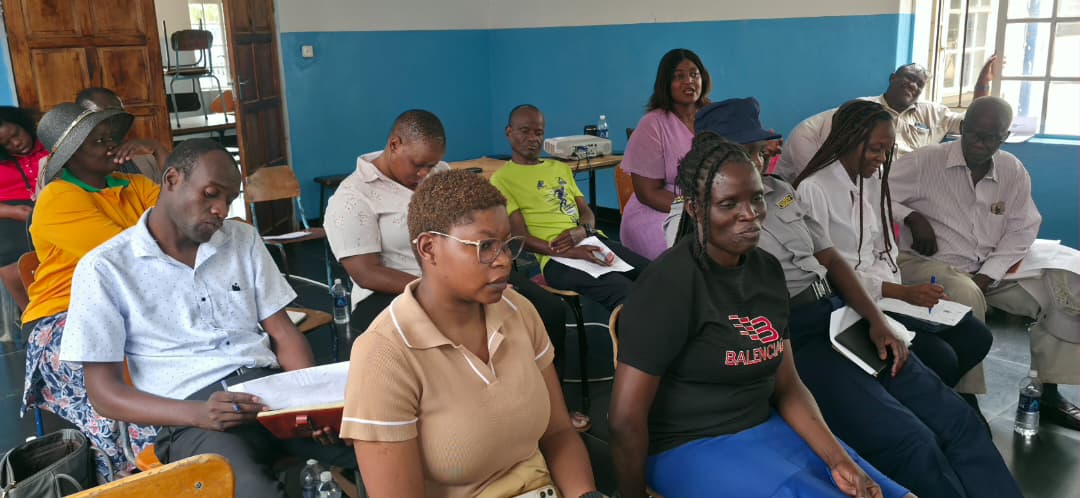
This emerged during a two-day Training of Trainers (ToTs) workshop for Mhondoro-Ngezi District in Kadoma on Tuesday.
Participants are expected to acquire knowledge and skills to help combat drug and substance abuse before cascading the information to their respective communities.
The workshop, organised by the Provincial Taskforce Committee on Anti-Drug and Substance Abuse under the Multi-Sectoral Drug and Substance Abuse Plan (2024-2030), ends on Thursday.
Drug and substance abuse was declared a national disaster by President Mnangagwa, prompting the Government to adopt a multi-sectoral approach involving various stakeholders in prevention, law enforcement, treatment and rehabilitation.
Similar training workshops have already been conducted in Kariba, Hurungwe, Sanyati, Chegutu and Makonde districts.
Speaking during the workshop, acting Provincial Information Officer Mr Johannes Kachikuli, who chairs the Mashonaland West Media and Communication Pillar, said the media was an indispensable partner in efforts to address the problem.
“Media is critical in the fight against drug and substance abuse as we help in the dissemination of information,” he said.
“As we fight this scourge, we are also fighting disinformation and misinformation. The world is full of fake and misleading information, particularly in the social media space.
“So, as you go back to your district and plan to engage and roll out programmes to fight the scourge, involve the media so that the information is spread across all platforms.”
Mr Kachikuli said it would be pointless for district and provincial taskforce committees to conduct awareness campaigns without ensuring that their messages reached wider audiences through the media.
“Our pillar, therefore, acts as a channel to amplify the voices of your efforts so that those that you fail to reach physically are reached through the trusted media which do not mislead the people.”
He challenged district committees to utilise the provincial radio station, Platinum FM, owned by Zimpapers, alongside other media platforms to disseminate information and publicise their programmes.
Meanwhile, the chairman of the Legal Pillar Mr Herald Matura, from the National Prosecuting Authority (NPA), said the Government was working towards ensuring that the country’s legal framework remained effective in deterring drug-related offences.
Zimbabwe already has several legislative instruments aimed at controlling dangerous drugs and prosecuting offenders.
The Criminal Law (Codification and Reform) Act (Chapter 9:23), particularly Sections 156 and 157, criminalises unlawful dealing in, possession and use of dangerous drugs.
The legislation provides for imprisonment and fines, with harsher penalties for drug dealing committed under aggravating circumstances.
The Dangerous Drugs Act [Chapter 15:02] also provides for the control of the importation, exportation, production, possession, sale, distribution and use of dangerous drugs, while the Medicines and Allied Substances Control Act (Chapter 15:03) provides for the regulation and control of medicines and pharmaceutical substances.
Mr Matura said the legal framework was an important component of the country’s multi-sectoral response, particularly in dealing with drug suppliers and those involved in the illegal distribution of substances.
The chairman of the Harm Reduction, Treatment and Rehabilitation Pillar Mr Tichaona Mahachi called for the responsible use of prescribed medicines, warning that the country was facing another challenge involving the misuse and overdose of prescription drugs.
He said while efforts were being intensified against illicit substances, communities also needed to be educated on the dangers of abusing medicines that were legally prescribed for medical purposes.
Meanwhile, Demand Reduction Pillar provincial chairman Mr Edias Mavune said the Government, through the Ministry of Youth Empowerment, Development and Vocational Training, was working towards capacitating Mamina Vocational Training Centre in Mhondoro-Ngezi to equip young people with practical skills.
“Most youths who are engaging, they claim that they don’t have jobs and anything to occupy them,” he said.
“Thus, as the pillar of demand reduction, we are capacitating all the VTCs and introduce new facilities so that the youths are empowered.”
Chief Mushava, who was also among the participants, welcomed the Government’s commitment to supporting vocational training facilities in his area, saying more such institutions were needed in the largely rural district.
He said expanding access to vocational training would give young people opportunities to acquire skills, become productive and contribute to the development of their communities.