

 Online Reporter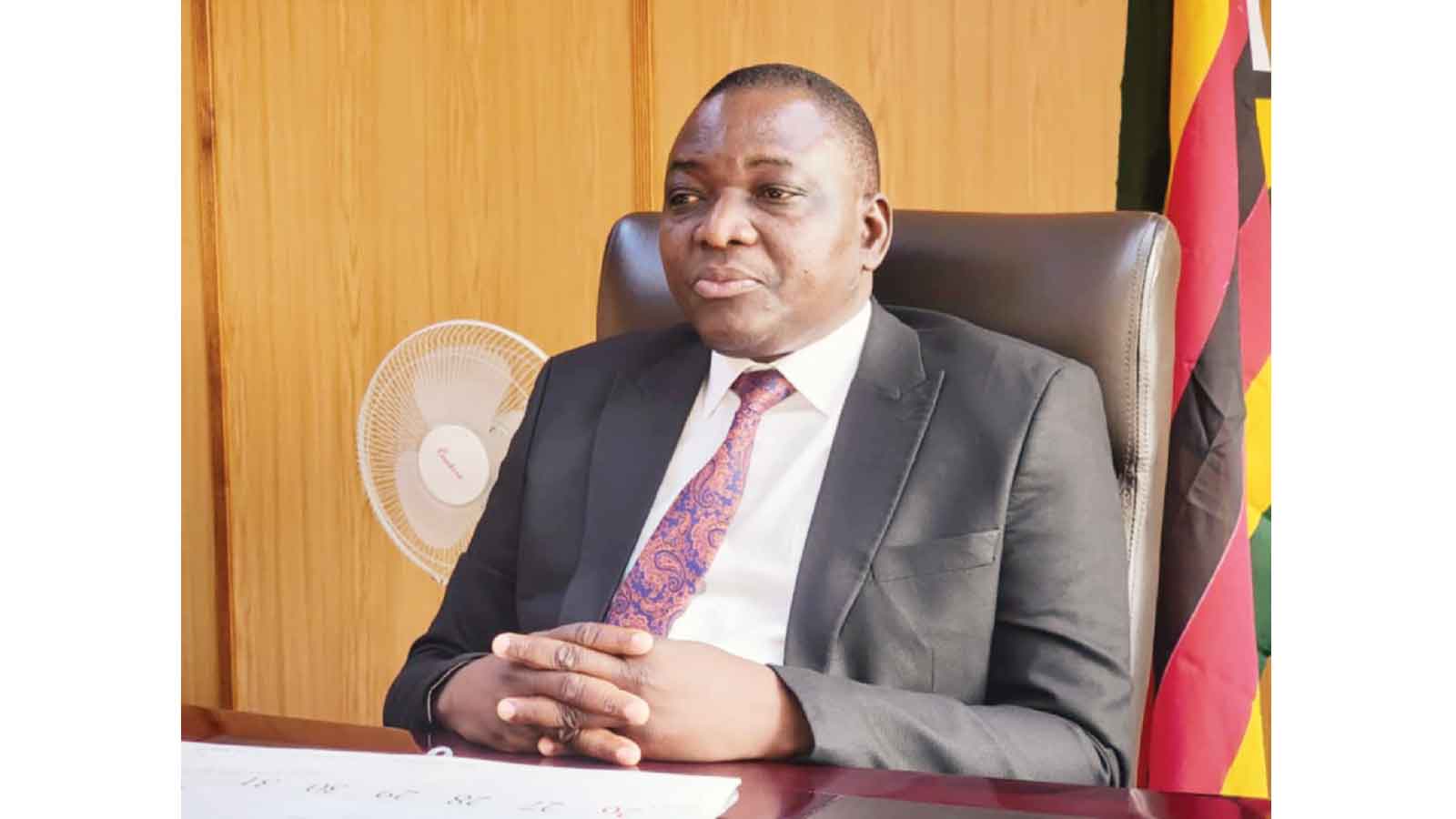
Gibson Mhaka
Zimpapers Politics Hub
ZIMBABWE joined the rest of the world in commemorating World Press Freedom Day on Sunday, and the occasion presented more than a moment for reflection on media freedoms; it offered a strategic opportunity to re-examine the role of the press in shaping a stable, peaceful and constitutionally grounded future.
Observed under the 2026 global theme, “Shaping a Future at Peace: Promoting Press Freedom for Human Rights, Development, and Security,” the day’s message resonates strongly with Zimbabwe’s current socio-political trajectory, particularly the growing call for the media to play a constructive role in championing constitutional continuity and supporting progressive national reforms such as Amendment No. 3 Bill.
First proclaimed by the United Nations General Assembly in 1993 and rooted in the historic Windhoek Declaration of 1991, World Press Freedom Day has long emphasised the need for a free, independent and pluralistic media.
However, in today’s complex information ecosystem, marked by digital disruption, geopolitical contestation and the rise of artificial intelligence, press freedom is increasingly intertwined with responsibility, national stability and developmental goals.
In the Zimbabwean context, this evolving reality places the media at the centre of a delicate balancing act: safeguarding democratic freedoms while actively contributing to national cohesion and policy continuity.
Information, Publicity and Broadcasting Services Minister Dr Zhemu Soda underscored this imperative, calling for a media landscape that builds rather than fractures society.
“The Second Republic, under His Excellency Dr ED Mnangagwa, has recorded landmark achievements in press freedom,” said Dr Soda, pointing to reforms such as the Freedom of Information Act, the operationalisation of the Zimbabwe Media Commission, the Zimbabwe Media Policy and the licensing of more than 40 radio stations, including community broadcasters.
“These demonstrate a Government that trusts its people and recognises that an informed citizenry is essential to democracy.
“Let this freedom be used to celebrate what unites us, even as we respectfully debate our differences,” he said.
These reforms signal a deliberate shift towards a more open and accessible media environment — one that aligns with global democratic standards while remaining anchored in national priorities.
Yet, as Dr Soda cautioned, expanded freedoms must not be mistaken for unchecked licence.
“Press freedom does not mean freedom to lie, to manipulate, or to destroy,” he said, warning against the growing threat of disinformation, fake news and AI-generated deep-fakes.
This warning is particularly relevant in an era in which information warfare has become a tool of destabilisation, often targeting developing nations undergoing reform.
In such a climate, the media’s role extends beyond reporting — it becomes a frontline defender of truth, stability and constitutional order.
It is within this framework that calls for Zimbabwe’s media to champion constitutional continuity and Amendment No.3 Bill gain significance.
Political analyst and media academic Mr Methuseli Moyo said World Press Freedom Day should serve as a turning point for the local media to align its agenda with national development imperatives.
“As Zimbabwe joins the rest of the world in commemorating this important day, there is need for introspection within the media fraternity,” he said.
“The global theme speaks to peace, development and security — all of which are anchored on strong constitutional frameworks.
“The media must therefore, play a role in supporting constitutional continuity and helping the public understand reforms such as Amendment No. 3 Bill.”
Mr Moyo argued that in mature democracies, the media does not operate in isolation from national interests, but often supports constitutional stability while maintaining its watchdog role.
“In countries such as the United States and the United Kingdom, the media, despite its diversity, broadly upholds constitutional principles and national interests.
During periods of reform or crisis, there is often a convergence around protecting institutional continuity,” he said.
He cited examples where Western media outlets have backed legislative reforms deemed critical for national security or economic stability, including coverage supporting constitutional amendments, judicial reforms or emergency policy measures.
For instance, in the United Kingdom, during the complex Brexit transition, sections of the press such as The Daily Telegraph and The Sun did not merely report on legal shifts. Still, they actively supported what they viewed as a constitutional return to sovereignty, aligning editorial positions with the broader reform agenda.
In the United States, major media outlets have historically rallied behind constitutional or legislative reforms during times of crisis. Following the events of September 11, 2001, much of the media supported the Patriot Act and related legal changes, framing them as necessary for national security, even as debate continued.
Similarly, in France, the media often acts as a custodian of the principle of laïcité (secularism), supporting reforms that safeguard this constitutional value and maintain social cohesion.
In these contexts, press freedom is frequently interpreted not only as the liberty to critique, but also as the responsibility to protect and promote national interests and constitutional stability.
“The idea that supporting national reforms compromises press freedom is a misconception.
“In fact, responsible journalism involves contextualising reforms, interrogating them constructively and ensuring that the public is well-informed, rather than fuelling confusion or polarisation,” Mr Moyo added.
This perspective aligns with the broader thrust of the 2026 World Press Freedom Day theme, which emphasises the link between media freedom and sustainable development.
In Zimbabwe, where constitutional reforms are part of an ongoing process to refine governance structures and enhance efficiency, the media’s role becomes even more critical.
Rather than framing such reforms in purely adversarial terms, analysts say the press has an opportunity to facilitate informed public discourse — breaking down complex legal provisions, amplifying diverse but constructive voices, and promoting national dialogue rooted in facts.
Dr Soda echoed this sentiment, stressing the importance of ethical journalism and national values.
“Every journalist, editor, media house, and citizen sharing content online is called upon to uphold the highest ethical standards: verify before sharing, correct mistakes, reject sensationalism, and never become a vehicle for disinformation,” he said.
He further emphasised that Zimbabwe’s media must reflect the country’s cultural identity and social fabric.
“Press freedom must not become an excuse to import and propagate ideas alien to Zimbabwean values, traditions, and way of life,” he said.
“Our rich cultural practices, respect for elders, communal spirit, Ubuntu, languages and heritage, deserve to be honoured.”
This call speaks to a uniquely Zimbabwean approach to media practice, one that blends global standards of press freedom with local values and developmental priorities.
In the context of Constitutional Amendment Bill No. 3 (CAB 3) this means reporting on the Bill not merely as a technical piece of legislation, but as a living instrument that shapes governance, reflects national values and supports development objectives.
To reinforce this vision, the Government has launched a national media literacy programme aimed at equipping citizens with the skills to navigate an increasingly complex information environment.
“Media literacy is important because press freedom alone is not enough. A free press must be matched by a discerning public,” said Dr Soda.
The initiative is expected to play a critical role in combating misinformation while empowering citizens to engage meaningfully with national issues, including constitutional reforms.
For Zimbabwe, the intersection of press freedom, development and constitutional continuity is not theoretical, it is a lived reality shaped by historical experiences, economic aspirations and evolving governance frameworks.
As the country continues on its reform path under the Second Republic, the media’s contribution will be judged not only by its ability to expose wrongdoing, but also by its capacity to inform responsibly, foster unity and support nation-building efforts.
World Press Freedom Day 2026, therefore, was not just a commemoration, it was a call to action.
It challenges Zimbabwe’s media to rise above narrow interpretations of freedom and embrace a broader mandate, one that includes safeguarding constitutional integrity, promoting informed debate and contributing to a peaceful, stable and prosperous future.
In this regard, championing constitutional continuity and engaging constructively with Amendment Bill No. 3 is not a departure from journalistic principles, but a reaffirmation of the media’s central role in shaping the nation’s trajectory.
As Dr Soda aptly put it, journalism is a “sacred duty”, one that must be exercised with responsibility, integrity and an unwavering commitment to the national good.
In a world increasingly defined by uncertainty, that duty has never been more important.
The message for 2026 is clear: champion the Constitution, protect continuity and build the future.



