Zimpapers Reporter
ZIMBABWE’S media industry must develop homegrown technological solutions to address challenges relating to adaptation and financial sustainability, Permanent Secretary for Information, Publicity and Broadcasting Services Nick Mangwana has said.
He said innovation and collaboration among media organisations, academic institutions, regulators and technology experts were critical to developing practical solutions that respond to the realities of the local media landscape.
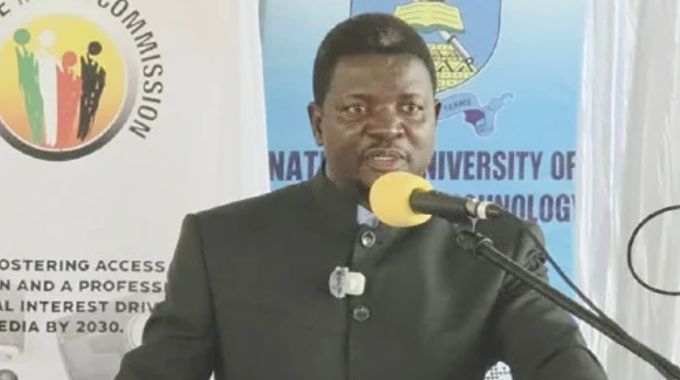
Speaking at the official opening of the four-day Zimbabwe Media Commission (ZMC)-National University of Science and Technology (NUST) MediaTech Hackathon in Bulawayo yesterday, Mr Mangwana, whose speech was delivered on his behalf by Ministry of Information, Publicity and Broadcasting Services Chief Director of Government Programmes and Messaging Mr Jonathan Gandari, said rapid developments in the information and communications technology sector had significantly transformed the operations of the media industry.
“The media sector in Zimbabwe, like the rest of the world, is facing challenges of adaptation and sustainability. It is only through such intervention that solutions for our media sector can be heralded,” he said.
Mr Mangwana said initiatives such as the hackathon provided an opportunity for young innovators to turn ideas into practical solutions that could improve the operations and sustainability of media organisations.
He said technological innovation should respond to Zimbabwe’s specific media realities, including linguistic diversity, economic circumstances and the information needs of communities.
“I encourage you to think boldly. Ask yourselves how technology can make journalism more effective, improve access to information, strengthen media credibility, combat misinformation and contribute to the long-term sustainability of media organisations,” he said.
Mr Mangwana said Artificial Intelligence (AI) was rapidly changing media operations, from content production and audience engagement to data analysis and fact-checking but warned against its irresponsible use.
He said the opportunities presented by emerging technologies had to be balanced against challenges such as misinformation, disinformation, privacy concerns and accountability.
“Technology is neither inherently good nor bad; its impact depends on how we develop, govern, and use it. As such, our responsibility is not simply to embrace technology, but to do so responsibly, ethically and in ways that advance the public interest,” he said.
Mr Mangwana also called for stronger collaboration among universities, regulators, Government institutions, media organisations and technology companies, saying such partnerships were necessary to translate ideas into practical solutions.
“Some of the ideas developed during this Hackathon may evolve into products, businesses, partnerships, or innovations that have a lasting impact on Zimbabwe’s media industry,” he said.
ZMC Executive Secretary Mr Godwin Phiri said the financial difficulties facing media organisations required fresh thinking and innovative approaches, particularly amid changing technologies and audience behaviour.
“At the same time, many media organisations are struggling financially. These are not challenges we can address simply by continuing to do things the way we have always done them,” he said.
Mr Phiri outlined five areas in which participants were expected to develop practical, technology-based solutions. These include media monitoring and the responsible use of AI, combating misinformation and disinformation, improving access to information, media sustainability and institutional efficiency.
On media sustainability, he challenged innovators to explore technologies that could help media houses grow their audiences, improve newsroom efficiency, reduce operating costs and identify new revenue opportunities.
He said the Commission was looking for practical digital tools and working prototypes that could address the needs of both the regulator and the wider media industry.
ZMC Commissioner Merit Munzwembiri said media organisations were struggling to remain financially sustainable, while the spread of false information was eroding public trust and new technologies were changing how news was produced and shared.
“We do not want to gather here on Friday, celebrate the winners, take photographs and then allow these wonderful ideas to disappear. We want to identify promising solutions and explore how they can be developed further,” said Comm Munzwembiri.
NUST Pro-Vice-Chancellor Professor Zephaniah Dhlamini said Zimbabwe had the expertise and young talent needed to develop solutions to challenges facing the media industry, but there was a need to connect that potential with real-world problems.
“Public institutions do not always have to look outside our borders for answers to the challenges they face. We have expertise in our universities. We have talented young people. We have researchers, developers, engineers and innovators who are eager to make a contribution,” he said.
The ZMC-NUST MediaTech Hackathon is running from November 3 to 6 under the theme, “Innovating for Media Freedom, Access to Information and Responsible Digital Transformation”.
The four-day event brings together young innovators, academics, media practitioners, technology experts, designers and researchers to develop practical, technology-based solutions to challenges within Zimbabwe’s media and information sector.
Zimpapers, ZB Financial Holdings and Skyz Metro FM are among the partners supporting the initiative.