Online Reporter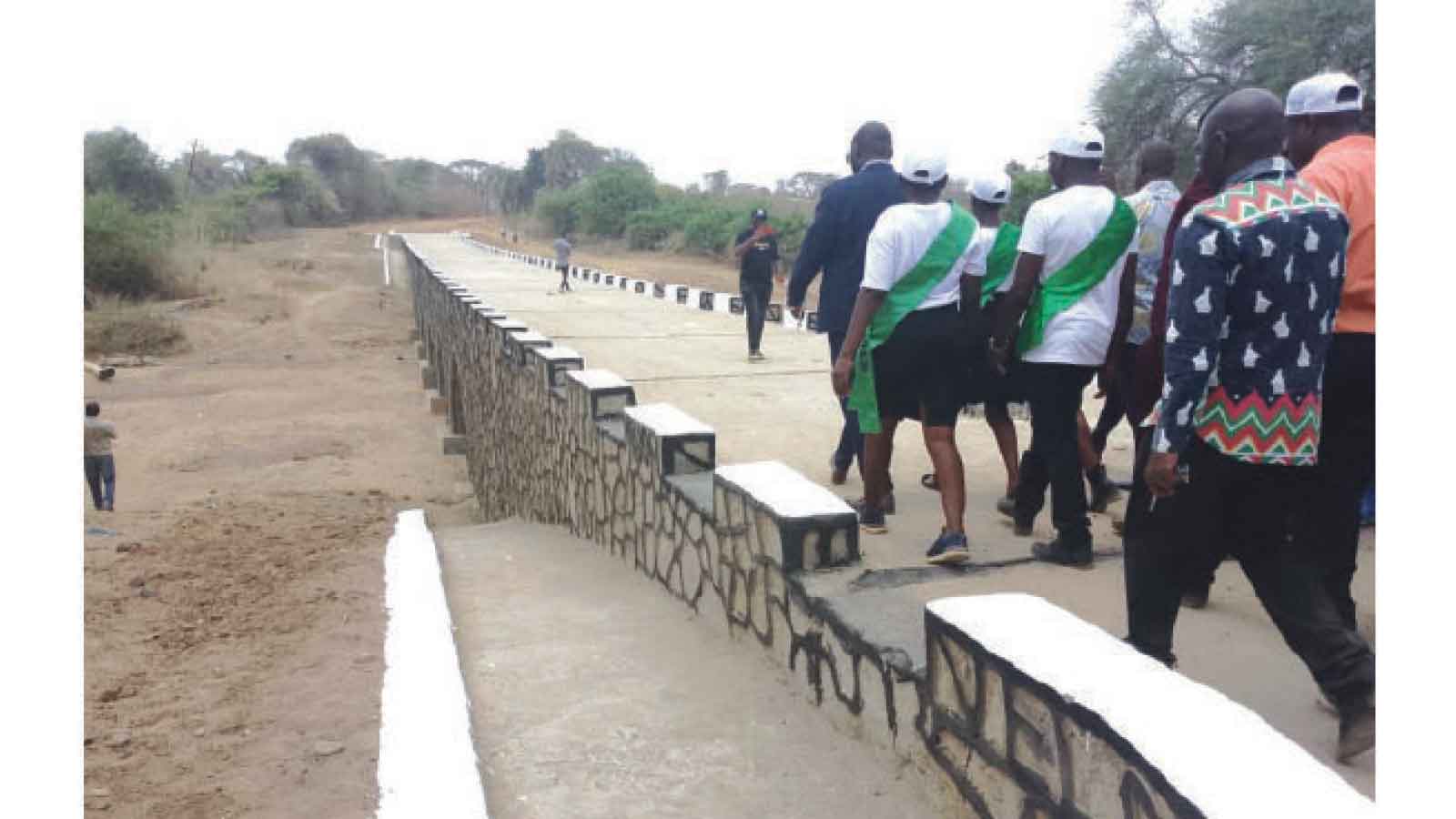
Patrick Chitumba-Midlands Bureau
MIDLANDS Province has rolled out over 1 000 development projects across key sectors, with major infrastructure works and private investment reshaping the province’s economic landscape and strengthening its position as a key growth hub.
The development drive, spanning roads, dams, health, education, energy, agriculture, manufacturing, mining and tourism, is being driven by public investment and growing private-sector activity.
Minister of State for Provincial Affairs and Devolution for Midlands Owen Ncube said the province had recorded significant progress across its development agenda, with projects being implemented in both urban and rural communities.
Addressing the Zanu PF Midlands Province Inter-District Conference at the party’s Convention Centre in Gweru over the weekend, Minister Ncube said the scale of development was positioning Midlands as a key contributor to Zimbabwe’s Vision 2030 industrialisation agenda.
“The province implemented over 1 000 programmes and projects covering roads, bridges, dams, power and devolution-funded health and education infrastructure, irrigation development, manufacturing and tourism sectors, among many others,” he said.
Minister Ncube said the development drive was being supported by growing investment in mining and manufacturing, with the US$6 million Global union Alloy ferrochrome smelting plant in Kwekwe among the major investments.
The investments come as Midlands continues to leverage its mineral wealth while pushing for greater beneficiation and value addition within the province.
“Midlands Province is emerging as the country’s largest rural provincial economy, driven by mining, manufacturing, agriculture, tourism, construction, retail and wholesale activities.
“The province continues to experience rapid economic growth, emerging as the largest rural Provincial economy driven mainly by robust infrastructure development and massive investments in mining, manufacturing, agriculture, tourism, construction, retail and wholesale sectors,” he said.
The province’s infrastructural development programme was equally expansive.
In Kwekwe, the Emmerson Dambudzo Mnangagwa Law School at the Midlands State University has been opened, while construction of the Kwekwe Magistrates Court is 80 percent complete.
“The 21km Gweru-Lower Gweru Road is also being rehabilitated, while a 7km section between Chinyenyetu and the Kuwirirana-Nembudziya junction along the Kuwirirana-Nemangwe road is being developed under the Independence Legacy Projects,” he said.
Minister Ncube said water infrastructure was also receiving major attention, with construction of Vungu Dam in Kwekwe and Defe Dam in Gokwe South under way.
The projects are expected to support agricultural production, improve water security and unlock economic activity in surrounding communities. “In the energy sector, the province commissioned the 96-kilowatt Gandavaroyi solar mini-grid, while work is progressing on the Gokwe South Smart GMB Silos,” he said.
Health infrastructure has also received a major boost, with Nkatazo Rural Hospital in Zvishavane completed and the upgrading of Mberengwa Rural Hospital to district hospital status nearing completion.
“The province is also constructing clinic pharmacies in several districts, including Mayoka, Malisa Zhombe and Sengwazo in Silobela, Nyautonge in Chirumanzu and Musadzi in Gokwe North.
“Transport infrastructure has not been left behind, with the completion of Mabori Bridge in Mberengwa, Pohwe Bridge in Gokwe South and Mabanana Bridge in Gokwe North, “ he said.
Minister Ncube added that the province had also drilled 22 boreholes in the first half of 2026 and completed 38 business units, further expanding basic infrastructure and economic opportunities.
Beyond infrastructure, Government is pushing to unlock value from agricultural land while resolving tensions between farmers and miners.
Minister Ncube said implementation of the new land tenure policy was being expedited to give land beneficiaries security of tenure and address farmer-miner conflicts.
“Layouts for 55 farms have already been produced, while more than 700 farmers have applied for title deeds in the province.
“The developments come against the backdrop of the Government’s broader push to accelerate economic growth and achieve Vision 2030,” he said.
Minister Ncube said the close working relationship between Government ministries, departments and agencies and party structures has helped accelerate implementation of development programmes.
He said the province was confident of maintaining the momentum despite the threat of drought during the 2026/27 agricultural season.
A super El Niño has been predicted for the coming rainfall season, a development associated with severe drought conditions.
However, Minister Ncube said the country has adequate grain reserves to cushion citizens against food shortages.
“The development momentum being witnessed across Midlands demonstrated that the province was firmly on course.
“I am convinced the Midlands Province is on the right development trajectory.
“With major infrastructure projects underway, new industrial investments coming on stream and Government expanding investment in health, education, energy, agriculture and transport, Midlands is increasingly positioning itself as one of the key engines of Zimbabwe’s economic transformation.”