Tendai Gukutikwa
Post Reporter
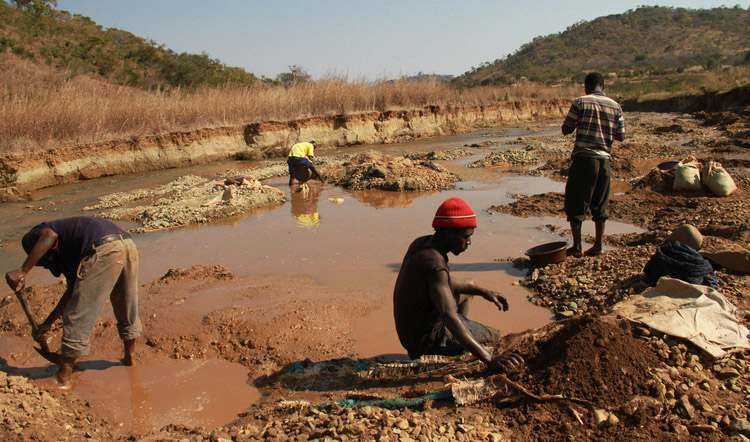
ENVIRONMENT, Climate and Wildlife Management Minister, Dr Evelyn Ndlovu, has called for an uncompromising crackdown on illegal miners and local authorities polluting the country’s waterways, amid mounting concerns over mining activities along Mutare and Sakubva rivers as well as the fragile Christmas Pass mountain ecosystem.
Her remarks come as residents in Mutare are increasingly raise alarm over environmental degradation caused by mining activities near river systems and ecologically sensitive areas, with many demanding stronger enforcement to protect the city’s natural resources.
On Monday, Hillcrest Schools held a meeting with parents and stakeholders to chat the way forward regarding the mining operations and building on Mt Sinai.
In a letter signed by the board chairman, Mrs Victoria Jakazi, the school stated: “The purpose of the meeting is to brief you on the ongoing efforts to build constructive relationships with the operators and to ensure that all relevant Government responsible authorities responsible for protection, safety and wellbeing of our schools are working collaboratively with us.”
Speaking during the official opening of her ministry’s review and strategic planning workshop in Nyanga last Saturday, Dr Ndlovu said illegal mining and sewage pollution have become major threats to Zimbabwe’s rivers and dams, requiring urgent and coordinated action by all responsible agencies.
“We meet while our rivers are being gouged, silted and poisoned. This is a moment for honest reckoning and decisive action. The Environmental Management Agency (EMA), Ministry of Mines and Mining Development, local authorities, catchment councils, police and courts must coordinate enforcement operations against those damaging rivers, regardless of their status or connections,” she said.
Dr Ndlovu’s strong warning resonates with concerns in Mutare, where illegal alluvial mining along rivers and reports of activity around Christmas Pass have heightened fears over the long-term impact on water sources and the environment.
She said illegal mining is altering river channels, destroying riverbanks and accelerating siltation, while toxic substances used during mining operations were contaminating water bodies relied upon by communities for domestic use, irrigation and livestock watering.
The minister warned that some miners continue to use mercury and other hazardous chemicals that ultimately find their way into rivers and dams. At the same time, failing sewage treatment systems and burst sewer pipes were allowing untreated or poorly treated effluent to flow into water sources.
“The consequence is the loss of aquatic life, the contamination of drinking water sources, higher treatment costs for our urban supply systems, and a constant threat of cholera, typhoid and other water-borne diseases,” she said.
For Mutare and surrounding communities, such pollution presents a direct threat to water quality, public health and livelihoods dependent on clean water.
Dr Ndlovu stressed that enforcement efforts must, not only target illegal miners on the ground, but also those who finance, protect or facilitate environmentally destructive activities.
“The law is clear, the polluter pays, and anyone who damages our rivers must be held accountable. Where permits and Environmental Impact Assessments are required, they must be enforced. Where they have been abused, they must be revoked. Illegal operators and those who shield or finance them must face the full consequences of the law, regardless of who they are,” she said.
She said authorities must thoroughly investigate suspected illegal operations and ensure environmental legislation is fully enforced, particularly in areas where communities have raised concerns about mining activities.
Looking ahead, Dr Ndlovu revealed that her ministry’s 2027 Annual Plan will prioritise intensified action against illegal mining and pollution while promoting the restoration of degraded riverbanks and wetlands.
However, she noted that protecting rivers requires more than arrests and prosecutions.
Sustainable solutions, she said, depend on formalising small-scale mining activities, rehabilitating damaged ecosystems and empowering local communities to act as custodians of their natural resources.
“We must rehabilitate degraded river banks and wetlands, promote cleaner and formalised small-scale mining practices, work with traditional leaders and communities as the custodians of their local rivers, and publish water-quality data openly so that citizens can see what is happening to the water they depend on. Our rivers are not open pits and they are not sewers. They are the arteries of our national economy and of life itself,” she said.
The minister also championed greater transparency, saying communities have a right to know the quality of water they consume and rely on daily. Publishing regular water-quality data, she said, would strengthen accountability and help citizens monitor the health of local rivers.
Dr Ndlovu urged miners to comply with environmental regulations and challenged local authorities to prioritise proper sewage treatment and infrastructure maintenance.
“Farmers must plan with climate information. Miners must respect the law and rivers. Local authorities must treat their sewage. Entities must put service before self,” she said.
She reserved some of her strongest criticism for councils whose failing sewer systems continue to discharge untreated waste into rivers and dams.
“Local authorities that discharge raw sewage into our water bodies are breaking the law and endangering the people they serve,” she said.
The minister further questioned how some councils were using revenue collected for water and sewer services, insisting that such funds must be directed towards maintaining and upgrading critical infrastructure.
“Revenue collected for water and sewer services must be used for those services. I expect clear remediation plans, with timelines, from every authority that is failing in this regard, and EMA must enforce compliance,” she said.
Dr Ndlovu said local authorities have a legal and moral obligation to maintain sewer networks and treatment plants, warning that failure to do so jeopardises public health and exposes communities to contaminated water.
“The time for excuses is over. Protecting our rivers is protecting our future,” she said.
ENDS
Minister cracks whip on illegal miners, polluting councils