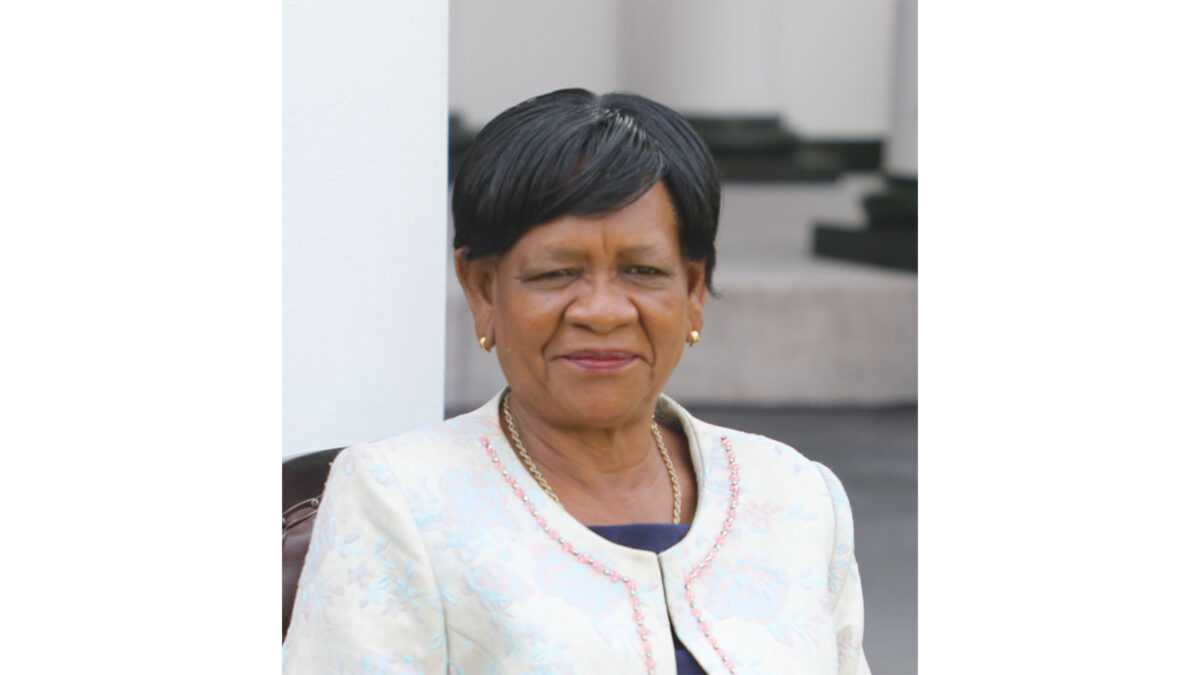
Tendai Gukutikwa
Mutare Bureau
ENVIRONMENT, Climate and Wildlife Minister Dr Evelyn Ndlovu has instructed public entities under her ministry to prioritise service delivery and infrastructure maintenance over salaries and allowances.
Speaking at the official opening of the ministry’s Strategic Planning Review Workshop in Nyanga on Saturday, Dr Ndlovu called for greater accountability in the use of public resources.
She said excessive spending on employment costs was leaving institutions with inadequate resources to fulfil their mandates, resulting in deteriorating infrastructure and compromised service delivery.
The minister said the country’s environmental, climate and wildlife management programmes could only succeed if institutions responsible for implementing them were adequately equipped and focused on their core responsibilities.
“Our strategic plan can only be delivered through institutions that are funded, equipped and focused on their mandates,” she said.
“Yet in too many parastatals and public entities, the pattern is troubling, the largest share of revenue is consumed by salaries, allowances and related benefits, while the services that justify those entities’ existence suffer and the infrastructure they are meant to maintain steadily deteriorates.”
She cited monitoring stations, laboratories, vehicles, firefighting equipment, park infrastructure and treatment works among the assets that were ageing and failing.
Dr Ndlovu, however, acknowledged the need for fair remuneration, saying the issue was ensuring that employment costs did not undermine the ability of institutions to provide services.
“Public servants deserve fair remuneration, and I value the dedication of those who work under difficult conditions. But remuneration cannot be a priority that crowds out the purpose of the institution,” she said.
“An entity that pays its people well but cannot deliver its service is not succeeding. It is consuming public and community resources without return.”
She directed public entities under her ministry to present transparent breakdowns of their expenditure, showing how much was being spent on employment costs, operations, service delivery and infrastructure maintenance.
The minister also called for clear service delivery targets in the entities’ 2027 annual plans and performance contracts, alongside schedules for repairing and replacing critical infrastructure.
She said remuneration and allowances should be aligned with performance, financial capacity and corporate governance requirements, with boards expected to exercise proper oversight.
“As Ministry leadership, we will track these indicators, report on them, and act on what we find,” she said.
Dr Ndlovu said the strategic planning process should produce measurable commitments rather than resolutions that could not be implemented.
She said every priority in the ministry’s 2027 Annual Plan should have a responsible officer, a budget, a timeline and an indicator against which performance could be assessed.
“Our 2027 plan must be results-driven, measurable, and responsive to both national and global environmental challenges.
“Every priority should have an owner, a budget, a timeline and an indicator, so that we can tell by the end of next year whether we have delivered,” she said.
The minister also challenged officials to spend more time addressing problems within the country instead of concentrating excessively on international engagements.
While acknowledging the importance of foreign travel in mobilising climate finance, accessing technology and advancing Zimbabwe’s positions at international forums, she said such engagements must produce tangible benefits.
“Travel is a means, not an end. Our mandate is delivered in our districts, catchments, wetlands, forests, parks and communities, and not in conference halls abroad,” she said.
She directed that foreign trips should be justified by clear national benefits, with delegations limited to officials whose presence was necessary.
Dr Ndlovu further called for reports after every trip, detailing what had been secured or learnt and how it would be applied locally.
She said departments would be assessed on their domestic performance, including field visits conducted, enforcement operations undertaken and projects completed on time.
“The test is simple. No official of this Ministry should be better known in international meetings than in the communities they are meant to serve,” she said.
The workshop, which started last Wednesday and ended yesterday (Monday) was convened to review implementation of the ministry’s 2026 Annual Plan, assess progress under its 2026–2030 Strategic Plan and set priorities for 2027.