Online Reporter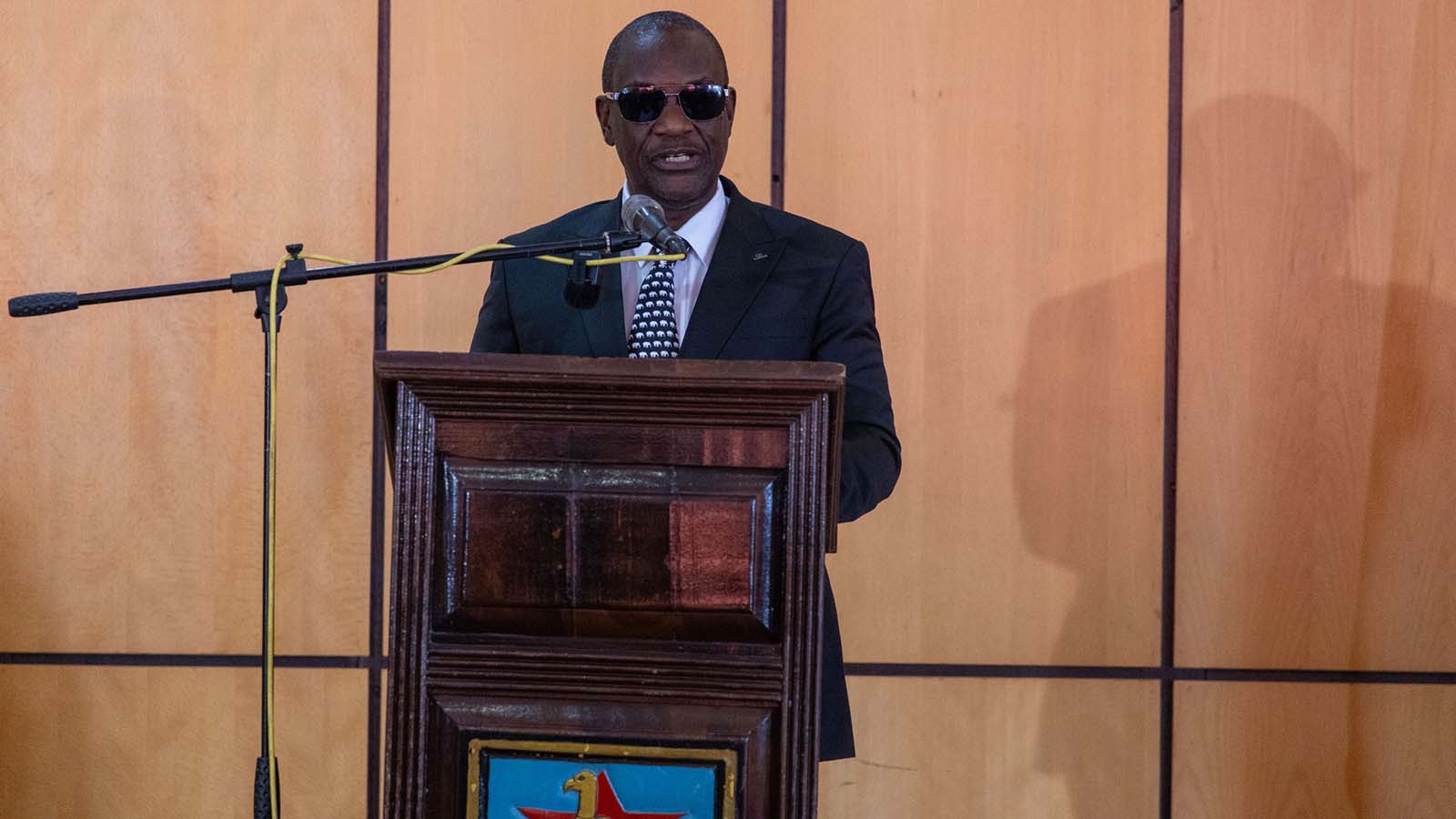
Patrick Chitumba
Midlands Bureau
FOR learners at Chaplin High School in Gweru, the classroom is no longer confined to chalkboards and textbooks following the opening of a state-of-the-art smart classroom, bringing interactive digital learning technology into daily lessons.
Equipped with interactive smart boards, internet access and modern digital learning tools, the new facility is set to transform classroom engagement while giving learners greater exposure to technology-driven education and preparing them for the demands of the Fourth Industrial Revolution.
The development is part of the country’s broader drive to fast-track the digital transformation of education through sustained investment in smart learning infrastructure.
Minister of State for Midlands Provincial Affairs and Devolution, Cde Owen Ncube, recently commissioned the new technology classroom, where he lauded continued investment in digital infrastructure, rural electrification, strategic partnerships, and Heritage-Based Education 5.0 for transforming classrooms into centres of innovation in line with Zimbabwe’s industrialisation and Vision 2030.
“We’re gathered here for the commissioning of the Chaplin High School Smart Classroom worth US$9 000 here in Gweru. I am pleased to note that the facility is equipped with 40 tablets, an overhead projector, an interactive board, and a 42-inch smart screen,” he said.
Minister Ncube said the event dovetails with the Second Republic’s NDS 2 Pillar on Science, Technology, Innovation, Digital Transformation, and Human Capital Development, which entrenches a quality education system, builds a knowledge-driven economy through modern education infrastructure and the development of a highly skilled and adaptable workforce.
He said President Mnangagwa made a bold and strategic policy shift from the colonial education system towards Heritage-Based Education 5.0, which integrates the country’s cultural heritage with modern infrastructure and technologies.
“The above-mentioned model entrenches partnerships with the Private Sector and Development Partners in the provision of universal access to water, power, and internet connectivity, among other education fundamentals,” he said. Minister Ncube commended Chaplin High School development committee, staff, and parents for the rigorous mobilisation of resources towards the project.
“I urge teachers to improve and sustain high pass rates as reflected by the highly commendable 91,1 percent A-Level pass rate for 2025 here at Chaplin High School. Given the foregoing, parents should uphold their obligation to pay fees, which facilitate seamless maintenance, expansion and sustainable development programmes and projects in schools,” he said.
“The school administration must consider payment plans for parents with difficulties paying the full amounts.”
Minister Ncube said tangible education and ICT sector programmes and projects are being rolled out in the Midlands Province and across the country.
“These include adoption of smart solutions in agriculture, mining, manufacturing, tourism, construction, education, healthcare and governance, bridging the digital divide through the donation of computers, printers, projectors, and whiteboards to both rural and urban schools,” he said.
Minister Ncube, however, noted with great concern the surge in drug and substance abuse in the Midlands Province, including amongst learners. Mbanje, Mutoriro/Guka, ganja cakes, and Broncleer are among the most abused drugs.
“I warn learners against indulging in drug and substance abuse as it is detrimental to their physical and mental health,” he said.
Lessons, he said, should be taken from the First Lady, Dr Auxillia Mnangagwa’s passionate and commendable drug and substance abuse awareness, treatment, and rehabilitation programmes rolled out under the Angel of Hope Foundation.
Midlands Provincial Education Director, Mr Jameson Machimbira, said the province is working towards wider ICT access across schools.
“Our target is to achieve 80 percent ICT connectivity across schools in Midlands Province through digital classrooms and learning devices,” he said.
Mr Machimbira said the initiative also reflects growing collaboration between Government and its development partners.
“The project forms part of Government’s broader digitalisation programme, which is expanding ICT infrastructure in schools to improve learning outcomes while fostering innovation, creativity and critical thinking,” he said.
A learner, Mary Munhundiripo, welcomed the development, saying it would prepare students for an increasingly digital world.
“This is a welcome development because technology has made the world a global village,” she said.