Nyore Madzianike
Senior Reporter
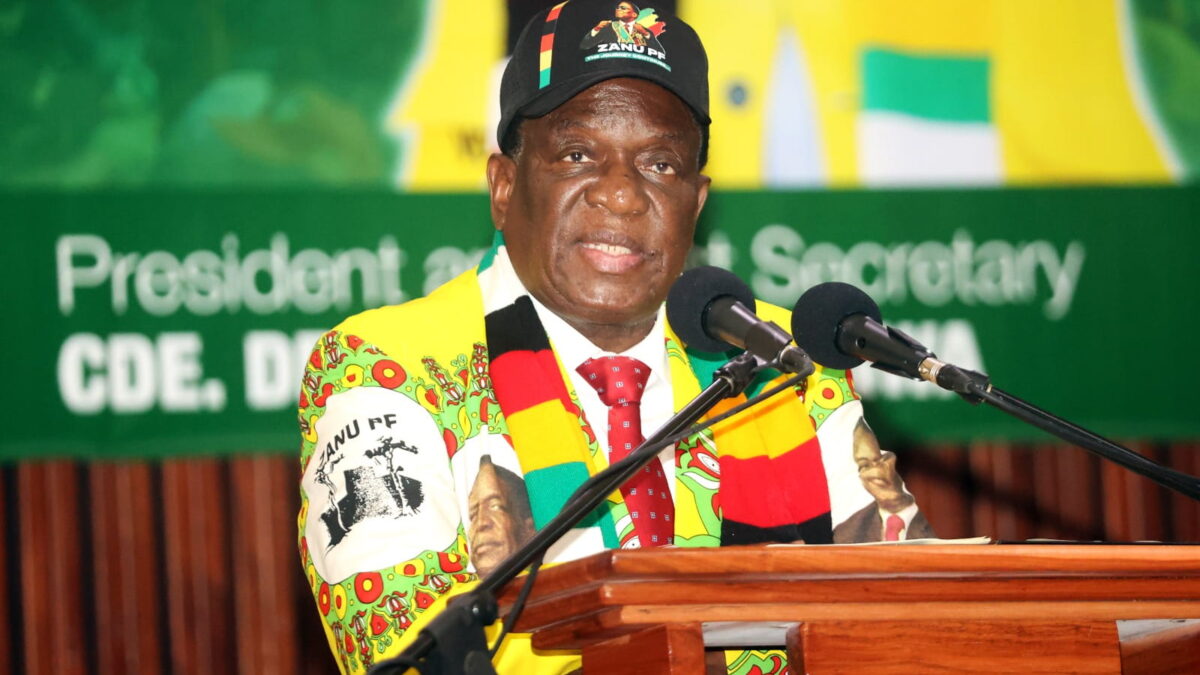
LEGISLATORS have welcomed President Mnangagwa’s Six-Pillar Plan for Agricultural Resilience, describing it as a timely framework for safeguarding food security and protecting rural livelihoods amid forecasts of the El Niño-induced weather challenges.
The country is expected to receive below-normal rainfall during the 2026-2027 agricultural season because of the El Niño conditions.
Debating the State of the Nation Address (SONA) made on September 26 in Parliament, MPs highlighted the importance of strengthening the six pillars as laid out by the President.
The six-pillar plan delves into strategic grain reserves, promoting climate-smart agriculture, improving agricultural financing and protecting livestock against the anticipated drought.
Gokwe-Gumunyu legislator Stephen Ngwenya said the country’s agricultural programmes had contributed to increased production, citing Pfumvudza/Intwasa, ARDA revitalisation and Command Agriculture as key initiatives.
“Secondly, on agriculture and food security, agriculture is reported to have grown by 22,9 percent and contributed 2.2 percentage points to our GDP growth,” he said.
“This is because Pfumvudza, ARDA Revitalisation and Command Agriculture are doing wonders. Where I come from in Gokwe- Gumunyu Constituency, we saw it; cotton, maize and other small grains were delivered.
“The President’s six-pillar drought plan, that is, strategic grain reserve, climate, smart agriculture, financing, livestock, coordination and early warning, shows foresight. I support it 100 percent.”
MP Ngwenya said the President’s six-pillar drought plan demonstrated foresight in preparing the country for possible climate-related challenges.
He called on Parliament to expedite consideration and passage of the Agricultural Finance Bill to ensure farmers receive funding on time.
Chegutu West MP Shacky Timburwa said President’s warning about unfavourable rainfall conditions during the 2026-2027 season showed the importance of preparing for potential crises before they occurred.
“This shows the vision that our leader has. He is innovative in making sure we come up with solutions before disaster strikes,” he said
“There is a much larger governance principle contained in this. The modern State that His Excellency is trying to architect cannot only be responded to mechanism-wise, but it must also become an anticipatory institution.
“The most expensive crisis is usually the crisis we saw coming but failed to prepare for. The pillars that were spoken by His Excellency are a sign of the level of preparedness of his Government.”
Guruve North MP Tendai Pindula said his constituency had experienced the effects of drought and climate-induced hunger over the years, but farmers were now benefiting from agricultural interventions.
He welcomed the President’s warning about below-normal rainfall across the Southern African Development Community (SADC) region during the coming season.
“I also want to look at agriculture and the Six-Pillar Resilience Plan that has been highlighted by His Excellency the President,” he said.
“This shows that His Excellency the President is a listening President. The President warned us about the below-normal rainfall pattern for the 2026-2027 season across SADC.
“This is true leadership, not hiding but telling the truth. He brought us the solutions to the Six-Pillar Plan. That is the enhanced strategic grain reserve, accelerated climate-smart production, integrated financing architecture, livestock, drought mitigation, coordination and early warning.
“For Guruve North, this means a lot. We are in Region 3. We depend on rain. Climate-smart Pfumvunza/Intwasa has already proven that.”
Mt Darwin North MP Labbany Munemo also backed the resilience plan, pointing to agricultural production in his constituency and the need to safeguard livestock and expand irrigation.
He said the President had been candid about the anticipated rainfall challenges facing the country.
“In agriculture, water and climate change are our heartbeat; agriculture grew by 27,9 percent and contributed 2,2 percent points to the 8,3 percent GDP growth. Record tobacco, maize, wheat, Pfumvudza/Intwasa fed three million households,” he said.
“Hon. Speaker. Mount Darwin North fed the nation this year. Dande produced cotton and sorghum. Dotito Range also produced maize and tobacco. However, His Excellency was honest and warned that 2026 to 2027 will face below-normal rainfall.
“That is why I fully support the six-pillar plan for resilience announced in SONA: enhanced strategic grain reserve, accelerated climate-smart production, integrated financing architecture, livestock drought mitigation, coordination, early warning and capacity building prepared through chiefs, headmen and village heads.”
He called for the fast-tracking of amendments to the Water Act and ZINWA Act announced, saying dams and irrigation infrastructure were necessary to support agricultural production.
Mwenezi West MP Priscilla Moyo said the threat posed by the predicted super El Niño phenomenon requires urgent attention since agriculture remained central to food security.
She said the Government’s Six-Pillar Plan for Resilience provided a framework for addressing the anticipated challenges.
MP Moyo welcomed the involvement of traditional leaders, including chiefs, headmen and village heads, in ensuring that interventions reached grassroots level.
She urged Parliament to ensure adequate resources were allocated in the 2027 National Budget and that institutional structures and implementation mechanisms were put in place to cushion communities against drought and climate variability.
“In the coming year, 2027, it is incumbent upon us to ensure His Excellency’s vision is achieved,” the Mwenezi West legislator said.
“This House should ensure adequate resources are allocated in the National Budget and that the necessary institutional structures and implementation mechanisms are in place to cushion our people from the effects of drought and climate variability.”
She also called for the strengthening of strategic grain reserves, expansion of climate-smart agricultural practices, development of appropriate financing models and promotion of crops suited to the conditions of different regions.