Online Reporter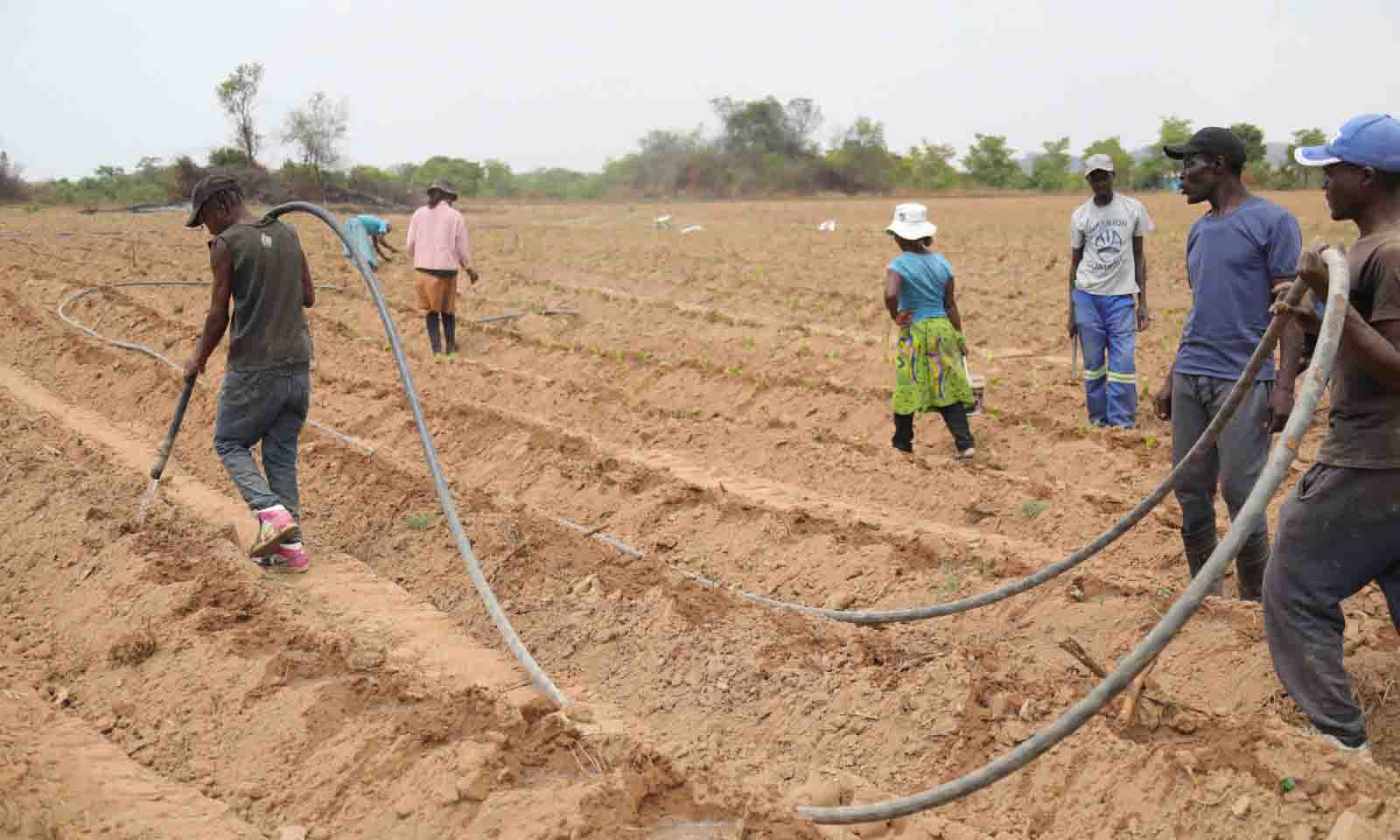
Zvamaida Murwira
Senior Reporter
JUST a few years ago, the land on the borders of Manicaland and Mashonaland East lived and died by the rain.
Seasons of anxiety followed the clouds, and the community’s destiny felt out of its hands. But today, a blue oasis shimmers under the sun — the Muchekeranwa Dam — and it has rewritten the story of this region.
The transformation is palpable. Where dusty fields once lay dormant, a vibrant greenbelt now thrives.
Villagers like Gertrude Masomere remember the old days all too well.
“We used to envy those who stay in cities and towns,” she reflects, her hands gesturing towards the lush fields.
“But with the coming of the dam, it is now a thing of the past. We are now masters of our destiny.”
This new mastery is visible everywhere. At Belventa Farm, manager Steven Zhakata is already planting a tobacco crop, his sprinklers casting rainbows in the air.
“We are using irrigation water while we wait for the rains,” he says, a testament to the year-round growing season the dam has enabled.
The dam’s waters feed not just crops but also ambition, supporting a thriving out-grower scheme for tomatoes, wheat and maize.
The benefits flow beyond the fields. On the dam’s vast surface, fishermen like Tichaona Magorimbo are casting their nets, hauling in a new livelihood.
“The dam has helped me to fend for my family through fish farming,” he says, his catch destined for markets as far as Marondera and Harare.
This new economy of fish, horticulture and irrigated crops has breathed life into the community.
The dam is also a catalyst for innovation, Marondera University of Agricultural Science and Technology draws from its waters for its industrial park and campus farm, turning the area into a living laboratory for President Mnangagwa’s Heritage Based Education 5.0.
The university has expanded its tillage, growing crops all year round and fuelling a new era of agricultural research.
The revolution is still spreading. The Herald’s news team found a hive of activity as Makomo Engineering, the local company that built the dam, now works on its most ambitious extension yet: a 26-kilometre pipeline.
Site Manager Jianzhao Pang, with the hum of construction behind him, reports that work is at an advanced stage.
“The foundation work of the reservoir is underway. Pipe bridges have been completed,” he says, outlining a project that will carry life-giving water to Wenimbi Dam and ultimately to the taps of water-stressed communities in Marondera, Chitungwiza and beyond.
This pipeline is a promise of a brighter future. It is expected to supply 90 megalitres to Chitungwiza, exceeding its current demand and finally offering a permanent solution to perennial water shortages. It will complement the Kunzvi Dam project, showcasing the Second Republic’s strategic focus on high-impact water infrastructure.
Constructed at the confluence of the Mucheke and Nyagumbo rivers, the Muchekeranwa Dam is more than concrete and water. It is the foundation of a legacy.
From the fish in its depths to the crops in its greenbelt, from the students at the university to the families in Svosve and Chiduku villages, it has become the anchor of the community’s food security and economic prosperity.
As the sun sets over the water, casting a golden glow on the thriving fields, it is clear that this is more than a dam. It is the fulfilment of a promise — a promise that with vision and water, nothing can stop this community, and indeed the nation, from achieving its Vision 2030.