Patrick Chitumba, [email protected]
HUNDREDS of Midlands residents affected by mining, urban expansion and other development projects are benefiting from negotiated settlements aimed at protecting their homes, livelihoods and access to resources.
The Centre for Conflict Management and Transformation (CCMT) is working with Government, local authorities, communities and private-sector developers to resolve disputes arising from development-induced displacement, particularly those involving land, accommodation, compensation and loss of livelihoods.
One of the notable outcomes was an agreement reached in Vanguard in 2023, which secured livelihoods and accommodation for 2 332 people. Other interventions have helped address disputes involving families in Gweru District.
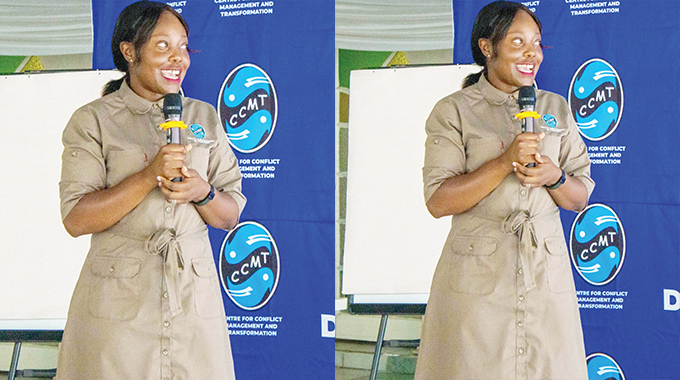
CCMT programmes manager Ms Rumbidzai Magurupira said development should not leave communities bearing the social and economic costs of projects intended to improve livelihoods.
She was speaking at the Midlands Provincial Development-Induced Displacement (DID) exchange and end-of-project evaluation workshop in Gweru yesterday. The meeting brought together
Government representatives, rural district councils and villagers from Gokwe South, Mberengwa, Gweru and Zvimba districts.
“We are working with local authorities, affected communities and other stakeholders to facilitate dialogue, negotiate lasting solutions and ensure that development projects take the welfare and rights of affected people into account,” said Ms Magurupira.
She said mining, agriculture, infrastructure development and urban expansion were among the major drivers of displacement, often leaving families facing the loss of land, inadequate compensation and uncertainty about their future.
Ms Magurupira said displacement went beyond the physical relocation of people, as some communities remained in their homes but lost access to farmland, natural resources and economic activities that sustained their livelihoods.
“Development projects come with challenges, including the displacement of communities, loss of livelihoods and environmental degradation. One of the major concerns is whether affected people receive adequate compensation,” she said.
The consequences could extend beyond material losses, with affected families experiencing economic hardship, psychological distress and the breakdown of social support networks when relatives, friends and neighbours were separated.
Ms Magurupira said development activities could also threaten ancestral graves, sacred grounds and other sites of cultural significance.
“People can lose their sources of income, access to arable land and natural resources. In some cases, mining activities leave open quarries, while development can also affect ancestral graves, sacred places and other sites of cultural importance,” she said.
To address these challenges, CCMT facilitates negotiations involving affected communities, local authorities, Government departments and private-sector developers, seeking peaceful settlements
that safeguard people’s rights and livelihoods.
The organisation initially concentrated its interventions in Gweru, Mberengwa and Gokwe South districts before expanding to Zvimba, where preliminary assessments have been conducted ahead of further engagement with affected households and stakeholders.
In Gweru District, the work has covered Muchakata, Mbembeswana and surrounding rural service centres, including Ntabamhlope, Maboleni and Insukamini. In Mberengwa, interventions have focused on Vanguard and Neta, while in Gokwe South, CCMT has engaged communities affected by the expansion of Gokwe Town Council.
Ms Magurupira said the organisation adopted a request-based approach, responding to concerns arising from public- and private-sector development projects.
Its interventions include strengthening community representatives’ capacity to participate in negotiations, facilitating dialogue, supporting policy development and seeking solutions to disputes involving land, accommodation, compensation and livelihood protection.
In addition to the Vanguard agreement, CCMT facilitated an agreement between families in Muchakata and Vungu Rural District Council in 2024. Bilateral agreements were also developed for 18 individual households in the rural service centre.
Ms Magurupira said sustained engagement among communities, local authorities and developers was essential to preventing disputes from escalating and ensuring that affected people had a voice in decisions shaping their lives.
Gweru District Development Coordinator Mr Tarisai Mudadigwa said projects intended to improve living standards could trigger conflict if their impact on local communities was not adequately addressed.
He said infrastructure development, agribusiness, mining, urbanisation and the regularisation of dysfunctional settlements needed to take residents’ welfare and rights into account.
“The Second Republic, under the leadership of President Mnangagwa, is pro-development and is committed to ensuring that conflicts do not arise from the negative impacts of such projects on communities, including displacement, disruption of livelihoods, environmental degradation and, in some cases, inadequate compensation for affected community members,” said Mr Mudadigwa.
He commended CCMT for promoting constructive approaches to conflict resolution, saying its interventions had helped turn disputes into opportunities for positive development.
Since 2009, CCMT has expanded its work in the Midlands, increasingly adopting a request-based model that allows it to tailor interventions to disputes raised by local authorities and other stakeholders.